Canada’s US Boycott Is Rewriting the Grocery Aisle
Grocers are adding produce from Morocco, South Africa, Spain, Brazil and Honduras as shoppers favour Canadian goods, turning consumer politics into a procurement and margin test.
Canada’s US Boycott Is Rewriting the Grocery Aisle
*By PriceVia Consumer Desk | Published September 13, 2026 | Updated September 13, 2026*
Why this matters now
Grocers are adding produce from Morocco, South Africa, Spain, Brazil and Honduras as shoppers favour Canadian goods, turning consumer politics into a procurement and margin test.
Key points
- Canadian grocers are sourcing more food outside the United States in response to customer preference and trade friction. - Alternative origins include Morocco, South Africa, Spain, Brazil and Honduras. - The shift can diversify supply, but longer routes, seasonality and certification may raise cost and waste.
The numbers
| Metric | Value | Context | |---|---:|---| | Greenhouse investment | C$3bn | Canada over a decade | | Local produce share | 90% | One four-store grocer | | Store sample | 4 | Reported operator | | New source regions | 5 | Named alternatives | | Investment horizon | 10 years | Greenhouse plan | | US share change | Undisclosed | Varies by category |
What happened
Reuters reported that Canadian grocers are adapting to a consumer boycott of US products and exploring new supply from Morocco, South Africa, Spain, Brazil and Honduras. The response varies by chain and category, so it should not be presented as a complete national halt to US food imports. [S1, S2] Canada plans C$3 billion over a decade for greenhouses and vertical farming. One operator with four stores said about 90% of its produce was Canadian, while also reducing advertising spending because sourcing changes raised costs. These examples illustrate direction, not an industry-wide average. [S1, S3]
What everyone is watching
Watch shelf prices, spoilage, freight times and whether shoppers sustain their preference when domestic or non-US alternatives cost more. Retailers can absorb only part of a persistent procurement premium. Contract duration matters. Short-term substitution can signal political solidarity, while multi-season grower agreements, greenhouse capacity and changed distribution hubs would make the shift structural.
What the market may be missing
PriceVia analysis: consumer boycotts become durable only when procurement infrastructure follows. New origins need quality assurance, cold-chain capacity, customs expertise and consistent volumes before they can replace an integrated continental network. Domestic investment may improve food resilience, but greenhouses consume capital and energy. The economic result depends on crop choice, power cost and utilisation—not on the label “local” alone.
Positive case
Diversified suppliers reduce concentration, Canadian growers gain stable demand and retailers build resilient seasonal sourcing. Consumers accept modest price differences and local capacity scales efficiently.
Downside case
Freight and waste raise food inflation, shoppers revert when budgets tighten, or retailers carry duplicate supply chains. Political de-escalation could strand expensive capacity built for a temporary preference.
What would change the story
Watch import shares by origin, grocery inflation, retailer gross margins, greenhouse approvals and long-term sourcing contracts. Persistent changes across several seasons would demonstrate that the boycott altered the network.
Verification lens
Use national customs data to test anecdotes from individual chains. Category detail matters because berries, citrus, vegetables and packaged food have different substitution options.
Related stocks and themes
Canadian grocers, US agriculture, greenhouse farming, food inflation, cold chains, trade disputes and consumer boycotts.
How to read it
Retail investors should compare traffic and loyalty benefits with gross-margin pressure and inventory waste. Suppliers need evidence of repeat orders before treating emergency diversification as permanent demand.
PriceVia View
A label preference becomes an economic force when buyers rewrite contracts. Canada’s test is whether political demand can support a more diversified food system without making the weekly basket materially more expensive.
Sources and timestamps
- [S1 — Reuters: Canadian grocers shift sourcing](https://www.reuters.com/business/retail-consumer/canadian-boycott-us-products-pushes-grocers-adapt-explore-new-supply-sources-2026-09-12/) — published 2026-09-12; accessed 2026-09-13T17:15:00+05:30 - [S2 — Agriculture and Agri-Food Canada](https://agriculture.canada.ca/en) — published 2026-09-13; accessed 2026-09-13T17:15:00+05:30 - [S3 — Statistics Canada: food and trade data](https://www.statcan.gc.ca/en/start) — published 2026-09-13; accessed 2026-09-13T17:15:00+05:30 - [S4 — Canada Border Services Agency: importing food](https://www.cbsa-asfc.gc.ca/import/menu-eng.html) — published 2026-09-13; accessed 2026-09-13T17:15:00+05:30
Visual disclosure
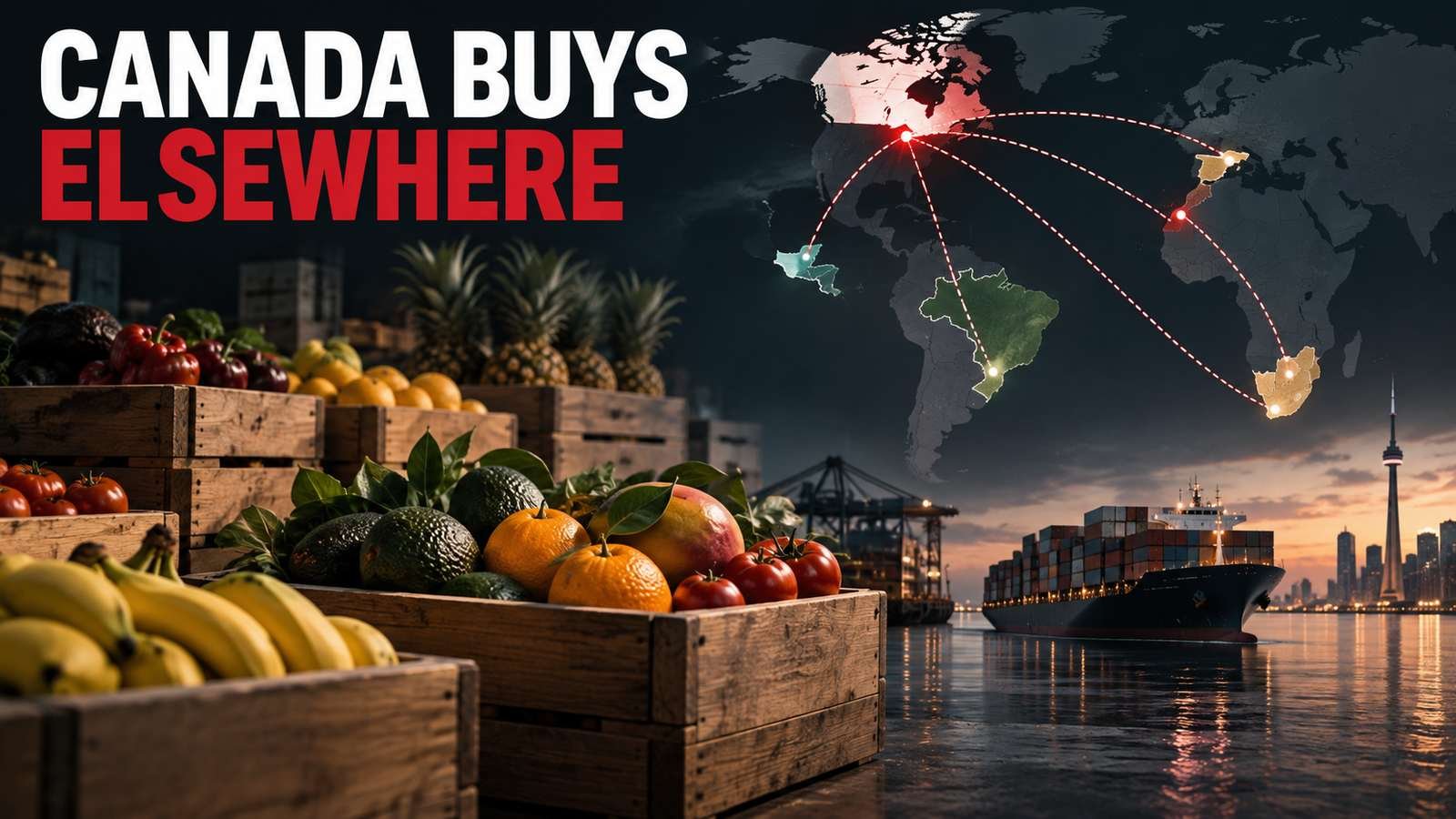
Hero visual created specifically for this article. Thumbnail text: “CANADA BUYS ELSEWHERE”. It is an editorial illustration, not a market-data screenshot.
Market-risk disclaimer
This article is for market education and information only. It is not investment advice, a recommendation or a promise of returns. Prices, policy decisions, deal terms and forecasts can change; verify the latest primary disclosures and assess risk independently.
- Import mix
- Food inflation
- Long-term contracts
Risk context: This article is for market education and information only. It is not investment advice, a recommendation or a promise of returns. Prices, policy decisions, deal terms and forecasts can change; verify the latest primary disclosures and assess risk independently.
- reuters.com2026-09-12
- agriculture.canada.ca2026-09-13
- statcan.gc.ca2026-09-13
- cbsa-asfc.gc.ca2026-09-13
Related PriceVia analysis

Tesla Set October 1 for the Roadster — Nine Years of Delay Make the Date the Product
The sports car first shown in 2017 is set for another reveal, potentially with SpaceX-linked technology, but delivery evidence will matter more than spectacle.

Revolut Trusted a Government Email — Attackers Turned It Into a Data Breach
Fraudulent requests sent from a legitimate agency email domain exposed sensitive customer identity data, revealing a social-engineering weakness outside the bank’s core systems.

A Pipeline Carrying Up to 5% of Global Oil Supply Was Shut
The 1,200-kilometre route that bypasses Hormuz has been taken offline after an attack linked to infrastructure from Iraq, tightening an already fragile Red Sea shipping system.

South Korea’s New Espionage Law Now Covers Every Foreign State
The law taking effect September 13 broadens prosecution beyond North Korea and sets a minimum three-year prison term, raising compliance stakes across chips, batteries, displays and AI.