Chime Is Paying $590 Million to Buy Its Own Bank Rails — The Charter Changes Everything
Buying its seven-year partner could remove sponsor-bank fees and unlock more lending, but it also turns a fintech platform into a bank holding company under deeper supervision.
Chime Is Paying $590 Million to Buy Its Own Bank Rails — The Charter Changes Everything
**Buying its seven-year partner could remove sponsor-bank fees and unlock more lending, but it also turns a fintech platform into a bank holding company under deeper supervision.**
*By PriceVia Global Markets Desk | Published September 9, 2026 | Updated September 9, 2026*
Why this matters now
Buying its seven-year partner could remove sponsor-bank fees and unlock more lending, but it also turns a fintech platform into a bank holding company under deeper supervision.
Key points
- Chime will pay $590 million in cash for Stride Bank, its partner for more than seven years. - Management expects more than $100 million of net synergies and immediate EPS accretion after closing. - Owning a charter can lower fees and funding costs, but it brings balance-sheet, credit, capital and regulatory responsibilities in-house.
The numbers
| Metric | Value | Context | |---|---:|---| | Purchase price | $590m | Cash consideration | | Expected synergies | >$100m | Net benefits | | Price/tangible book | ~1.5× | Stride valuation | | Active members | 10m+ | Chime disclosure | | Closing target | H1 2027 | Subject to approvals | | Balance-sheet target |
What happened
Chime agreed to acquire Stride Bank for $590 million in cash. Stride is a nationally chartered bank and has supported Chime for more than seven years. After closing, it would become Chime Bank, N.A., a wholly owned subsidiary, while Chime would become a bank holding company. [S1, S2] Chime expects more than $100 million of net synergies from sponsor-bank fee savings, a lower cost of funds and lending expansion. The price equals about 1.5 times Stride’s tangible book value. Chime plans to fund the transaction with cash and says no incremental capital contribution is anticipated. [S1]
What everyone is watching
The deal requires approvals from the Office of the Comptroller of the Currency and Federal Reserve and is targeted to close in the first half of 2027. Regulators will examine capital, liquidity, governance, technology, consumer compliance and the combined organisation’s risk controls. [S1, S3] Investors will test the synergy bridge. Removing partner fees is tangible, but lending growth adds credit losses, reserves and collections complexity. The acquired bank must be more than a cheaper pipe; it must support faster products without weakening underwriting.
What the market may be missing
PriceVia analysis: the charter changes Chime’s identity. The company moves from orchestrating regulated partners to owning the institution that holds deposits and originates more products. That can shorten development cycles and unify data, but accountability can no longer be pushed across a vendor boundary. Chime plans to keep assets below $10 billion for the foreseeable future, preserving an asset-light message. That self-imposed ceiling is worth watching: strong lending demand could eventually conflict with the desire to limit balance-sheet complexity and regulatory thresholds.
Positive case
Approvals arrive on time, integration is smooth and fee savings exceed the cost of compliance. Lower funding costs expand responsible lending, members consolidate primary accounts and the acquisition lifts earnings without materially increasing credit risk.
Downside case
Regulators impose costly conditions, integration distracts management or credit losses rise as lending expands. The bank structure reduces flexibility, synergies arrive slowly and operational failures damage the trust Chime expects the charter to strengthen.
What would change the story
Watch OCC and Federal Reserve decisions, closing conditions, integration expense, deposit retention, funding cost, loan growth, delinquencies, capital ratios and realised synergies. Clean approvals and measured credit expansion support the thesis; rapid balance-sheet growth would demand a higher risk discount.
Related stocks and themes
Chime, Stride Bank, Bancorp Bank, digital banking, sponsor-bank models, bank charters, fintech regulation, consumer lending, deposit funding, interchange economics and AI underwriting.
PriceVia View
Buying Stride can eliminate a costly handoff, but the $590 million price is only the entry fee. Chime must prove that owning regulation and credit risk creates more value than the partnership model it is replacing.
Sources and timestamps
- [S1 — Chime: definitive agreement, guidance and transaction terms](https://www.chime.com/newsroom/chime-announces-agreement-to-acquire-stride-bank/) — published 2026-09-08; accessed 2026-09-09T11:55:00+05:30 - [S2 — Reuters: acquisition announcement and market reaction](https://www.reuters.com/legal/transactional/chime-buy-nationally-chartered-stride-bank-590-million-shares-jump-2026-09-08/) — published 2026-09-08; accessed 2026-09-09T11:55:00+05:30 - [S3 — OCC: bank merger and combination framework](https://www.occ.treas.gov/topics/charters-and-licensing/mergers-and-conversions/index-mergers-and-conversions.html) — published accessed 2026-09-09; accessed 2026-09-09T11:55:00+05:30 - [S4 — FDIC: Stride Bank institution profile](https://banks.data.fdic.gov/bankfind-suite/bankfind/details/4091) — published accessed 2026-09-09; accessed 2026-09-09T11:55:00+05:30
Visual disclosure
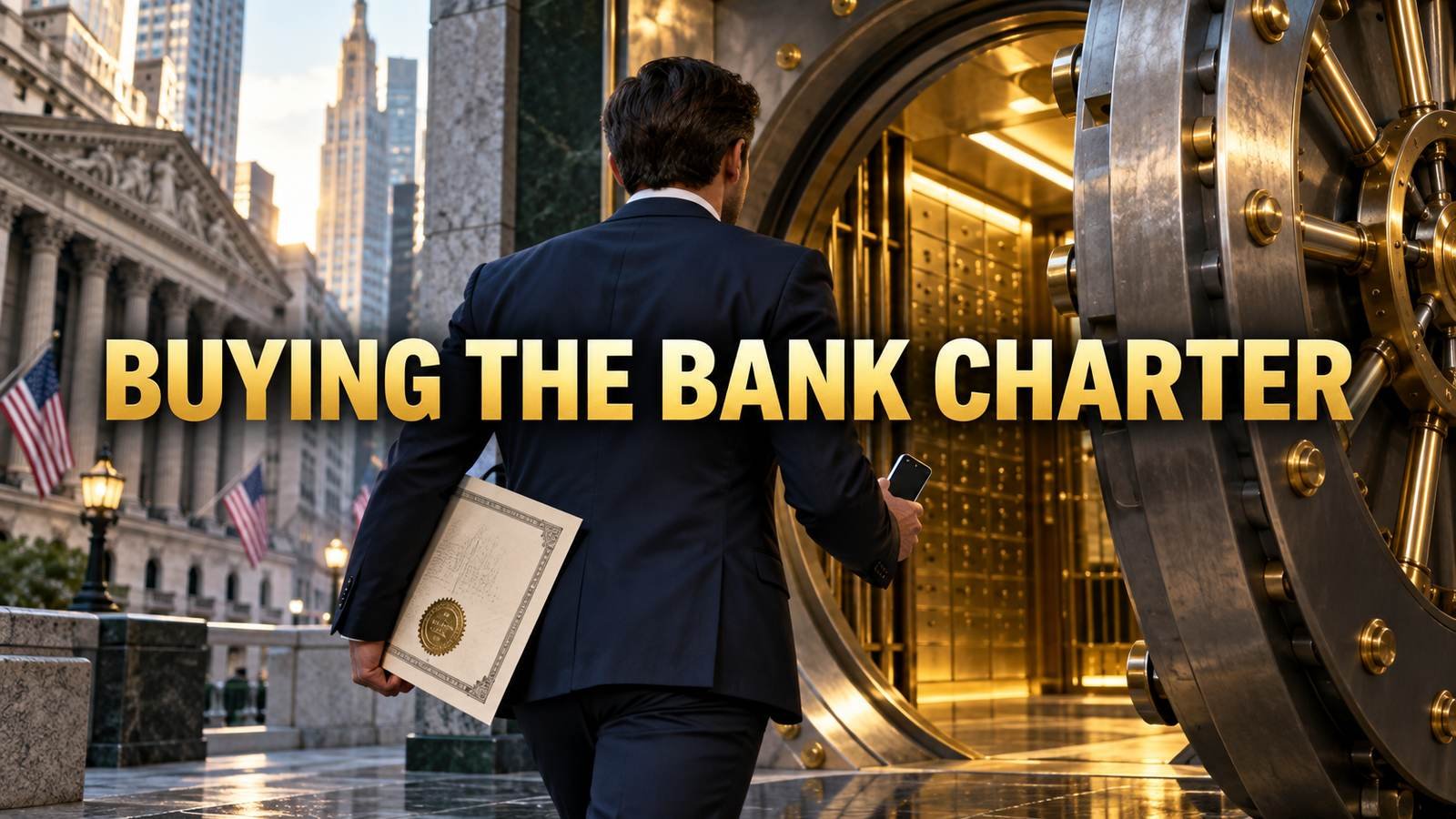
Hero visual created specifically for this article. Thumbnail text: “BUYING THE BANK CHARTER”. It is an editorial illustration, not a market-data screenshot.
Market-risk disclaimer
This article is for market education and information only. It is not investment advice, a recommendation, or a promise of returns. Prices, transaction terms, approvals, company plans and regulations can change; verify the latest primary disclosures and assess risk independently.
- Regulatory approvals
- Realised synergies
- Credit quality and capital
Risk context: This article is for market education and information only. It is not investment advice, a recommendation, or a promise of returns. Prices, transaction terms, approvals, company plans and regulations can change; verify the latest primary disclosures and assess risk independently.
- chime.com2026-09-08
- reuters.com2026-09-08
- occ.treas.govaccessed 2026-09-09
- banks.data.fdic.govaccessed 2026-09-09
Related PriceVia analysis

Tesla Set October 1 for the Roadster — Nine Years of Delay Make the Date the Product
The sports car first shown in 2017 is set for another reveal, potentially with SpaceX-linked technology, but delivery evidence will matter more than spectacle.

Revolut Trusted a Government Email — Attackers Turned It Into a Data Breach
Fraudulent requests sent from a legitimate agency email domain exposed sensitive customer identity data, revealing a social-engineering weakness outside the bank’s core systems.

A Pipeline Carrying Up to 5% of Global Oil Supply Was Shut
The 1,200-kilometre route that bypasses Hormuz has been taken offline after an attack linked to infrastructure from Iraq, tightening an already fragile Red Sea shipping system.
South Korea’s New Espionage Law Now Covers Every Foreign State
The law taking effect September 13 broadens prosecution beyond North Korea and sets a minimum three-year prison term, raising compliance stakes across chips, batteries, displays and AI.