The Fuel Under Global Shipping Jumped 76% — A Hidden Shortage Is Moving Into Freight Rates
Fuel-oil stocks in major hubs sit roughly 30% below seasonal norms as disrupted exports and refinery choices create a projected third-quarter deficit.
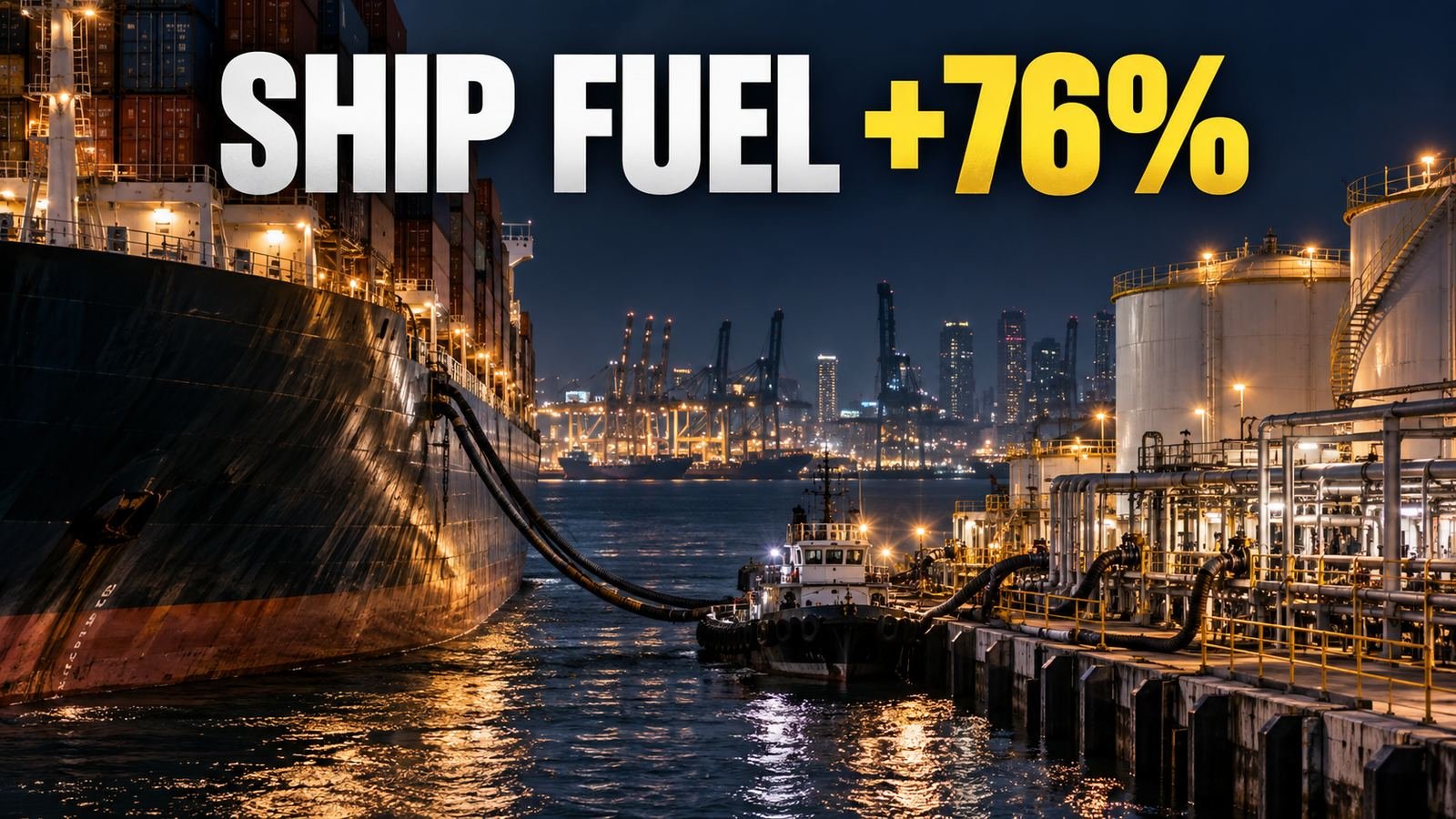
The Fuel Under Global Shipping Jumped 76% — A Hidden Shortage Is Moving Into Freight Rates
**Fuel-oil stocks in major hubs sit roughly 30% below seasonal norms as disrupted exports and refinery choices create a projected third-quarter deficit.**
*By PriceVia Global Desk | September 7, 2026*
Why now
Fuel-oil stocks in major hubs sit roughly 30% below seasonal norms as disrupted exports and refinery choices create a projected third-quarter deficit.
Key points
- Singapore very-low-sulphur fuel oil rose 76% since the Iran war to just under $825 a tonne by September 1. - Major-hub inventories were about 30% below their three-year seasonal averages. - Energy Aspects forecast a third-quarter fuel-oil deficit of 218,000 barrels a day.
The numbers
| Metric | Value | Context | |---|---:|---| | VLSFO price move | +76% | Since Iran war began | | Singapore price |
What happened
A supply squeeze is forming in fuel oil, the heavy product used by ships and some power plants. Singapore very-low-sulphur fuel oil climbed 76% from the start of the Iran war to just under $825 a metric tonne by September 1, far outpacing Brent crude’s roughly 40% increase over the same period. [S1, S2] Stocks across Singapore, Amsterdam-Rotterdam-Antwerp and Fujairah were around 30% below three-year seasonal averages. Energy Aspects projected a third-quarter deficit of 218,000 barrels a day, while Middle East fuel-oil exports in March–August fell 45% from a year earlier. [S1]
What everyone is watching
Refiners are the swing factor. Damaged or constrained plants in Russia and the Middle East have reduced output, while healthy refiners can earn more by feeding fuel oil into secondary units to make scarce diesel, gasoline and jet fuel. That rational decision tightens the residual product used for bunkering. Asia is especially exposed. Singapore, the largest bunker hub, imports more than half of demand approaching one million barrels a day. Longer routes around conflict zones add sailing days and fuel consumption precisely when supply is restricted, amplifying the cost through both price and distance.
The overlooked PriceVia angle
PriceVia analysis: crude oil is no longer a sufficient proxy for transportation inflation. A shipowner pays the refined-product spread, port availability and route-specific bunker price. When VLSFO rises much faster than Brent, freight contracts and fuel surcharges can reprice even without a headline crude shock. The squeeze also divides fleets. Ships equipped with scrubbers can burn cheaper high-sulphur fuel, while compliant vessels rely more on VLSFO or distillates. The widening economics can change voyage selection, charter rates and the payback on emissions-control equipment.
Positive scenario
Refinery outages ease, Middle East exports recover and alternative supply reaches Asian hubs. Inventory rebuilds, VLSFO premiums compress and shipping companies pass through only temporary surcharges without disrupting trade volumes.
Risk scenario
Conflict keeps refineries and tanker routes constrained while refiners maximise higher-margin products. Bunker prices remain elevated, freight rates rise and fuel-intensive routes or older fleets face margin pressure and working-capital strain.
What would change the story
Watch weekly Singapore and Fujairah inventories, VLSFO-Brent spreads, Russian and Middle East exports, refinery utilisation, Red Sea routing, bunker sales and carrier surcharges. A sustained inventory rebuild across multiple hubs would signal relief.
Related stocks and themes
Container shipping, dry bulk, tanker operators, marine fuels, refiners, freight rates, Singapore bunkering, scrubbers, logistics inflation and global trade.
Sources and timestamps
- [S1 — Reuters: global balances, inventories and export disruption](https://www.reuters.com/business/energy/ship-fuel-shortage-looms-refiners-strained-by-war-favour-other-products-2026-09-07/) — published 2026-09-07; accessed 2026-09-08T00:40:00+05:30 - [S2 — Singapore MPA: bunker-sales statistics](https://www.mpa.gov.sg/port-marine-ops/marine-services/bunkering/bunkering-statistics) — published accessed 2026-09-07; accessed 2026-09-08T00:40:00+05:30 - [S3 — Enterprise Singapore: official oil-product inventory data](https://www.enterprisesg.gov.sg/resources/sg-trade-data) — published accessed 2026-09-07; accessed 2026-09-08T00:40:00+05:30 - [S4 — Reuters: earlier Asia fuel-oil supply disruption](https://www.reuters.com/business/energy/asia-struggles-find-fuel-oil-middle-east-exports-plummet-sources-say-2026-03-06/) — published 2026-03-06; accessed 2026-09-08T00:40:00+05:30
Visual disclosure
Hero visual created specifically for this article. Thumbnail text: “SHIP FUEL +76%”. It is an editorial illustration, not a market-data screenshot.
Market-risk disclaimer
This article is for market education and information only. It is not investment advice, a recommendation, or a promise of returns. Prices, transaction terms, approvals, company plans and regulations can change; verify the latest primary disclosures and assess risk independently.
- Hub inventories
- VLSFO-Brent spread
- Carrier fuel surcharges
Risk context: This article is for market education and information only. It is not investment advice, a recommendation, or a promise of returns. Prices, transaction terms, approvals, company plans and regulations can change; verify the latest primary disclosures and assess risk independently.
- reuters.com2026-09-07
- mpa.gov.sgaccessed 2026-09-07
- enterprisesg.gov.sgaccessed 2026-09-07
- reuters.com2026-03-06
Related PriceVia analysis

AI Leaders Asked for a Slowdown — Zuckerberg Said Competition Is Safer Than Coordination
Meta’s chief says liability and rivalry already force responsible development, breaking with peers who support a pause on recursive self-improvement; antitrust now sits inside the safety debate.
New York Put a $1 Million Price on Every Data-Center Megawatt
The state wants host communities to receive at least $1 million for each megawatt of utility demand, turning power consumption into a direct development cost for AI infrastructure.

Tesla Put Cybercabs on Austin Roads — The Regulator Wants to Know Which Rules They Passed
Tesla must answer by September 30 whether temporary human controls supported certification of a robotaxi that lacks a steering wheel, pedals and mirrors; deployment moved faster than rulemaking.

Japan Is Taking Rates to a 31-Year High — The Cheap-Yen Trade Is Losing Its Anchor
A likely 25-basis-point increase would put the BOJ rate at 1.25% and near its neutral range; the global consequence is a less dependable funding currency for leveraged trades.