Gold Just Broke Higher — The Dollar May Be the Bigger Story
Gold’s breakout is getting attention, but the combination of a softer dollar, bond-market stress and heavy hedging demand may be more important than the price level itself.
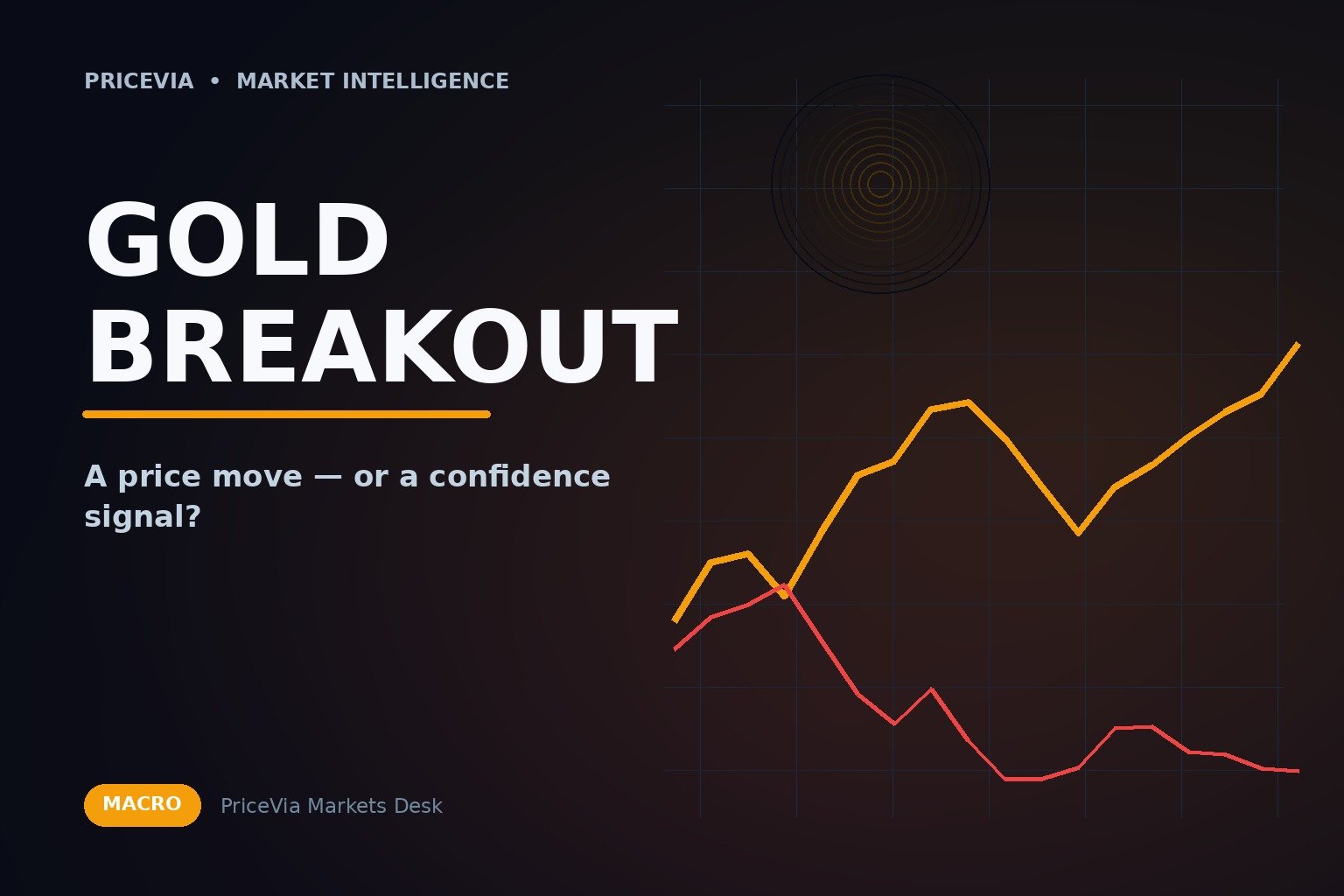
This move is bigger than a chart breakout
Gold surged to its highest level in more than three months on Friday and moved decisively above its 200-day moving average. Technical traders will focus on the breakout, but the timing matters just as much as the level.
The move arrived while the U.S. dollar weakened and long-dated Treasury markets remained unsettled. That combination turns gold from a simple momentum trade into a broader macro signal.
The dollar is doing part of the work
A weaker dollar mechanically makes dollar-priced gold easier to buy for holders of other currencies, but the current move also reflects confidence. Investors are debating whether U.S. efforts to contain long-term borrowing costs could shift some of the adjustment into the currency.
Reuters reported that gold demand strengthened as the Treasury expanded buybacks in long-dated bonds and the dollar came under pressure. The precious metal is therefore responding to both price mechanics and a renewed desire for protection.
What most people may be missing
The most interesting feature is not that gold is rising. It is that investors are buying protection even while equity fund flows remain strong. That means the market is not behaving like a simple risk-off panic.
Instead, investors appear willing to own growth assets and hedges at the same time. That is often what happens when uncertainty is about the monetary and fiscal regime itself rather than one isolated recession signal.
Options can amplify the move
Reuters cited strong call-option demand as another factor. When bullish options activity rises, dealers may need to hedge in ways that reinforce price momentum. That can make a breakout move faster than the underlying change in physical demand would suggest.
The same mechanism works in reverse. A market driven partly by positioning can move sharply if volatility rises or option demand fades, which is why a strong technical setup should not be treated as a guarantee.
India is showing the other side of the rally
High prices are already discouraging some physical buying in India, according to Reuters. That creates a useful contrast: financial demand is strengthening while price-sensitive jewellery and retail demand becomes less enthusiastic.
If gold continues higher despite weaker physical demand, it would reinforce the idea that the current move is being driven mainly by global portfolio hedging and currency concerns rather than traditional consumption.
What would keep the breakout alive
Watch the U.S. dollar, long-term Treasury yields, ETF and options demand, and whether gold can hold above its major moving averages. A sustained softer dollar with continued macro uncertainty would support the current narrative.
A sharp dollar rebound or a rapid calming of bond-market stress would challenge it. The key is whether gold remains a hedge investors want even after the first wave of momentum buyers is already in.
- Whether gold holds above the 200-day moving average.
- The U.S. dollar after Treasury-market volatility.
- Gold ETF and options demand.
- Whether physical demand weakens further in India and Asia.
Risk context: Gold can reverse sharply after momentum-driven breakouts. This is market analysis, not a price target or recommendation.
Related PriceVia analysis
 THE REAL SIGNAL
Bitcoin Is Surging Again — The Bigger Signal May Be Outside Crypto
Bitcoin is getting the attention, but the more important story may be the unusual alignment between crypto demand, Treasury-market stress, a softer dollar and gold.
 SMART MONEY SPLIT
Investors Poured $22 Billion Into Stocks — Then the Market Sold Off
The most revealing part of global fund flows is not that investors bought stocks. It is that they were buying risk assets and protection at the same time.
 AI UNDER PRESSURE
Nvidia Has to Prove the AI Boom Can Outrun the Bond Market
Nvidia’s earnings will test AI demand, but the more uncomfortable question is whether the economics of the AI buildout still look as attractive when long-term money costs much more.
 RISK IS BUILDING
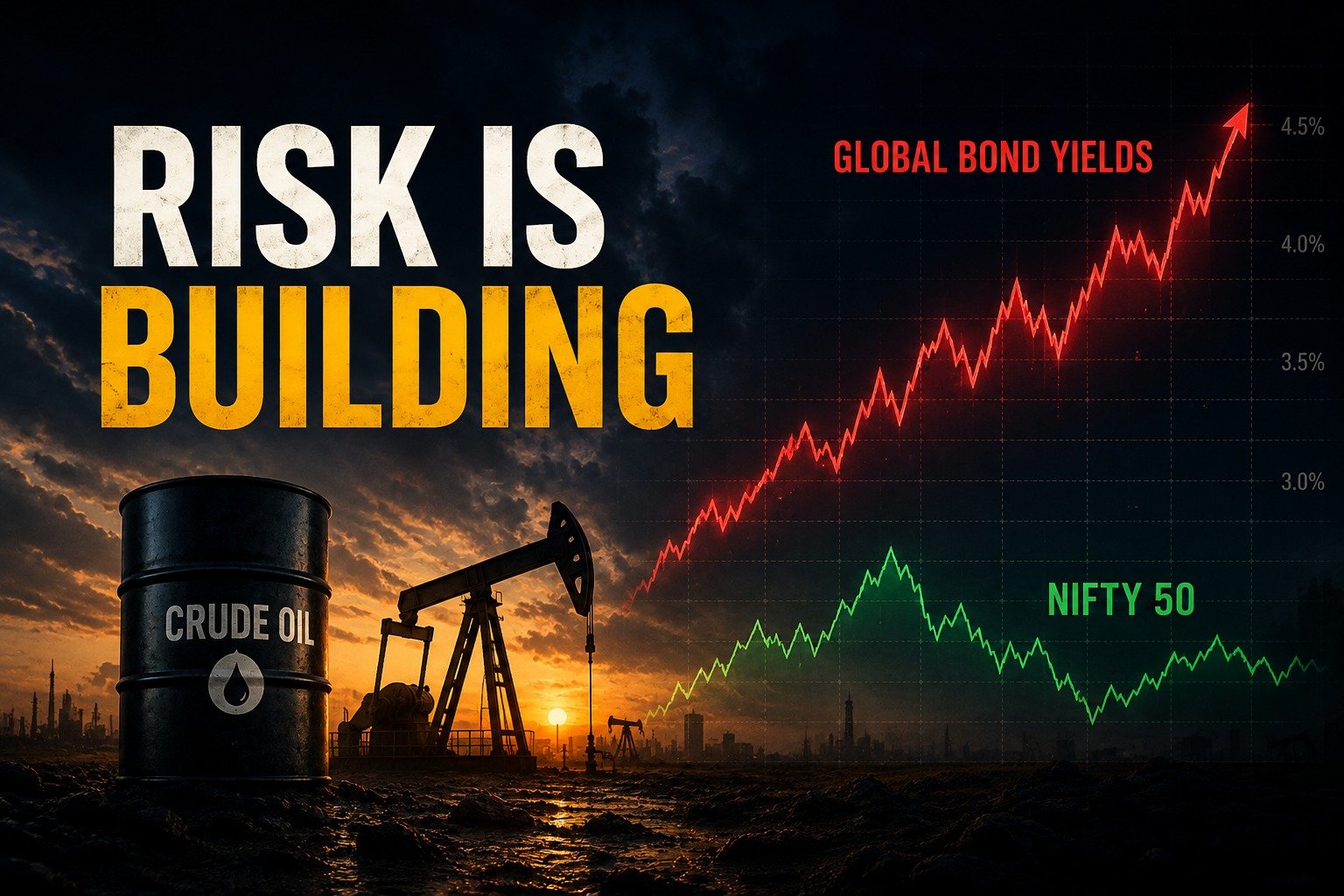
Indian Markets Look Calm. Oil and Global Bond Yields Are Quietly Raising the Risk
The index barely moved on Friday. That calm surface may be hiding a more important combination: expensive oil, volatile global yields and pressure on India’s currency and foreign flows.