A $4.2 Billion Shipping Deal Hit a National-Security Wall — Hapag-Lloyd Is Rebuilding the Bid
The German carrier is proposing tighter foreign-ownership limits and an Israeli-controlled 16-vessel company as it seeks cabinet support for buying ZIM.
A $4.2 Billion Shipping Deal Hit a National-Security Wall — Hapag-Lloyd Is Rebuilding the Bid
**The German carrier is proposing tighter foreign-ownership limits and an Israeli-controlled 16-vessel company as it seeks cabinet support for buying ZIM.**
*By PriceVia Global Markets Desk | September 7, 2026*
Why now
The German carrier is proposing tighter foreign-ownership limits and an Israeli-controlled 16-vessel company as it seeks cabinet support for buying ZIM.
Key points
- Hapag-Lloyd agreed in February to acquire ZIM for $35 per share, an equity value of about $4.2 billion. - A proposed Israeli-controlled company would retain 16 vessels and direct international maritime links. - The revised plan would lower a foreign-ownership threshold from 24% to 10%; Israeli cabinet review is pending.
The numbers
| Metric | Value | Context | |---|---:|---| | Equity value | $4.2bn | Cash transaction | | Offer price | $35 | Per ZIM share | | Protected fleet | 16 vessels | Israeli-controlled unit | | Old threshold | 24% | Foreign ownership | | Proposed threshold | 10% | Revised safeguard | | External financing | Up to $2.5bn | Original funding plan |
What happened
Hapag-Lloyd is working with Israel’s government on changes to its agreed $4.2 billion cash acquisition of ZIM after opposition from workers and officials, including concerns about national maritime security. The February merger agreement pays $35 per share and would make ZIM part of the German shipping group. [S1, S2] The revised concept would preserve an Israeli-controlled company owned by private-equity firm FIMI. That entity would hold a 16-vessel fleet and maintain direct global links, while the foreign-ownership threshold would reportedly fall from 24% to 10%. Israel’s cabinet is expected to review the proposal later in September. [S1, S3]
What everyone is watching
The core issue is the state’s ability to guarantee shipping access during conflict or emergency. Commercial merger logic—network scale, vessel deployment and cost synergies—must coexist with rights over sensitive cargo, routes, crews and local infrastructure. Financing and regulatory timing also matter. Hapag-Lloyd planned to use cash plus up to $2.5 billion of external funding. A longer review period can raise carrying costs and distract management, while new safeguards may reduce the assets or synergies acquired.
The overlooked PriceVia angle
PriceVia analysis: the 16 vessels are not a side note; they define the security carve-out. If a protected Israeli fleet preserves strategic access but removes routes, customer relationships or capacity from the buyer, the economic value of the remaining ZIM business changes even if the $35 price stays fixed. The proposed 10% foreign-ownership threshold is another governance trade-off. It may make control visibly domestic, yet it could narrow future financing flexibility for the Israeli vehicle. Security reassurance and capital-market optionality are pulling in opposite directions.
Positive scenario
Cabinet approval arrives with workable safeguards, the protected fleet secures Israeli continuity and Hapag-Lloyd still captures meaningful network synergies. A clear structure removes deal uncertainty for ZIM shareholders and customers.
Risk scenario
Political objections intensify, concessions erode transaction economics or review delays threaten closing. Shipping-cycle weakness could also make the fixed cash price look expensive before integration begins.
What would change the story
Watch the cabinet decision, final carve-out assets, foreign-ownership rules, financing terms, shareholder approvals, closing timetable and any price renegotiation. The decisive document will be the legally binding amendment—not verbal reassurance.
Related stocks and themes
Hapag-Lloyd, ZIM, Maersk, container freight rates, maritime security, Middle East trade lanes, shipping consolidation and merger regulation.
Sources and timestamps
- [S1 — Reuters: revised safeguards and Israeli review](https://www.reuters.com/world/middle-east/hapag-lloyd-plans-improvements-42-billion-bid-israels-zim-2026-09-07/) — published 2026-09-07; accessed 2026-09-07T23:20:00+05:30 - [S2 — Hapag-Lloyd: signed merger agreement and price](https://www.hapag-lloyd.com/en/company/press/releases/2026/02/hapag-lloyd-signs-merger-agreement-with-zim.html) — published 2026-02-16; accessed 2026-09-07T23:20:00+05:30 - [S3 — ZIM investor relations: proposed transaction FAQ](https://investors.zim.com/resources/FAQs-Proposed-Merger-with-Hapag-Lloyd/default.aspx) — published accessed 2026-09-07; accessed 2026-09-07T23:20:00+05:30 - [S4 — SEC: ZIM transaction announcement and financing context](https://www.sec.gov/Archives/edgar/data/1654126/000117891326000483/exhibit_99-2.htm) — published 2026-02-16; accessed 2026-09-07T23:20:00+05:30
Visual disclosure
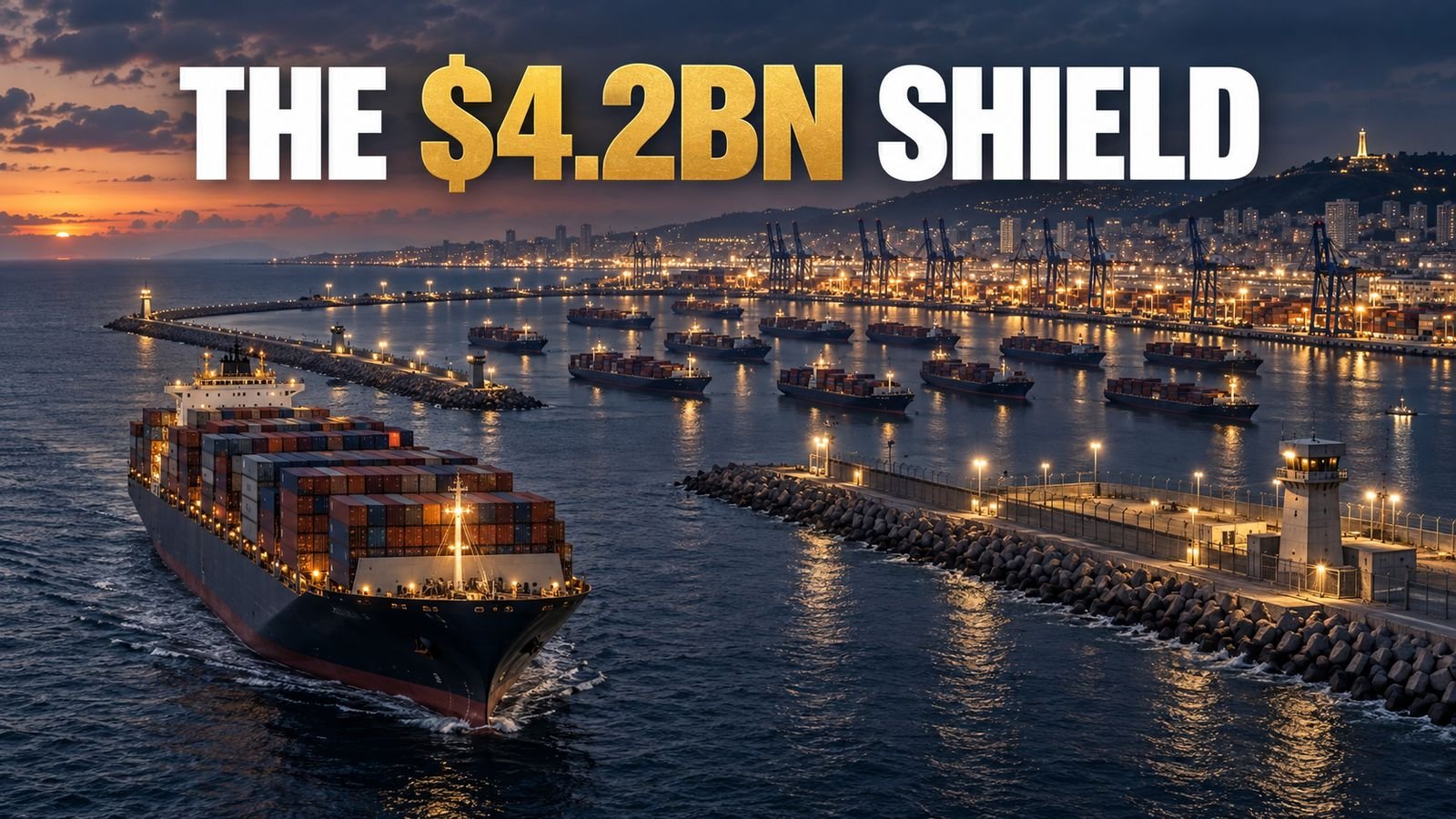
Hero visual created specifically for this article. Thumbnail text: “THE $4.2BN SHIELD”. It is an editorial illustration, not a market-data screenshot.
Market-risk disclaimer
This article is for market education and information only. It is not investment advice, a recommendation, or a promise of returns. Prices, transaction terms, approvals, company plans and regulations can change; verify the latest primary disclosures and assess risk independently.
- Israeli cabinet decision
- Final carve-out terms
- Closing timetable
Risk context: This article is for market education and information only. It is not investment advice, a recommendation, or a promise of returns. Prices, transaction terms, approvals, company plans and regulations can change; verify the latest primary disclosures and assess risk independently.
- reuters.com2026-09-07
- hapag-lloyd.com2026-02-16
- investors.zim.comaccessed 2026-09-07
- sec.gov2026-02-16
Related PriceVia analysis

Tesla Set October 1 for the Roadster — Nine Years of Delay Make the Date the Product
The sports car first shown in 2017 is set for another reveal, potentially with SpaceX-linked technology, but delivery evidence will matter more than spectacle.

Revolut Trusted a Government Email — Attackers Turned It Into a Data Breach
Fraudulent requests sent from a legitimate agency email domain exposed sensitive customer identity data, revealing a social-engineering weakness outside the bank’s core systems.

A Pipeline Carrying Up to 5% of Global Oil Supply Was Shut
The 1,200-kilometre route that bypasses Hormuz has been taken offline after an attack linked to infrastructure from Iraq, tightening an already fragile Red Sea shipping system.

South Korea’s New Espionage Law Now Covers Every Foreign State
The law taking effect September 13 broadens prosecution beyond North Korea and sets a minimum three-year prison term, raising compliance stakes across chips, batteries, displays and AI.