Asian LNG Near $30 Broke Demand — India’s Gas Ambition Has a Price Ceiling
Middle East disruption pushed Asian spot LNG from roughly $10 toward $30 per MMBtu, forcing price-sensitive buyers to switch fuels and exposing the tension between gas-transition targets and affordability.
Asian LNG Near $30 Broke Demand — India’s Gas Ambition Has a Price Ceiling
*By PriceVia Energy Desk | Published September 15, 2026 | Updated September 15, 2026*
Why this matters now
Middle East disruption pushed Asian spot LNG from roughly $10 toward $30 per MMBtu, forcing price-sensitive buyers to switch fuels and exposing the tension between gas-transition targets and affordability.
Key points
- Asian spot LNG prices rose from around $10 to nearly $30 per MMBtu amid Middle East supply disruption. - Shell estimated about 36 million tonnes of global LNG supply was removed or disrupted. - GAIL and PetroChina executives expect demand to recover after prices normalise, while 150–200 million tonnes of new capacity is due over four to five years.
The numbers
| Metric | Value | Context | |---|---:|---| | Earlier spot price | ~$10/MMBtu | Pre-shock reference | | Recent spot price | Nearly $30/MMBtu | Asian LNG | | Supply disruption | ~36m tonnes | Shell estimate | | GAIL pain threshold | Above $20/MMBtu | Demand concern | | New capacity | 150–200m tonnes | Next 4–5 years | | Demand level | Multi-year lows | India and China |
What happened — confirmed facts
Executives at an energy forum said LNG demand in India and China had fallen to multi-year lows after Middle East conflict disrupted Qatari and UAE exports through the Strait of Hormuz. [S1, S2] Asian spot prices moved from roughly $10 toward $30 per MMBtu. Buyers reduced purchases or switched toward coal and oil, while industry executives argued that demand could return when the conflict and price shock ease. [S1, S3]
What everyone is watching
The duration of disrupted supply is the immediate variable. Inventories and alternative cargoes can soften a short interruption, but sustained scarcity forces fertiliser, city-gas, refining and power users to compete. The 150–200 million tonnes of planned global capacity could reset prices later, yet project timing and contract availability matter. Capacity that starts after demand destruction does not solve today’s affordability problem.
What the market may be missing — PriceVia analysis
PriceVia analysis: India’s gas target contains an implicit price assumption. Infrastructure can be built, but utilisation falls when imported molecules are too expensive for power and industry. Fuel switching protects output but can increase emissions and costs elsewhere. A gas shock therefore affects both corporate margins and India’s energy-transition trajectory.
Positive case
Conflict risk declines, cargo flows restart and new supply compresses spot prices. Indian demand rebounds, terminals improve utilisation and gas regains share from higher-carbon fuels.
Downside case
The disruption persists, long-term contracts tighten and spot prices stay above demand thresholds. Fertiliser subsidies, city-gas margins and industrial competitiveness come under pressure.
What would change the story
Watch Hormuz LNG flows, Qatar and UAE loadings, Asian spot assessments, GAIL procurement and terminal utilisation. Sustained prices below $20 would be the clearest demand-recovery signal.
Related stocks and themes
GAIL, Petronet LNG, city-gas distributors, fertiliser producers, gas power plants, Qatar LNG, shipping and energy-transition policy.
How to read it
Stress-test gas-linked companies at multiple import prices. Capacity and demand projections are fragile when the commodity can triple within a geopolitical shock.
Reader checklist
- Confirm hormuz flows in a primary disclosure before changing the thesis. - Compare asian spot lng with the headline narrative; they may move in different directions. - Reassess after new information on terminal utilisation rather than treating the first report as a completed outcome.
PriceVia View
The market often talks about gas demand as a structural curve. At nearly $30, that curve becomes a cliff for price-sensitive buyers.
Sources and timestamps
- [S1 — Reuters: India and China LNG demand outlook](https://www.reuters.com/business/energy/lng-demand-china-india-expected-recover-when-mideast-war-ends-2026-09-15/) — published 2026-09-15; accessed 2026-09-15T13:15:00+05:30 - [S2 — IEA: gas market and supply outlook](https://www.iea.org/reports/gas-market-report-q3-2026) — published 2026-09-15; accessed 2026-09-15T13:15:00+05:30 - [S3 — GAIL: investor and market disclosures](https://gailonline.com/IZ-InvestorsInformation.html) — published 2026-09-15; accessed 2026-09-15T13:15:00+05:30 - [S4 — Petroleum and Natural Gas Ministry](https://mopng.gov.in/) — published 2026-09-15; accessed 2026-09-15T13:15:00+05:30
Visual disclosure
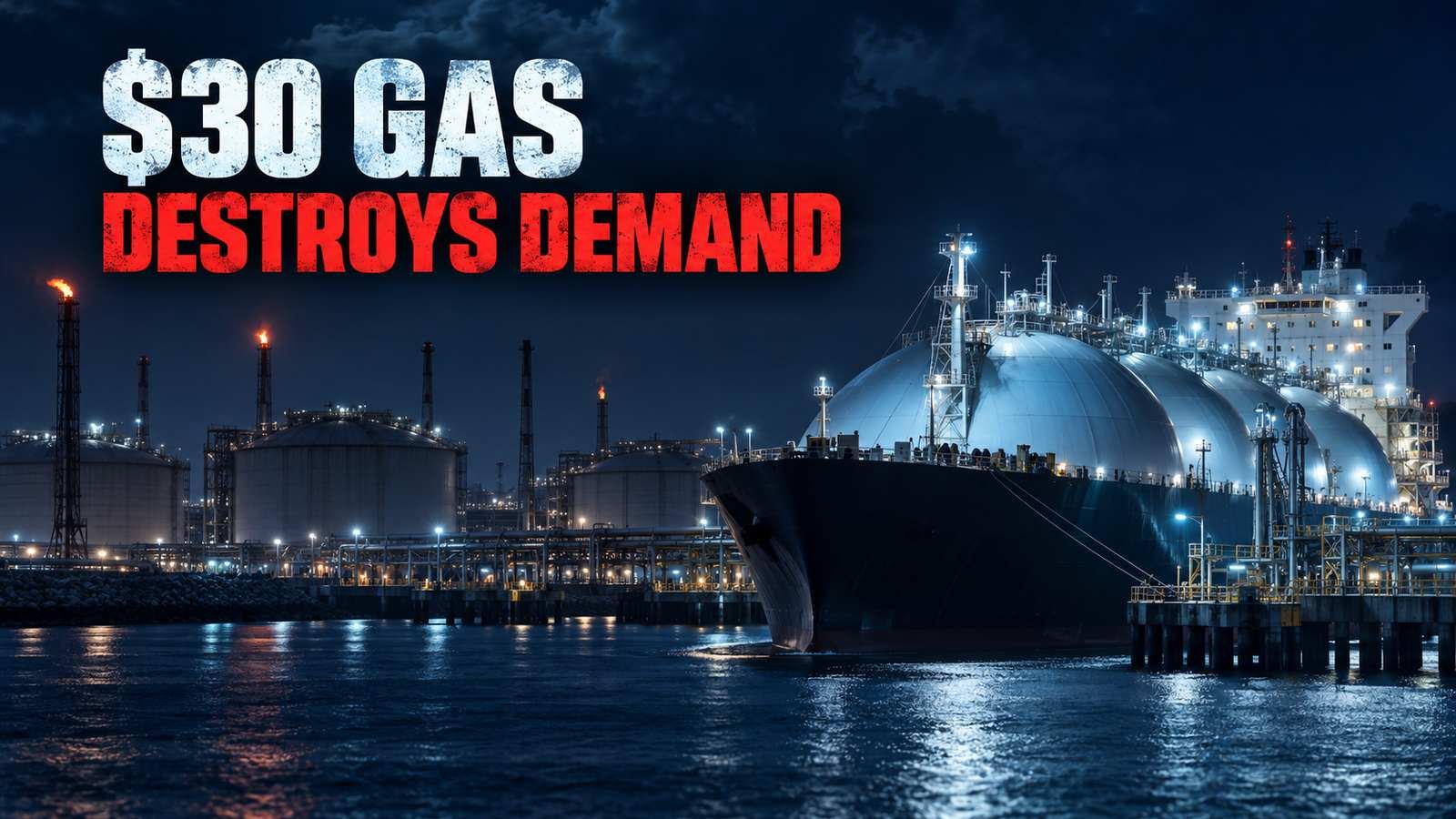
Hero visual created specifically for this article. Thumbnail text: “$30 GAS DESTROYS DEMAND”. It is an editorial illustration, not a market-data, legal, clinical or regulatory screenshot.
Market-risk disclaimer
This article is for market education and information only. It is not investment advice, a recommendation or a promise of returns. Market prices, policy decisions, deal terms, clinical results and forecasts can change. Verify the latest primary disclosures and assess suitability and risk independently.
- Hormuz flows
- Asian spot LNG
- Terminal utilisation
Risk context: This article is for market education and information only. It is not investment advice, a recommendation or a promise of returns. Market prices, policy decisions, deal terms, clinical results and forecasts can change. Verify the latest primary disclosures and assess suitability and risk independently.
- reuters.com2026-09-15
- iea.org2026-09-15
- gailonline.com2026-09-15
- mopng.gov.in2026-09-15
Related PriceVia analysis

AI Leaders Asked for a Slowdown — Zuckerberg Said Competition Is Safer Than Coordination
Meta’s chief says liability and rivalry already force responsible development, breaking with peers who support a pause on recursive self-improvement; antitrust now sits inside the safety debate.
New York Put a $1 Million Price on Every Data-Center Megawatt
The state wants host communities to receive at least $1 million for each megawatt of utility demand, turning power consumption into a direct development cost for AI infrastructure.

Tesla Put Cybercabs on Austin Roads — The Regulator Wants to Know Which Rules They Passed
Tesla must answer by September 30 whether temporary human controls supported certification of a robotaxi that lacks a steering wheel, pedals and mirrors; deployment moved faster than rulemaking.

Japan Is Taking Rates to a 31-Year High — The Cheap-Yen Trade Is Losing Its Anchor
A likely 25-basis-point increase would put the BOJ rate at 1.25% and near its neutral range; the global consequence is a less dependable funding currency for leveraged trades.