One in Five Food Samples Failed India’s Safety Test
More than 100,000 samples are tested annually and roughly 20% have been unsafe, substandard or mislabelled, while quick commerce and a $100 billion packaged-food market outgrow enforcement.
One in Five Food Samples Failed India’s Safety Test
*By PriceVia Consumer Desk | Published September 14, 2026 | Updated September 14, 2026*
Why this matters now
More than 100,000 samples are tested annually and roughly 20% have been unsafe, substandard or mislabelled, while quick commerce and a $100 billion packaged-food market outgrow enforcement.
Key points
- Roughly 20% of tested food samples since 2020 were unsafe, substandard or inadequately labelled. - Maharashtra’s food-safety commissioner has conducted more than 3,000 raids since May. - India proposed front-of-pack warnings after scrutiny of labels, ingredients and different global formulations.
The numbers
| Metric | Value | Context | |---|---:|---| | Packaged-food market | $100bn+ | India | | Samples tested yearly | 100,000+ | Since 2020 | | Problem samples | ~20% | Unsafe/substandard/mislabelled | | High fat/sugar/salt share | Nearly 80% | Packaged-food market | | Maharashtra raids | 3,000+ | Since May | | Quick-commerce market | $13bn | About 9m orders daily |
What happened
Reuters reported that India’s food-safety crackdown has exposed misleading labels, altered expiry dates and hygiene lapses across a packaged-food market exceeding $100 billion. Since 2020, authorities have tested more than 100,000 samples a year and found roughly 20% unsafe, substandard or inadequately labelled. [S1, S2] Maharashtra food-safety commissioner Tukaram Mundhe has conducted more than 3,000 raids since May. India’s regulator proposed front-of-pack warnings in August after scrutiny of ingredient and nutrition differences, while court challenges show that aggressive enforcement also needs legal consistency. [S1, S3]
What everyone is watching
The final label design, nutrient thresholds, implementation period and treatment of traditional foods will determine the business effect. A prominent warning can alter reformulation, pricing and demand. Quick-commerce warehouses need traceability and cold-chain controls suited to rapid turnover. The sector processes about nine million orders daily, so isolated hygiene failures can scale quickly.
What the market may be missing
PriceVia analysis: the competitive advantage may shift from marketing to verifiable quality systems. Companies able to prove batch origin, storage and formulation can gain trust even if compliance costs rise. Enforcement data should separate unsafe products from technical labelling failures. Combining them in one percentage can hide whether risk comes from health hazards, administrative non-compliance or deliberate deception.
Positive case
Clear national standards improve disclosure, strong brands reformulate and digital traceability helps regulators target repeat offenders. Consumer trust rises without unnecessary disruption to safe products.
Downside case
Rules remain fragmented, raids are overturned, smaller firms struggle with costs or companies use confusing label workarounds. Export concerns could grow if foreign regulators lose confidence.
What would change the story
Watch FSSAI’s final front-label rule, court decisions, recall data, inspection outcomes and quick-commerce compliance. Transparent category-level enforcement would make the risk easier to price.
Related stocks and themes
FSSAI, Nestlé India, beverage and snack companies, quick commerce, food retail, packaging, labelling and consumer health.
How to read it
Consumer-company investors should track reformulation, recalls, compliance capex and brand trust. The firms most exposed are those whose affordability depends on ingredients or labels that regulation may force them to change.
Verification discipline
The confirmed facts above come from the cited reporting and primary sources. Readers should re-check final warning labels, because that is the clearest next test of whether the present interpretation still holds. Reported plans, proposals and forecasts are labelled as such; they are not treated as completed outcomes.
PriceVia View
The alarming number is not one raid; it is the recurring one-in-five failure rate. India needs enforcement that is tough enough to deter abuse and precise enough to distinguish danger from paperwork.
Sources and timestamps
- [S1 — Reuters: inside India’s food-safety crackdown](https://www.reuters.com/world/india/inside-indias-food-safety-crackdown-2026-09-08/) — published 2026-09-08; accessed 2026-09-14T09:45:00+05:30 - [S2 — FSSAI: food safety and standards](https://www.fssai.gov.in/) — published 2026-09-14; accessed 2026-09-14T09:45:00+05:30 - [S3 — Maharashtra FDA](https://fda.maharashtra.gov.in/) — published 2026-09-14; accessed 2026-09-14T09:45:00+05:30 - [S4 — WHO: healthy diet and food labelling](https://www.who.int/health-topics/healthy-diet) — published 2026-09-14; accessed 2026-09-14T09:45:00+05:30
Visual disclosure
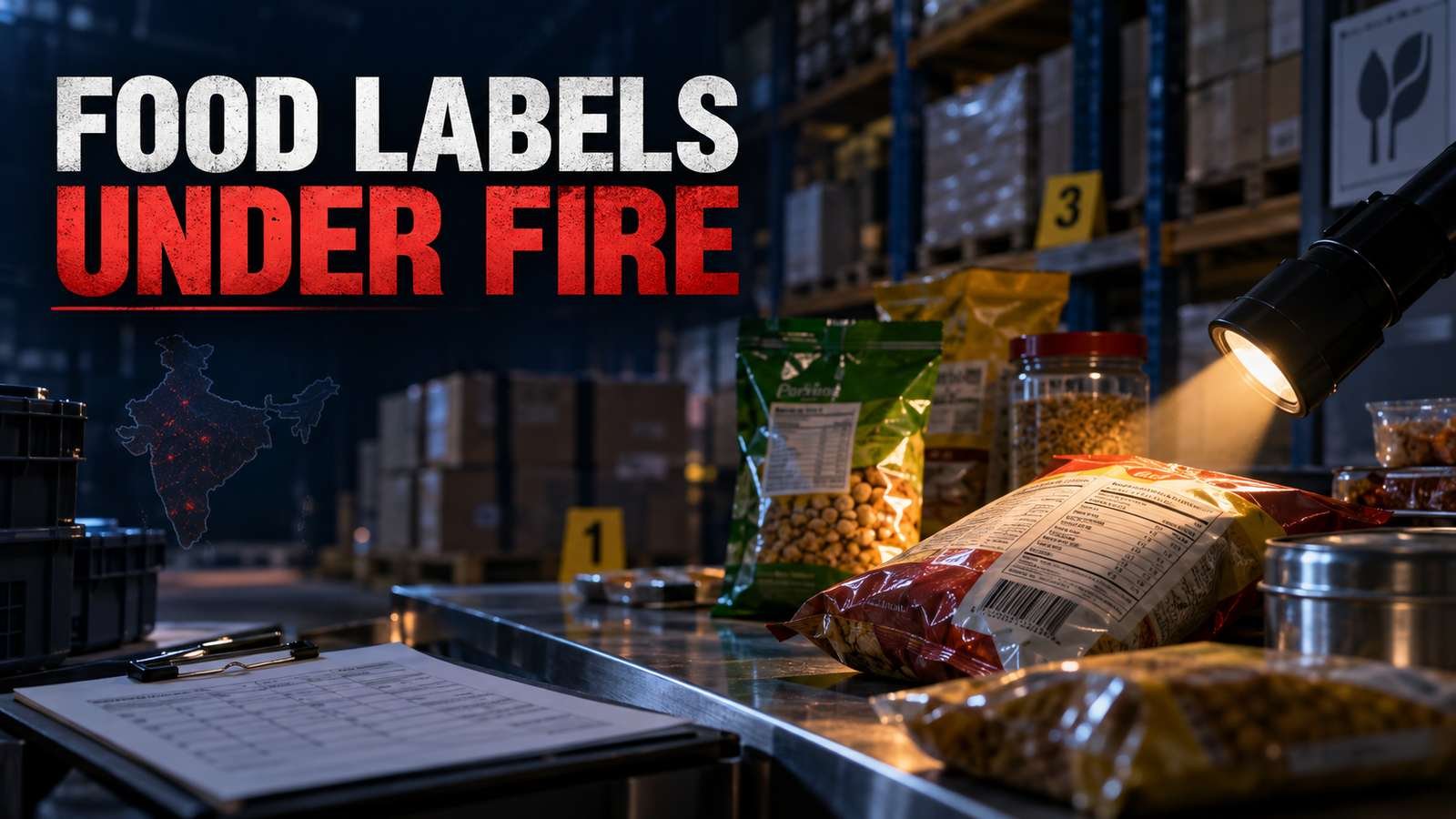
Hero visual created specifically for this article. Thumbnail text: “FOOD LABELS UNDER FIRE”. It is an editorial illustration, not a market-data screenshot.
Market-risk disclaimer
This article is for market education and information only. It is not investment advice, a recommendation or a promise of returns. Prices, policy decisions, deal terms and forecasts can change; verify the latest primary disclosures and assess risk independently.
- Final warning labels
- Recall data
- Warehouse compliance
Risk context: This article is for market education and information only. It is not investment advice, a recommendation or a promise of returns. Prices, policy decisions, deal terms and forecasts can change; verify the latest primary disclosures and assess risk independently.
- reuters.com2026-09-08
- fssai.gov.in2026-09-14
- fda.maharashtra.gov.in2026-09-14
- who.int2026-09-14
Related PriceVia analysis

AI Leaders Asked for a Slowdown — Zuckerberg Said Competition Is Safer Than Coordination
Meta’s chief says liability and rivalry already force responsible development, breaking with peers who support a pause on recursive self-improvement; antitrust now sits inside the safety debate.

New York Put a $1 Million Price on Every Data-Center Megawatt
The state wants host communities to receive at least $1 million for each megawatt of utility demand, turning power consumption into a direct development cost for AI infrastructure.

Tesla Put Cybercabs on Austin Roads — The Regulator Wants to Know Which Rules They Passed
Tesla must answer by September 30 whether temporary human controls supported certification of a robotaxi that lacks a steering wheel, pedals and mirrors; deployment moved faster than rulemaking.

Japan Is Taking Rates to a 31-Year High — The Cheap-Yen Trade Is Losing Its Anchor
A likely 25-basis-point increase would put the BOJ rate at 1.25% and near its neutral range; the global consequence is a less dependable funding currency for leveraged trades.