New Zealand Opened 95% of Its Tariff Door — India’s Bigger Prize Is the $20 Billion Pledge
Wellington’s parliament approved the bilateral agreement 93–29, clearing a major ratification step; tariff cuts are immediate for many goods, but investment delivery will decide the deeper value.
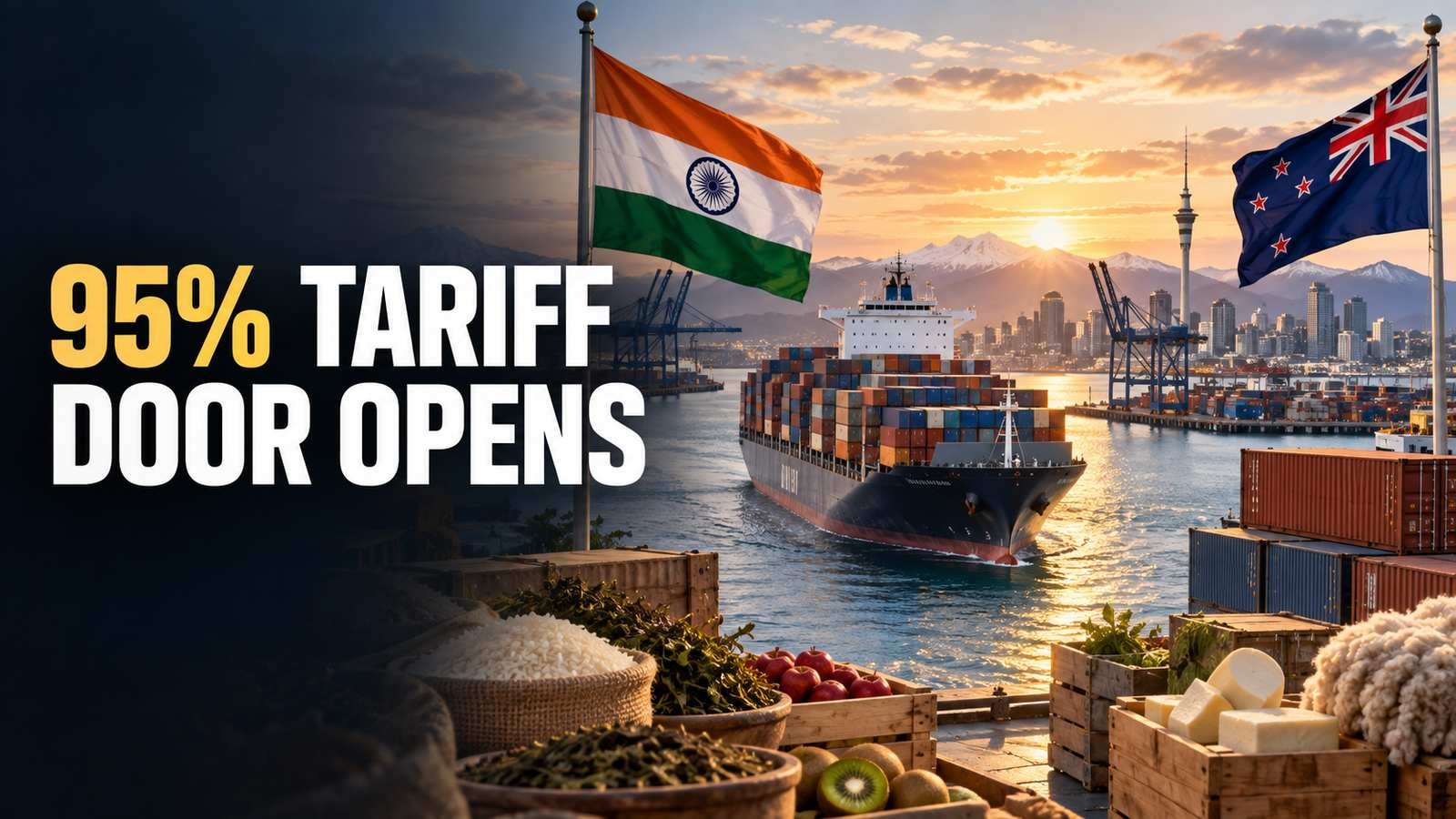
New Zealand Opened 95% of Its Tariff Door — India’s Bigger Prize Is the $20 Billion Pledge
*By PriceVia Policy Desk | Published September 16, 2026 | Updated September 16, 2026*
Why this matters now
Wellington’s parliament approved the bilateral agreement 93–29, clearing a major ratification step; tariff cuts are immediate for many goods, but investment delivery will decide the deeper value.
Key points
- Tariffs on about 95% of New Zealand exports to India will be eliminated or significantly reduced, with more than half duty-free on day one. - All Indian goods will receive duty-free access to New Zealand. - New Zealand agreed to invest $20 billion in India over 15 years, a promise whose sector mix and execution timetable now matter.
The numbers
| Metric | Value | Context | |---|---:|---| | Parliament vote | 93–29 | New Zealand approval | | NZ export coverage | ~95% | Tariffs cut or eliminated | | Immediate duty-free | More than half | Products covered | | Indian access | 100% duty-free | Goods entering New Zealand | | Investment pledge | $20bn | Over 15 years | | Two-way trade | NZ$3.99bn | Year to June 2026 |
What happened — confirmed facts
The implementation legislation passed with opposition Labour support. The two governments signed the agreement in April, and it will enter into force after both complete their ratification procedures. [S1, S2] India is New Zealand’s ninth-largest goods and services export market. Tariff savings can benefit New Zealand agriculture and services, while Indian exporters gain full duty-free access to a smaller but high-income market. [S1, S3]
What everyone is watching
Sensitive products, quotas, standards and rules of origin determine the real commercial opening. A tariff at zero does not help an exporter who cannot satisfy sanitary, certification or content rules. The $20 billion pledge deserves a project ledger. Infrastructure, renewable energy, food processing, education and services could absorb capital, but announcements become economic value only after approvals and funding close.
What the market may be missing — PriceVia analysis
PriceVia analysis: India’s asymmetric market size means the deal is strategically larger for New Zealand exporters, but India can use it as proof that its trade strategy is producing reciprocal access and capital commitments. Full duty-free treatment can help Indian textiles, pharmaceuticals, engineering goods and services, yet distance and shipping cost may matter more than the final tariff for some categories.
Positive case
Ratification finishes quickly, businesses use the rules and investment projects move from pledge to committed capital. Trade broadens beyond a narrow set of commodities and education services.
Downside case
Domestic sensitivities delay implementation, standards constrain utilisation or the investment figure remains aspirational. Import competition may become politically contentious in protected sectors.
What would change the story
Watch India’s ratification, the entry-into-force date, product schedules, investment announcements and customs utilisation. Binding funded projects would validate the $20 billion promise.
Related stocks and themes
Indian exporters, New Zealand agriculture, dairy-sensitive policy, pharmaceuticals, education, tourism, logistics, ports and Indo-Pacific trade.
How to read it
Identify product-level winners only after checking schedules and rules of origin. Track the investment pledge as commitments, not as money already deployed.
Reader checklist
- Confirm india ratification in a primary disclosure before changing the thesis. - Compare entry into force with the headline narrative; they may move in different directions. - Reassess after new information on funded investment projects rather than treating the first report as a completed outcome.
PriceVia View
The 95% tariff headline is tangible; the capital pledge is potentially transformative. The second deserves more scrutiny because it is easier to announce than to deliver.
Sources and timestamps
- [S1 — Reuters: New Zealand parliament passes India deal](https://www.reuters.com/world/india/new-zealand-parliament-passes-india-trade-deal-cutting-tariffs-most-exports-2026-09-16/) — published 2026-09-16 00:14 UTC; accessed 2026-09-16T13:15:00+05:30 - [S2 — New Zealand Parliament](https://www.parliament.nz/en/pb/bills-and-laws/) — published 2026-09-16; accessed 2026-09-16T13:15:00+05:30 - [S3 — New Zealand Ministry of Foreign Affairs and Trade](https://www.mfat.govt.nz/en/trade/free-trade-agreements) — published 2026-09-16; accessed 2026-09-16T13:15:00+05:30 - [S4 — India Department of Commerce FTAs](https://commerce.gov.in/international-trade/trade-agreements/) — published 2026-09-16; accessed 2026-09-16T13:15:00+05:30
Visual disclosure
Hero visual created specifically for this article. Thumbnail text: “95% TARIFF DOOR OPENS”. It is an editorial illustration, not a market-data, legal or regulatory screenshot.
Market-risk disclaimer
This article is for market education and information only. It is not investment advice, a recommendation or a promise of returns. Market prices, policy decisions, deal terms and forecasts can change. Verify the latest primary disclosures and assess suitability and risk independently.
- India ratification
- Entry into force
- Funded investment projects
Risk context: This article is for market education and information only. It is not investment advice, a recommendation or a promise of returns. Market prices, policy decisions, deal terms and forecasts can change. Verify the latest primary disclosures and assess suitability and risk independently.
- reuters.com2026-09-16 00:14 UTC
- parliament.nz2026-09-16
- mfat.govt.nz2026-09-16
- commerce.gov.in2026-09-16
Related PriceVia analysis
India’s Trade Deficit Shrunk to $26.86 Billion — Oil Is Already Reversing the Relief
A plunge in gold and other imports produced a much smaller deficit than economists expected, but crude costs surged and September’s oil basket moved near $110, threatening the improvement.
US LNG Returned to China on a 20-Year Contract — Tariffs Still Sit in the Middle
China Gas will buy 500,000 tonnes a year from Venture Global starting in 2030, reviving long-term US energy trade even as a 15% Chinese tariff and weak LNG demand complicate the economics.
India’s Inflation Hit 4.82% — The Onion Shock Is Not the Number RBI Fears Most
Retail inflation reached an eight-month high and food inflation climbed to 5.95%; the policy question is whether pressure is spreading beyond volatile vegetables into a stickier household-cost problem.
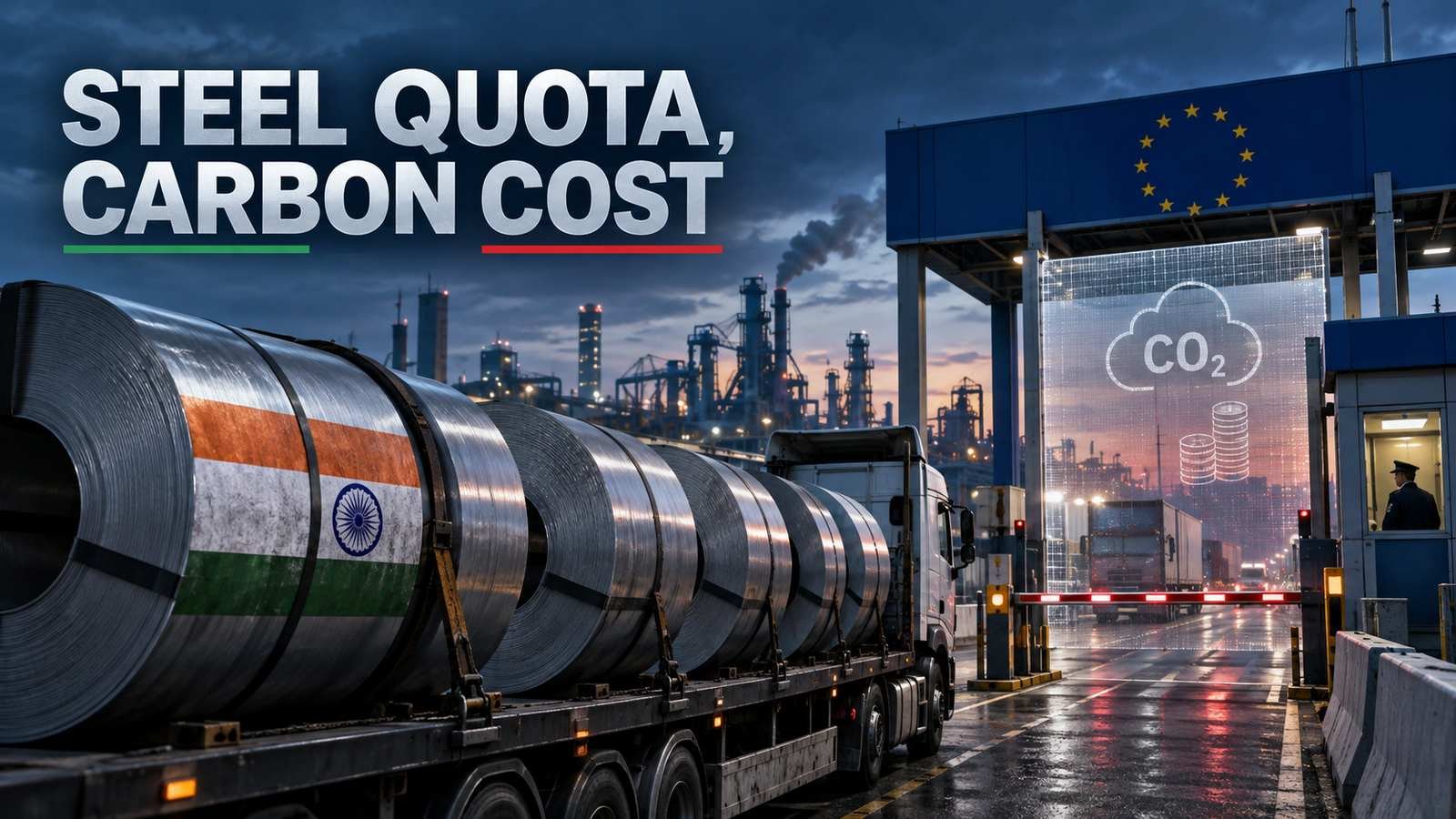
India Won a 1.64-Million-Tonne EU Steel Door — Carbon Still Collects at the Gate
The trade arrangement improves market access and protects higher-value products, yet EU carbon charges and a 50% out-of-quota duty mean volume access is not the same as profitable access.