Sponge Iron Hit a Two-Year High — India’s Steel Squeeze Starts Before the Furnace
Imported coal rose as much as 20% and domestic supply tightened, pushing the benchmark to ₹29,700 a tonne and exposing smaller steelmakers to a raw-material shock.
Sponge Iron Hit a Two-Year High — India’s Steel Squeeze Starts Before the Furnace
**Imported coal rose as much as 20% and domestic supply tightened, pushing the benchmark to ₹29,700 a tonne and exposing smaller steelmakers to a raw-material shock.**
*By PriceVia Economy Desk | Published September 10, 2026 | Updated September 10, 2026*
Why this matters now
Imported coal rose as much as 20% and domestic supply tightened, pushing the benchmark to ₹29,700 a tonne and exposing smaller steelmakers to a raw-material shock.
Key points
- Benchmark sponge-iron prices reached ₹29,700 a tonne in August, the highest in two years. - India has about 336 plants producing roughly 50 million tonnes annually. - The sector consumes around 40% of India’s imported coal, making freight and supply disruption a direct margin risk.
The numbers
| Metric | Value | Context | |---|---:|---| | Benchmark price | ₹29,700/t | August | | Price marker | 2-year high | Reported | | Plants | 336 | India | | Annual output | ~50 MT | Capacity/production scale | | Import-coal share | ~40% | Sector consumption | | Coal rise | Up to 20% | Since May |
What happened
India’s benchmark sponge-iron price rose to ₹29,700 per tonne in August, its highest in two years, as imported coal became costlier and domestic availability tightened. India is the largest producer, with roughly 336 plants and annual output near 50 million tonnes. [S1, S2] The steel and sponge-iron sector consumes about 40% of Indian coal imports. Thermal-coal arrivals fell 19% in July and 11% in June amid higher freight and insurance costs, while some Indonesian, Russian and South African grades gained as much as 20% from May. [S1, S3]
What everyone is watching
Secondary steelmakers will watch whether sponge-iron inflation passes into billets, rebar and long products. Producers with captive mines or secure linkages may gain relative advantage; spot buyers face margin compression when customers resist price increases. Domestic allocation is the second variable. Power generation often receives priority during periods of tight supply. Monsoon disruption to mining and rail transport can amplify scarcity even when annual coal production appears adequate.
What the market may be missing
PriceVia analysis: the squeeze begins upstream of finished steel. A builder may see rebar prices later, but the first stress appears in coal procurement and sponge-iron conversion. Following only large integrated steel producers can miss the pain among smaller mills. High prices can attract imports or production restarts, yet each response has a lag. Shipping routes, insurance, rail rakes and kiln utilisation determine how fast supply arrives; the benchmark can remain elevated even after global coal stops rising.
Positive case
Domestic coal dispatch improves after the monsoon, freight normalises and strong construction demand supports pass-through. Efficient plants preserve spreads while higher utilisation offsets unit costs.
Downside case
Coal stays expensive, power-sector priority restricts supply and finished-steel buyers reject increases. Smaller mills cut utilisation, working capital rises and the squeeze spreads into downstream construction materials.
What would change the story
Watch coal-import volumes, origin prices, rail dispatches, power-plant stocks, sponge-iron output, billet spreads and rebar prices. Falling feedstock cost with stable demand would ease the pressure.
Related stocks and themes
Coal India, NMDC, SAIL, Tata Steel, JSW Steel, secondary steelmakers, rebar, construction, thermal coal, rail logistics and freight insurance.
Reader checklist
Separate the confirmed event from the forward case. Track coal dispatches, sponge-iron spreads and downstream pass-through; then compare those signals with management or regulator disclosures. The headline establishes why sponge iron matters now, but the next measurable milestone decides whether attention becomes durable value. Until that evidence arrives, valuation and scenario claims should remain conditional rather than certain.
PriceVia View
Finished-steel prices are the visible result; sponge iron is the earlier warning. The decisive indicator is whether coal supply normalises before downstream buyers refuse further increases.
Sources and timestamps
- [S1 — Reuters: prices, imports and coal shortage](https://www.reuters.com/world/india/indian-sponge-iron-two-year-high-boosted-by-costly-coal-imports-domestic-2026-09-09/) — published 2026-09-09; accessed 2026-09-10T09:55:00+05:30 - [S2 — Ministry of Steel: monthly reports](https://steel.gov.in/monthly-summary) — published accessed 2026-09-10; accessed 2026-09-10T09:55:00+05:30 - [S3 — Ministry of Coal: production and dispatch statistics](https://coal.gov.in/en/major-statistics/production-and-supplies) — published accessed 2026-09-10; accessed 2026-09-10T09:55:00+05:30 - [S4 — Coal Controller: coal statistics](https://coalcontroller.gov.in/) — published accessed 2026-09-10; accessed 2026-09-10T09:55:00+05:30
Visual disclosure
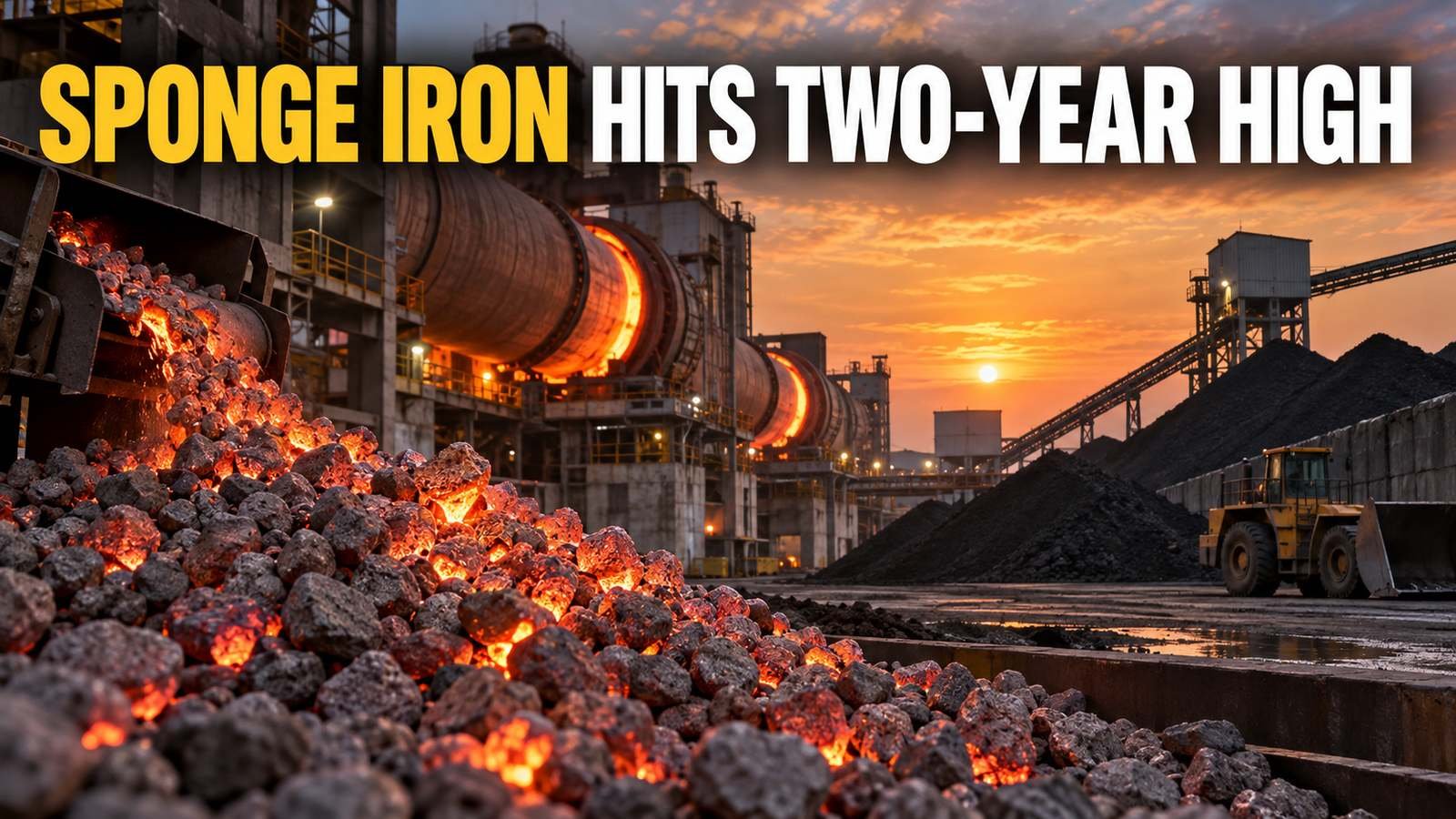
Hero visual created specifically for this article. Thumbnail text: “SPONGE IRON HITS TWO-YEAR HIGH”. It is an editorial illustration, not a market-data screenshot.
Market-risk disclaimer
This article is for market education and information only. It is not investment advice, a recommendation or a promise of returns. Prices, approvals, deal terms and forecasts can change; verify the latest primary disclosures and assess risk independently.
- Coal dispatches
- Sponge-iron spreads
- Downstream pass-through
Risk context: This article is for market education and information only. It is not investment advice, a recommendation or a promise of returns. Prices, approvals, deal terms and forecasts can change; verify the latest primary disclosures and assess risk independently.
- reuters.com2026-09-09
- steel.gov.inaccessed 2026-09-10
- coal.gov.inaccessed 2026-09-10
- coalcontroller.gov.inaccessed 2026-09-10
Related PriceVia analysis

AI Leaders Asked for a Slowdown — Zuckerberg Said Competition Is Safer Than Coordination
Meta’s chief says liability and rivalry already force responsible development, breaking with peers who support a pause on recursive self-improvement; antitrust now sits inside the safety debate.

New York Put a $1 Million Price on Every Data-Center Megawatt
The state wants host communities to receive at least $1 million for each megawatt of utility demand, turning power consumption into a direct development cost for AI infrastructure.

Tesla Put Cybercabs on Austin Roads — The Regulator Wants to Know Which Rules They Passed
Tesla must answer by September 30 whether temporary human controls supported certification of a robotaxi that lacks a steering wheel, pedals and mirrors; deployment moved faster than rulemaking.

Japan Is Taking Rates to a 31-Year High — The Cheap-Yen Trade Is Losing Its Anchor
A likely 25-basis-point increase would put the BOJ rate at 1.25% and near its neutral range; the global consequence is a less dependable funding currency for leveraged trades.