LIC Can Nearly Double Its ICICI Bank Stake to 9.99% — But Approval Is Not a Purchase
RBI has given LIC a one-year window to raise its aggregate holding from about 4.35%, creating flexibility rather than an obligation to buy immediately.
RBI has given LIC a one-year window to raise its aggregate holding from about 4.35%, creating flexibility rather than an obligation to buy immediately.
Key points
- LIC received RBI permission to hold up to 9.99% of ICICI Bank’s paid-up share capital or voting rights. - The insurer’s reported current holding is about 4.35%, so the approval creates room for a substantial increase. - The permission expires after one year if unused and remains subject to banking, securities and foreign-exchange rules.
The numbers
| Metric | Value | Context | |---|---:|---| | Maximum permitted holding | 9.99% | Paid-up capital or voting rights | | Reported current holding | 4.35% | Before any new acquisition | | Potential headroom | 5.64 pp | Maximum minus reported holding | | Approval window | 1 year | From RBI letter date | | Major holding trigger | 5% | Prior RBI approval framework |
What happened
ICICI Bank disclosed that the Reserve Bank of India had permitted Life Insurance Corporation of India to acquire an aggregate holding of up to 9.99% of the bank's paid-up share capital or voting rights. The permission must be used within one year, after which it lapses if the approved holding is not acquired. [S1, S2] Reports place LIC's existing stake near 4.35%. The approval therefore creates headroom of about 5.64 percentage points, but it does not say how much LIC intends to purchase, at what price, or on what schedule. Applicable banking, securities and foreign-exchange conditions continue to apply. [S1, S3, S4]
What everyone is watching
The market will watch exchange disclosures and shareholding data for evidence of actual buying. Because ICICI Bank is liquid and widely owned, acquisitions could be spread across time and venues. An approval headline may influence sentiment before any meaningful ownership change appears in quarterly filings. Another question is portfolio concentration. LIC already has significant exposure to major Indian banks. Increasing ICICI Bank could reflect confidence in private-bank earnings and asset quality, but it must also fit the insurer's internal limits, liabilities, valuation discipline and broader allocation needs.
The PriceVia angle
PriceVia analysis: this is an option, not a completed flow. RBI approval removes a regulatory ceiling that would otherwise block LIC from crossing the major-shareholding threshold, yet the economic event occurs only when the insurer deploys capital. Investors should not translate 9.99% directly into a guaranteed order book for the stock. The useful signal is pace. Slow accumulation would suggest valuation sensitivity and portfolio flexibility. Rapid movement toward the ceiling would be a stronger institutional-conviction signal, but it could also raise questions about concentration and future exit liquidity.
Positive scenario
LIC buys selectively at attractive valuations while ICICI Bank sustains loan growth, asset quality and return ratios. A patient institutional shareholder can provide demand stability without changing management control or the bank's operating strategy.
Risk scenario
The market prices in demand that never arrives, or LIC accumulates before bank earnings weaken. Regulatory conditions, internal allocation decisions or valuation could keep the actual holding far below 9.99%, making the initial excitement temporary.
What would change the story
Watch LIC and ICICI Bank disclosures, quarterly shareholding patterns, bulk or block transactions, insurer investment income, bank valuation and any RBI conditions. The story becomes materially stronger only when reported ownership rises and the purchase price can be assessed.
Related stocks and themes
LIC, ICICI Bank, HDFC Bank, Indian private banks, public-sector institutional ownership, banking regulation, insurer portfolios and large-cap liquidity.
Sources and timestamps
- [S1 — Mint: ICICI Bank disclosure of RBI approval and one-year window](https://www.livemint.com/market/stock-market-news/stocks-to-watch-lic-gets-rbi-approval-to-acquire-up-to-9-99-stake-in-icici-bank-11788605077824.html) — published 2026-09-05; accessed 2026-09-06T12:15:00+05:30 - [S2 — Economic Times: RBI permits LIC holding up to 9.99%](https://economictimes.indiatimes.com/industry/banking/finance/banking/rbi-approves-lic-to-acquire-up-to-9-99-stake-in-icici-bank/articleshow/133791372.cms) — published 2026-09-05; accessed 2026-09-06T12:15:00+05:30 - [S3 — Financial Express: existing stake and regulatory conditions](https://www.financialexpress.com/business/news/lic-gets-rbi-nod-to-raise-stake-in-icici-bank-to-9-99/4332643/) — published 2026-09-05; accessed 2026-09-06T12:15:00+05:30 - [S4 — RBI: 2025 directions on bank shareholding and voting rights](https://www.rbi.org.in/scripts/NotificationUser.aspx?Id=13166&Mode=0) — published 2025-11-28; accessed 2026-09-06T12:15:00+05:30
Visual disclosure
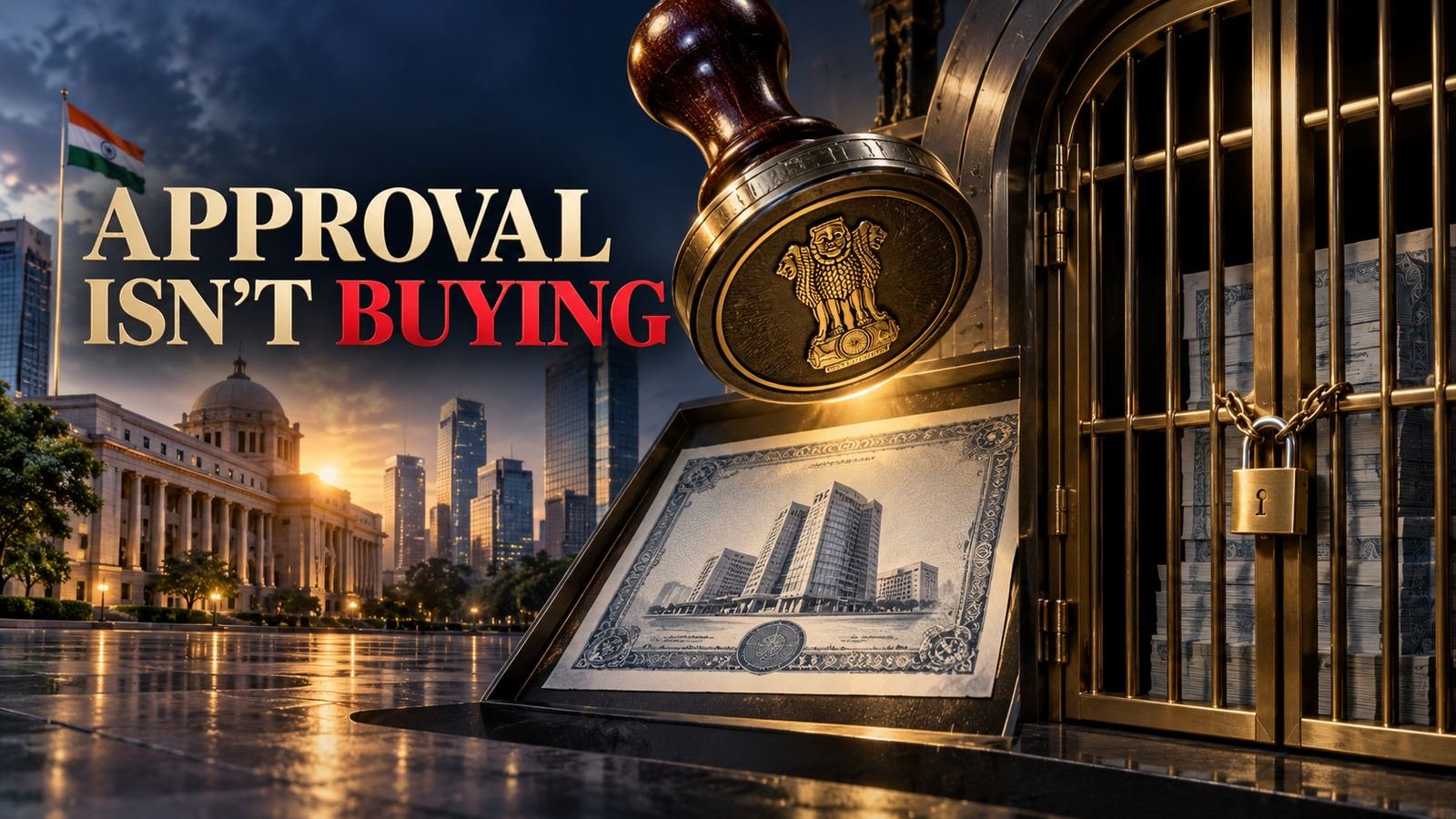
Hero visual created specifically for this article. Thumbnail text: “APPROVAL ISN'T BUYING”. It is an editorial illustration, not a market-data screenshot.
Market-risk disclaimer
This article is for market education and information only. It is not investment advice, a recommendation, or a promise of returns. Market prices, transaction terms, approvals and company plans can change; verify the latest primary disclosures and assess risk independently.
- Actual LIC buying
- Quarterly ownership change
- Valuation and regulatory conditions
Risk context: This article is for market education and information only. It is not investment advice, a recommendation, or a promise of returns. Market prices, transaction terms, approvals and company plans can change; verify the latest primary disclosures and assess risk independently.
- livemint.com2026-09-05
- economictimes.indiatimes.com2026-09-05
- financialexpress.com2026-09-05
- rbi.org.in2025-11-28
Related PriceVia analysis

Airbus Delivered 475 Jets — The Hard Part of Its 870-Aircraft Target Starts Now
Deliveries rose 9% through August and A330 handovers restarted, yet the company still needs 395 aircraft in four months to reach its full-year goal.
Reliance Gave Wabag a 13-Month Water Job — The Bigger Signal Is Inside Jamnagar’s Green Complex
The ₹100–250 crore repeat order covers chemical, biological and sludge treatment at Reliance’s green-energy manufacturing hub, linking industrial water to the clean-tech build-out.
Bubs Australia Won Permanent US Access — Then Its Shares Jumped 45%
The FDA authorised three infant-formula products for permanent US marketing, replacing emergency-era uncertainty and opening a path to branded and private-label expansion.

Mazagon Dock Just Won an AI-Security Order — And It Has Nothing to Do With Building Ships
The defence shipyard will deploy an AI-enabled security system across five Maharashtra transmission substations, creating a small but strategically unusual diversification test.