SEBI May Give Institutions Half of SME IPOs — The Bigger Change Could Be Killing the ₹2 Lakh Trading Lot
Proposed reforms could simultaneously raise the quality bar for SME issuers and make post-listing trading far more accessible, changing both who gets shares and who can trade them.
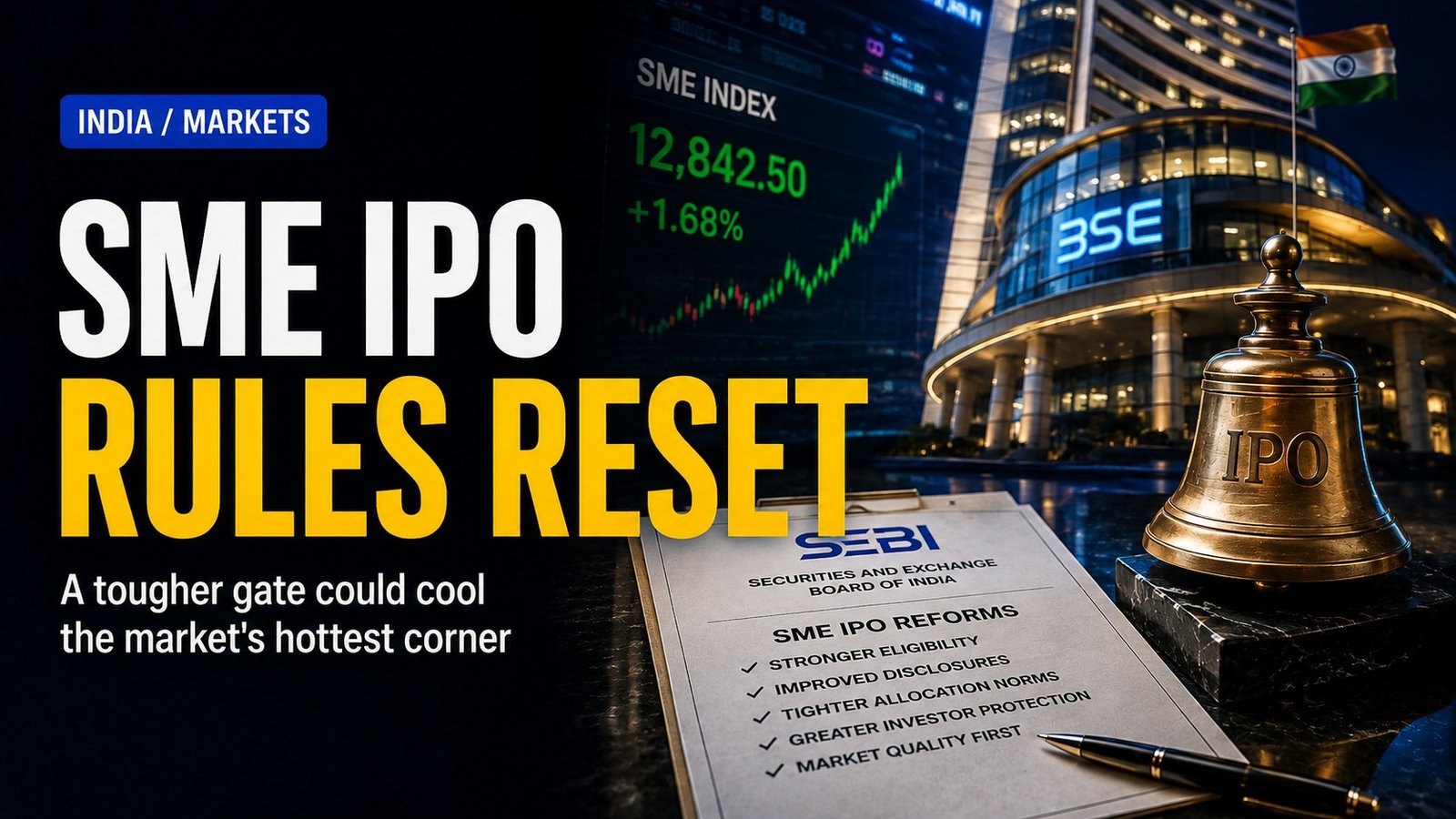
SEBI is considering a broad reset of the SME IPO market, including a larger institutional allocation, tougher profitability requirements, higher company-size limits and the possibility of allowing single-share trading instead of today’s expensive lot structure.
The proposals pull in two directions at once. Entry into the public market could become harder for weaker issuers, while trading after listing could become easier for ordinary investors. That combination can materially change how the SME platform behaves.
WHAT HAPPENED
Reuters reported that the regulator is examining rules that could reserve as much as half of some offerings for qualified institutional buyers, raise operating-profit thresholds and adjust company-size limits for SME platforms.
SEBI is also considering allowing trading in single shares rather than the current structure that can require roughly ₹2 lakh of capital for one lot. The discussions follow warnings about misuse of IPO proceeds and investigations into inflated subscription practices and unusually high intermediary fees.
WHAT EVERYONE IS WATCHING
The market will focus on whether more institutional participation reduces manipulation.
The larger structural question is liquidity. Large trading lots can make SME shares difficult to enter or exit, concentrating activity among investors willing to commit more capital. Single-share trading could broaden participation — but it could also increase speculative turnover if surveillance does not improve at the same time.
WHAT THE MARKET MAY BE MISSING
Institutional reservation and lower trade sizes solve different problems.
QIB participation adds due diligence and price discovery before listing. Smaller lots improve access after listing. Stronger issuer-profit requirements filter who can enter the market at all.
If SEBI combines all three, the SME platform could become more like a scaled-down main board rather than a separate speculative market.
THE NUMBERS
• Potential QIB reservation discussed: up to 50% • Current SME trading structure can require roughly ₹2 lakh per lot • Reform areas: institutional quotas, profit criteria, issuer-size limits and trading lots • Policy status: under consideration, not a final notified framework • Motivation: strengthen integrity after concerns around fund use, fees and subscription practices
POSITIVE CASE
Better screening and deeper institutional participation improve the credibility of SME listings, while smaller trade sizes enhance liquidity and price discovery.
DOWNSIDE CASE
Retail participation expands faster than governance quality, creating more speculation rather than better markets. Tougher thresholds could also reduce legitimate fundraising access for young companies.
WHAT WOULD CHANGE THE STORY
A formal SEBI consultation paper or circular, exact QIB percentages, profit thresholds, lot-size rules and implementation dates will determine the actual impact.
RELATED THEMES
SME IPOs, BSE SME, NSE Emerge, investment banks, QIBs, retail investors, market surveillance and primary markets.
PRICEVIA VIEW
The reform is not simply about making SME IPOs safer. It could redesign the entire funnel — who is allowed to list, who gets allocated shares and how easily those shares trade afterward.
SOURCES & TIMESTAMP
Reuters/Business Standard reporting dated August 28 and SEBI’s current legal/circular repository checked August 30. Proposals remain under consideration rather than final rules.
MARKET-RISK DISCLAIMER
For information and education only; not investment advice. Markets, regulatory outcomes, transaction terms and company guidance can change. Time-sensitive facts should be rechecked before acting.
Related PriceVia analysis

NSE’s $47 Billion IPO Could List This Month — But the Exchange Gets None of the Cash
Regulatory clearance has put a September listing in sight, but the proposed 148.9-million-share issue is entirely an offer for sale—so the money goes to existing shareholders, not NSE.

Tata Motors’ €3.82 Billion Iveco Offer Opens Tomorrow — 80% Is the Threshold That Changes the Deal
The €14.10-a-share offer has board backing and a committed 27.06% holder, but acceptance between 80% and 95% triggers a different route to control and delisting.
TCS Put ₹70,000 Crore Behind a 1-GW AI Campus — The Power Bill Is the Number Investors Need Next
HyperVault has secured 264 acres in Hyderabad for a data-centre campus of up to 1 GW, but phased demand, electricity access and utilisation will decide whether the record-scale plan earns its cost of capital.
Bharat Forge Is Bringing 70-mm Rockets to India — Early 2027 Is the Date That Decides the Story
A strategic alliance promises Indian assembly of unguided and laser-guided rockets, but the investable signal is not the announcement—it is whether technology transfer becomes qualified production on schedule.