Sterlite Tech Just Locked a $288 Million Hyperscaler Contract — The Risk-Sharing Clause Matters More Than the Headline
STL’s new three-year fibre agreement gives investors unusually long visibility into AI-data-centre demand, but the contract also makes both demand shortfalls and supply shortages financially relevant.
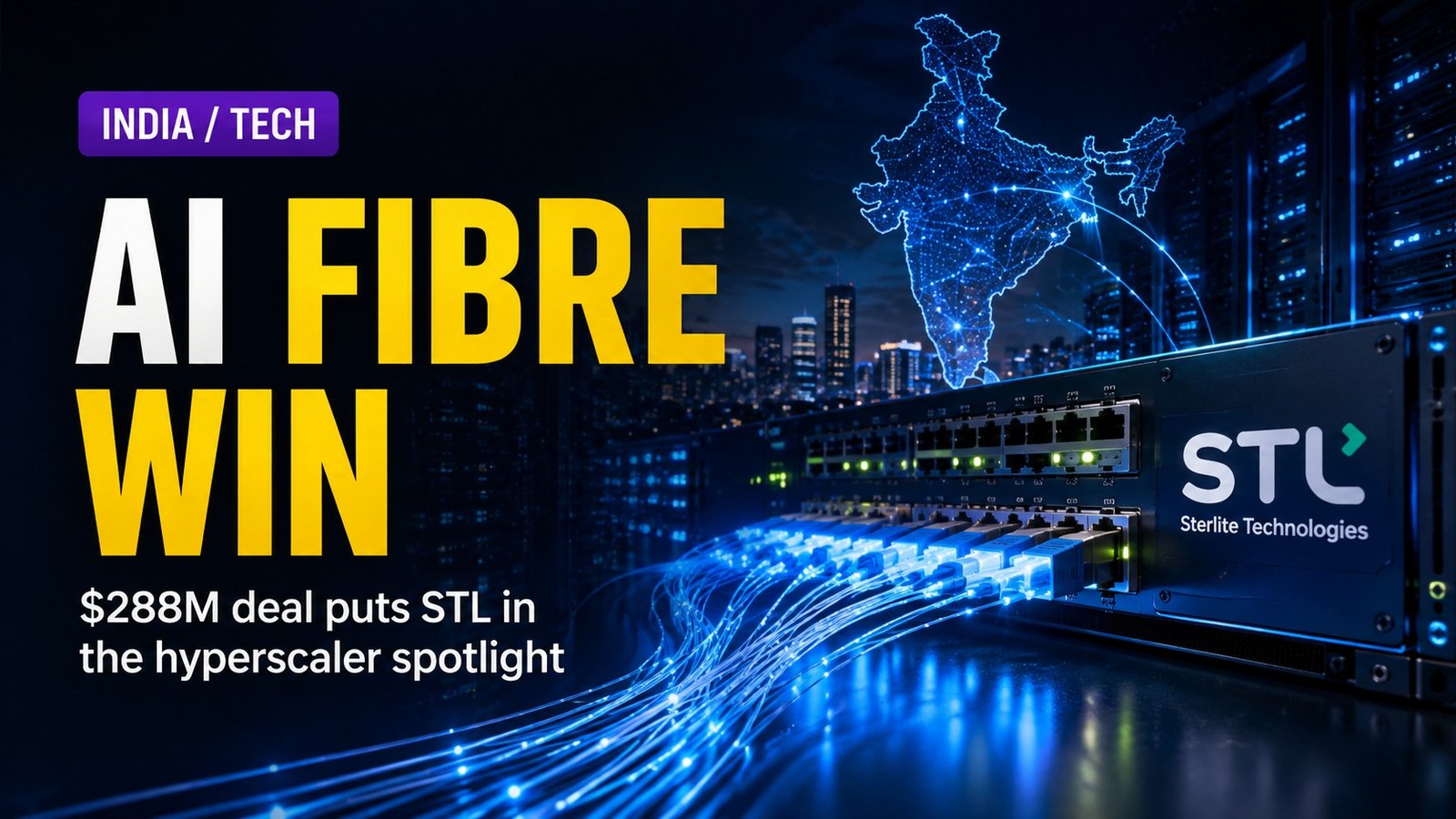
Sterlite Technologies has signed a long-term supply agreement worth approximately $288 million with a leading international hyperscaler for high-density optical fibre cable products. The contract runs across calendar years 2027 to 2029 and can be extended by another two years by mutual consent.
The obvious story is the size. The more useful PriceVia angle is the structure: purchase orders will arrive periodically, while both parties have capped financial liabilities if demand falls short or STL cannot provide contracted capacity. That turns an AI-infrastructure growth contract into a test of planning discipline on both sides.
WHAT HAPPENED
The company disclosed the agreement after market hours on August 29. Its filing says annual allocations will be based on customer specifications, with orders released through the contract period.
The agreement covers three calendar years, with a potential two-year extension, and explicitly creates a reciprocal risk-sharing framework for demand shortfalls and supply-capacity shortages.
STL entered the deal after reporting a record Q1 FY27 order book of ₹18,618 crore, giving the new agreement a broader backlog context rather than making it a one-off order headline.
WHAT EVERYONE IS WATCHING
Investors will focus on the $288 million value and how much it can add to future revenue.
The more important questions are the annual allocation schedule, product mix, margin profile and whether the hyperscaler’s demand remains high enough to fully utilise the framework. Because purchase orders are periodic, the headline contract value should not be treated as instant revenue.
WHAT THE MARKET MAY BE MISSING
The reciprocal liability clause is unusual enough to deserve attention.
It suggests the customer wants supply certainty during a period of intense data-centre build-out, while STL wants protection against committing manufacturing capacity that the customer later does not use. In other words, the agreement is not only a sales win; it is evidence that fibre capacity itself is becoming strategically valuable in AI infrastructure.
That can improve utilisation and revenue visibility — but it also raises execution consequences if STL cannot deliver.
THE NUMBERS
• Approximate contract value: $288 million • Initial term: CY2027 through CY2029 • Potential extension: two additional years by mutual consent • Product: high-density optical fibre cable • Purchase orders: periodic during the contract • Q1 FY27 order book previously reported by STL: ₹18,618 crore
POSITIVE CASE
Hyperscaler demand remains strong, annual allocations are fully converted into purchase orders and STL uses the contract to improve manufacturing utilisation and international mix. A two-year extension would further lengthen visibility.
DOWNSIDE CASE
AI data-centre spending slows, the customer draws less than expected or STL faces capacity constraints. The reciprocal liability structure means planning errors can carry a direct financial cost rather than only lost opportunity.
WHAT WOULD CHANGE THE STORY
Annual order releases, margin commentary, customer concentration, capacity utilisation and any extension beyond 2029 will determine how much of the $288 million becomes high-quality earnings.
RELATED THEMES
Sterlite Technologies, optical fibre, hyperscalers, AI data centres, telecom infrastructure, cloud capex and global connectivity.
PRICEVIA VIEW
The number gets attention; the contract architecture gives the signal. A hyperscaler is willing to share financial risk around future fibre demand, which says something about how strategically scarce reliable capacity has become.
SOURCES & TIMESTAMP
Sterlite Technologies Regulation 30 filing dated August 29, 2026; company Q1 FY27 release and exchange-announcement aggregators, accessed August 30 morning IST.
MARKET-RISK DISCLAIMER
For information and education only; not investment advice. Markets, regulatory outcomes, transaction terms and company guidance can change. Time-sensitive facts should be rechecked before acting.
Related PriceVia analysis
Airbus Delivered 475 Jets — The Hard Part of Its 870-Aircraft Target Starts Now
Deliveries rose 9% through August and A330 handovers restarted, yet the company still needs 395 aircraft in four months to reach its full-year goal.

Reliance Gave Wabag a 13-Month Water Job — The Bigger Signal Is Inside Jamnagar’s Green Complex
The ₹100–250 crore repeat order covers chemical, biological and sludge treatment at Reliance’s green-energy manufacturing hub, linking industrial water to the clean-tech build-out.
Bubs Australia Won Permanent US Access — Then Its Shares Jumped 45%
The FDA authorised three infant-formula products for permanent US marketing, replacing emergency-era uncertainty and opening a path to branded and private-label expansion.
Mazagon Dock Just Won an AI-Security Order — And It Has Nothing to Do With Building Ships
The defence shipyard will deploy an AI-enabled security system across five Maharashtra transmission substations, creating a small but strategically unusual diversification test.