Bill Gates-Backed TerraPower Wants UK Nuclear Power by 2034 — The Fuel Bottleneck Comes First
The developer is taking its 345 MW sodium-cooled reactor through Britain’s design assessment, but has no UK site yet and depends on scarce HALEU fuel and regulatory execution.
Bill Gates-Backed TerraPower Wants UK Nuclear Power by 2034 — The Fuel Bottleneck Comes First
**The developer is taking its 345 MW sodium-cooled reactor through Britain’s design assessment, but has no UK site yet and depends on scarce HALEU fuel and regulatory execution.**
*By PriceVia Global Desk | September 7, 2026*
Why now
The developer is taking its 345 MW sodium-cooled reactor through Britain’s design assessment, but has no UK site yet and depends on scarce HALEU fuel and regulatory execution.
Key points
- TerraPower is targeting electricity from a first British Natrium reactor by 2034. - The 345 MW sodium-cooled design can boost output to 500 MW using molten-salt storage. - No UK site has been selected; licensing, financing and HALEU fuel supply remain gating items.
The numbers
| Metric | Value | Context | |---|---:|---| | UK target | 2034 | First electricity | | Base output | 345 MW | Natrium reactor | | Boost output | 500 MW | With storage | | US target | 2031 | Wyoming first plant | | Price ambition |
What happened
TerraPower, the advanced-nuclear developer founded by Bill Gates, is targeting 2034 for a first Natrium plant to begin generating electricity in Britain. The United Kingdom would be its first international market. TerraPower UK has entered the country’s three-step Generic Design Assessment, but it has not selected a site or announced a final commercial structure. [S1, S2] Natrium combines a 345 MW sodium-cooled fast reactor with molten-salt energy storage that can lift output to about 500 MW when demand is high. TerraPower says the architecture can complement variable wind and solar and is aiming for electricity below £100 per megawatt-hour. Its first project in Wyoming is targeting operation around 2031. [S1, S3]
What everyone is watching
The 2034 date depends on several sequential decisions: design acceptance, a site, planning and nuclear-site licences, financing, supply-chain commitments, construction and fuel. Generic Design Assessment reviews the reactor concept; it is not permission to build at a particular location. Each subsequent gate can add time. Fuel is a central constraint. Natrium requires high-assay low-enriched uranium, or HALEU, whose commercial supply is limited outside Russia. The United States and allies are funding domestic capacity, but enrichment and fabrication plants take years. A reactor can clear design review and still wait for a bankable fuel schedule.
The overlooked PriceVia angle
PriceVia analysis: Natrium is partly a power-flexibility product. Conventional nuclear economics emphasise continuous output, while the storage system allows the nuclear island to run steadily and the grid-facing output to rise when prices or demand spike. If demonstrated, that could make advanced reactors more compatible with renewable-heavy systems. The claimed sub-£100/MWh ambition should remain a target, not a forecast. First-of-a-kind projects bear engineering, regulatory and financing premiums. Repeat builds, standardised components and lower construction risk are normally required before headline levelised-cost estimates become customer bills.
Positive scenario
The UK assessment advances on schedule, government and investors select a credible site, HALEU supply expands and the Wyoming plant validates construction and performance. Britain then gains dispatchable low-carbon capacity with storage-like flexibility.
Risk scenario
Licensing or siting takes longer, fuel remains scarce and the first US project exposes higher costs. The 2034 target slips while competing reactors, grids, renewables and storage secure the available capital and connections.
What would change the story
Watch each UK assessment step, site selection, government support, offtake terms, construction licence, final cost, HALEU contracts and Wyoming milestones. A financed UK site with secured fuel would move the plan from technology ambition toward an investable project.
Related stocks and themes
Advanced nuclear, uranium enrichment, HALEU, UK power markets, sodium-cooled reactors, energy storage, Meta data centres, grid flexibility and clean-energy finance.
Sources and timestamps
- [S1 — TerraPower: UK launch and design assessment](https://www.terrapower.com/TerraPower-Takes-Major-Step-Forward-in-UK-Deployment-with-launch-of-TerraPower-UK-and-Start-of-GDA-Step-1-for-Natrium-Reactor) — published 2026-06-30; accessed 2026-09-07T23:55:00+05:30 - [S2 — UK ONR: three-step Generic Design Assessment](https://www.onr.org.uk/news/all-news/2026/06/terrapower-natrium-3-step-generic-design-assessment-starts) — published 2026-06-30; accessed 2026-09-07T23:55:00+05:30 - [S3 — Reuters: 2034 target, output and cost ambition](https://www.reuters.com/business/energy/gates-backed-terrapower-targets-british-nuclear-power-plant-start-by-2034-2026-09-07/) — published 2026-09-07; accessed 2026-09-07T23:55:00+05:30 - [S4 — US DOE: Wyoming construction permit context](https://www.energy.gov/ne/articles/nrc-issues-construction-permit-terrapowers-natrium-advanced-reactor) — published 2026-03-09; accessed 2026-09-07T23:55:00+05:30
Visual disclosure
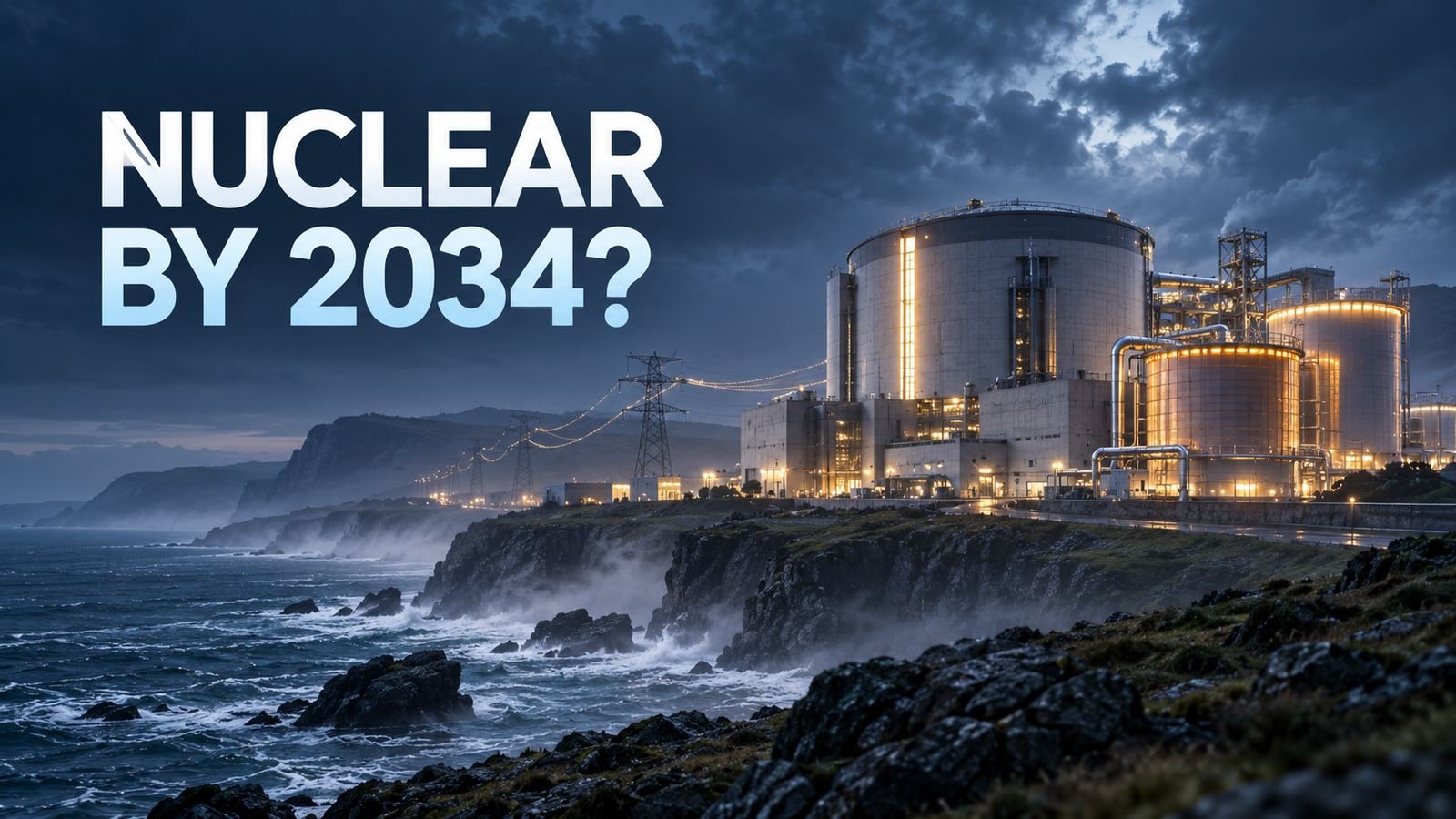
Hero visual created specifically for this article. Thumbnail text: “NUCLEAR BY 2034?”. It is an editorial illustration, not a market-data screenshot.
Market-risk disclaimer
This article is for market education and information only. It is not investment advice, a recommendation, or a promise of returns. Prices, transaction terms, approvals, company plans and regulations can change; verify the latest primary disclosures and assess risk independently.
- UK site selection
- HALEU supply
- Wyoming project milestones
Risk context: This article is for market education and information only. It is not investment advice, a recommendation, or a promise of returns. Prices, transaction terms, approvals, company plans and regulations can change; verify the latest primary disclosures and assess risk independently.
- terrapower.com2026-06-30
- onr.org.uk2026-06-30
- reuters.com2026-09-07
- energy.gov2026-03-09
Related PriceVia analysis

AI Leaders Asked for a Slowdown — Zuckerberg Said Competition Is Safer Than Coordination
Meta’s chief says liability and rivalry already force responsible development, breaking with peers who support a pause on recursive self-improvement; antitrust now sits inside the safety debate.
New York Put a $1 Million Price on Every Data-Center Megawatt
The state wants host communities to receive at least $1 million for each megawatt of utility demand, turning power consumption into a direct development cost for AI infrastructure.

Tesla Put Cybercabs on Austin Roads — The Regulator Wants to Know Which Rules They Passed
Tesla must answer by September 30 whether temporary human controls supported certification of a robotaxi that lacks a steering wheel, pedals and mirrors; deployment moved faster than rulemaking.

Japan Is Taking Rates to a 31-Year High — The Cheap-Yen Trade Is Losing Its Anchor
A likely 25-basis-point increase would put the BOJ rate at 1.25% and near its neutral range; the global consequence is a less dependable funding currency for leveraged trades.