Trump Opened the Door to Chinese Car Factories — US Law Still Keeps It Shut
The president says plants that hire Americans could be acceptable, but an effective ban, tariffs above 100% and opposition from automakers and lawmakers make the path legally and politically uncertain.
Trump Opened the Door to Chinese Car Factories — US Law Still Keeps It Shut
*By PriceVia Auto Desk | Published September 14, 2026 | Updated September 14, 2026*
Why this matters now
The president says plants that hire Americans could be acceptable, but an effective ban, tariffs above 100% and opposition from automakers and lawmakers make the path legally and politically uncertain.
Key points
- President Trump said he would accept Chinese automakers building vehicles in the United States if they hired locally. - He opposed cars built in Mexico and shipped into the US. - Existing connected-vehicle rules effectively bar Chinese automakers, while tariffs above 100% remain on Chinese EVs.
The numbers
| Metric | Value | Context | |---|---:|---| | EV tariffs | Above 100% | Chinese vehicles | | Current rule | Effective ban | Chinese passenger vehicles | | Legislative deadline | End of December | Industry request | | Trump–Xi meeting | About 2 weeks | Reported timing | | Location preference | US plants | Not Mexico exports | | Employment test | Local hiring | Trump emphasis |
What happened
President Donald Trump said he would not oppose Chinese automakers opening US plants if they hired American workers. He separately said he did not want vehicles built in Mexico and shipped into the United States. [S1, S2] A rule introduced in 2025 effectively bans Chinese automakers from selling or manufacturing passenger vehicles in the US, and tariffs above 100% remain on Chinese EVs. A major auto-industry group has urged Congress to enact a permanent ban by the end of December. [S1, S3]
What everyone is watching
A policy change would need detail on ownership, connected software, data access, batteries and supply chains. A factory’s location alone does not resolve cybersecurity or subsidy concerns. US automakers and unions will ask whether local jobs offset price competition and technology dependence. State incentives could create conflict between national security policy and regional investment goals.
What the market may be missing
PriceVia analysis: the statement separates manufacturing nationality from production geography. Trump’s test appears to be local employment, while current rules focus on control of software, hardware and data. Chinese firms could consider licensing, joint ventures or heavily localised structures, but each path changes control and economics. Political permission is not the same as a commercially workable model.
Positive case
Clear rules permit tightly controlled local investment, create jobs and lower vehicle costs while protecting data. Competition accelerates domestic manufacturing and battery localisation.
Downside case
Policy uncertainty freezes investment, security rules remain incompatible or US automakers face subsidised competition. Any concession could become a flashpoint before elections or trade talks.
What would change the story
Watch Trump–Xi talks, Commerce Department rules, congressional legislation, tariff orders and any announced factory structure. A signed legal pathway matters more than an interview statement.
Related stocks and themes
Chinese automakers, General Motors, Ford, Tesla, US auto policy, connected vehicles, EV tariffs, Mexico and industrial jobs.
How to read it
Auto investors should treat this as a policy scenario, not a forecast of imminent market entry. Model local production only after ownership, security and tariff rules change in writing.
Verification discipline
The confirmed facts above come from the cited reporting and primary sources. Readers should re-check trump–xi talks, because that is the clearest next test of whether the present interpretation still holds. Reported plans, proposals and forecasts are labelled as such; they are not treated as completed outcomes.
PriceVia View
The door opened rhetorically, not legally. Chinese carmakers need a rulebook that reconciles local jobs with software and data control before a single factory decision becomes credible.
Sources and timestamps
- [S1 — Reuters: Trump open to Chinese car plants](https://www.reuters.com/world/us/trump-says-he-would-be-ok-with-china-building-cars-us-2026-09-12/) — published 2026-09-12; accessed 2026-09-14T09:45:00+05:30 - [S2 — White House: remarks and policy actions](https://www.whitehouse.gov/remarks/) — published 2026-09-14; accessed 2026-09-14T09:45:00+05:30 - [S3 — US Commerce: connected vehicle rules](https://www.bis.gov/) — published 2026-09-14; accessed 2026-09-14T09:45:00+05:30 - [S4 — Alliance for Automotive Innovation](https://www.autosinnovate.org/) — published 2026-09-14; accessed 2026-09-14T09:45:00+05:30
Visual disclosure
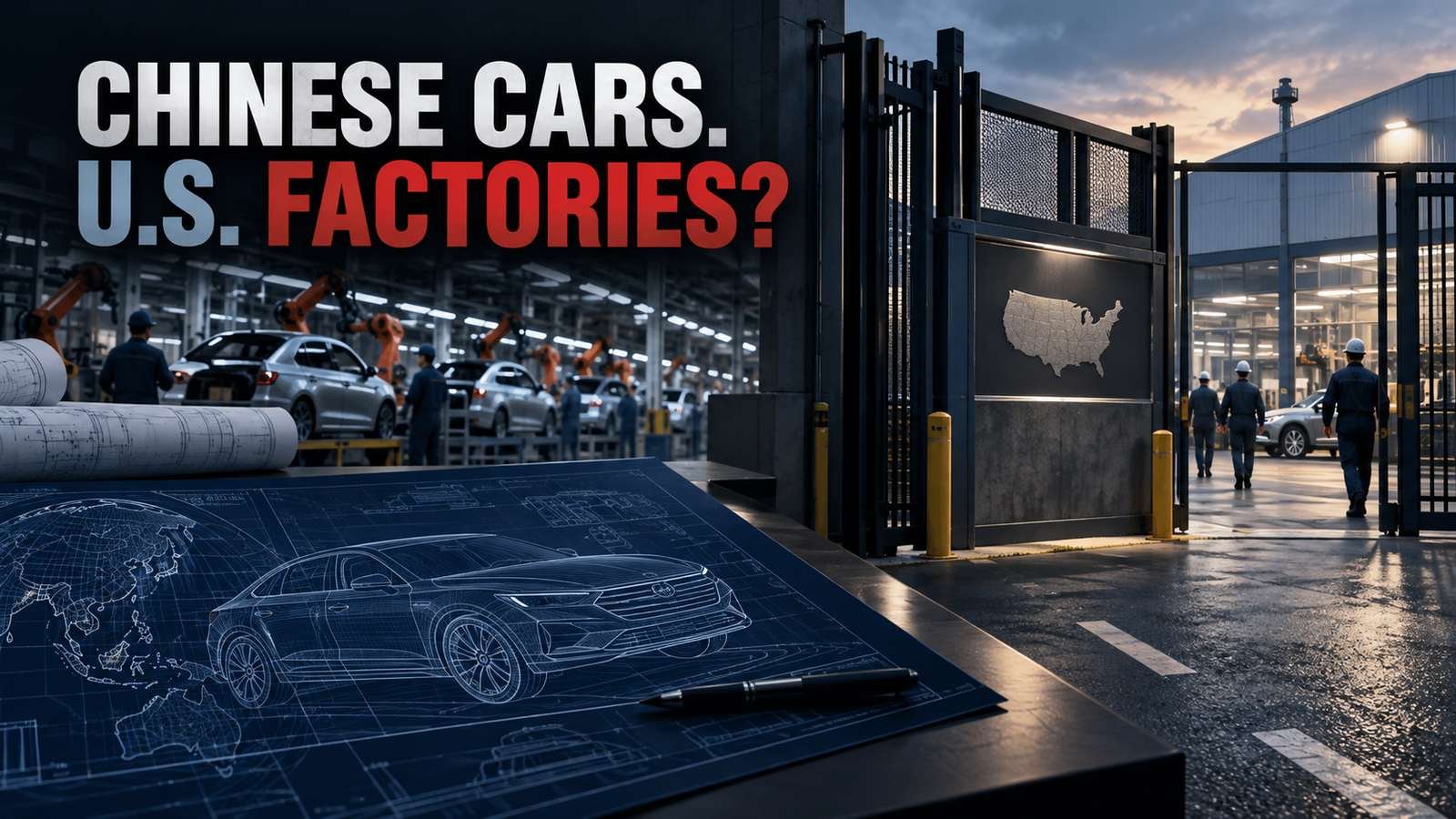
Hero visual created specifically for this article. Thumbnail text: “CHINESE CARS. U.S. FACTORIES?”. It is an editorial illustration, not a market-data screenshot.
Market-risk disclaimer
This article is for market education and information only. It is not investment advice, a recommendation or a promise of returns. Prices, policy decisions, deal terms and forecasts can change; verify the latest primary disclosures and assess risk independently.
- Trump–Xi talks
- Commerce rules
- Congressional bill
Risk context: This article is for market education and information only. It is not investment advice, a recommendation or a promise of returns. Prices, policy decisions, deal terms and forecasts can change; verify the latest primary disclosures and assess risk independently.
- reuters.com2026-09-12
- whitehouse.gov2026-09-14
- bis.gov2026-09-14
- autosinnovate.org2026-09-14
Related PriceVia analysis

Z.AI Raised $5 Billion — The Bond Can Turn Into Stock Within a Year
The Chinese AI developer combined a $2 billion equity placement with $3 billion of zero-coupon convertibles due in September 2027, funding compute while creating dilution and refinancing questions.
Canada Changed Its Index Gate — A $53 Billion Copper Merger May Walk Through
Foreign issuers with a material Canadian connection can qualify from December 21, potentially keeping Anglo-Teck inside the benchmark despite a London primary listing.
Amazon Paused a Cargo Partner After Five Deaths — Logistics Speed Meets Safety Risk
The retailer suspended work with 21 Air after a 32-year-old Boeing 767 freighter overran a runway, while investigators examine speed and a considered go-around.
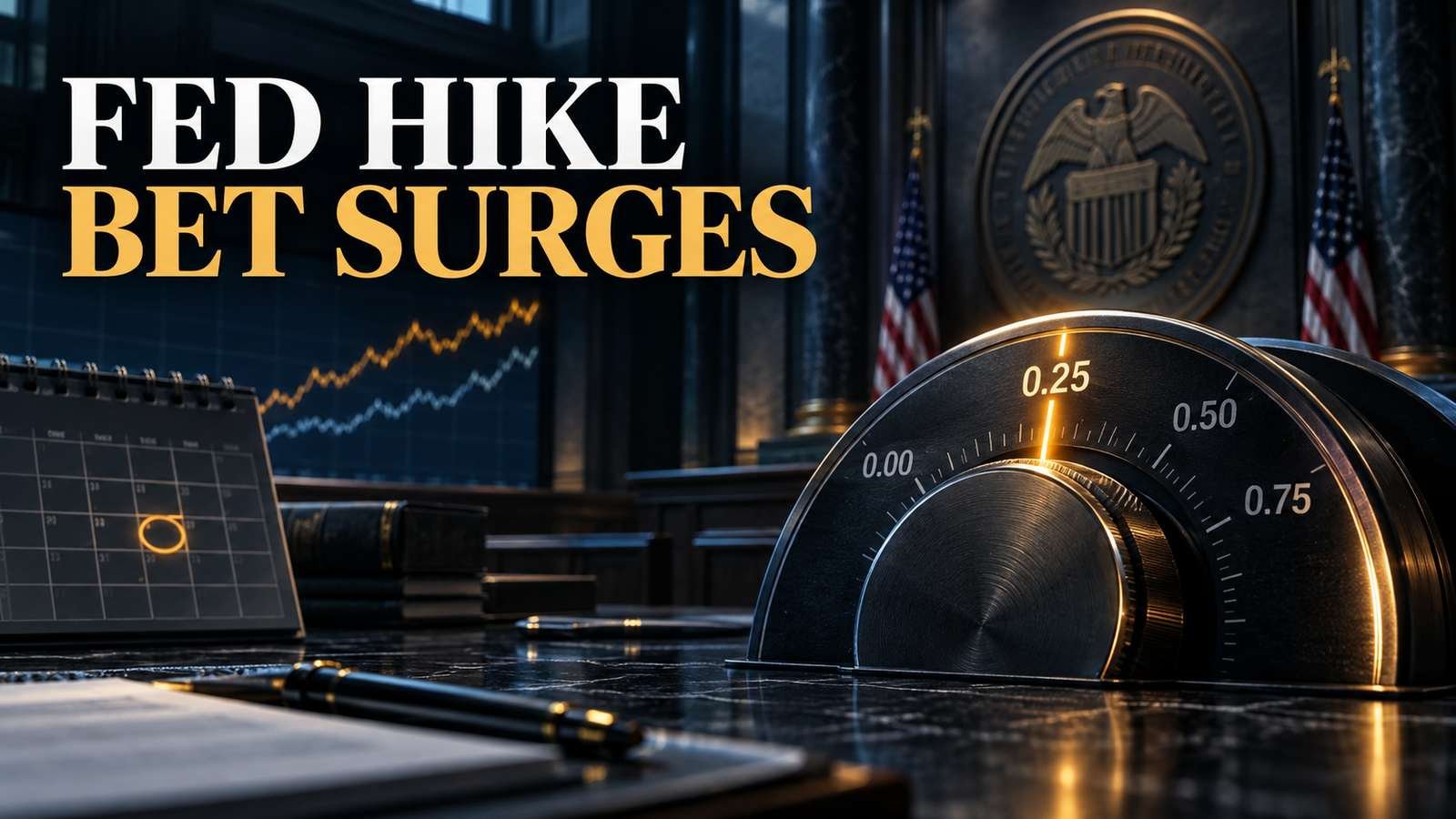
Wall Street’s Fed Call Flipped — An 87% Hike Bet Is Now the Base Case
Goldman Sachs joined the tightening camp and markets price an 87% chance of a quarter-point increase as oil above $100 and hotter producer prices revive inflation risk.