US Diesel Hit $6.29 a Gallon — Food Inflation Is Moving From Farms to Shelves
Diesel is 68% above last year just as combines, trucks and cold chains enter peak harvest, creating a cost shock that cannot be avoided by delaying farm activity.
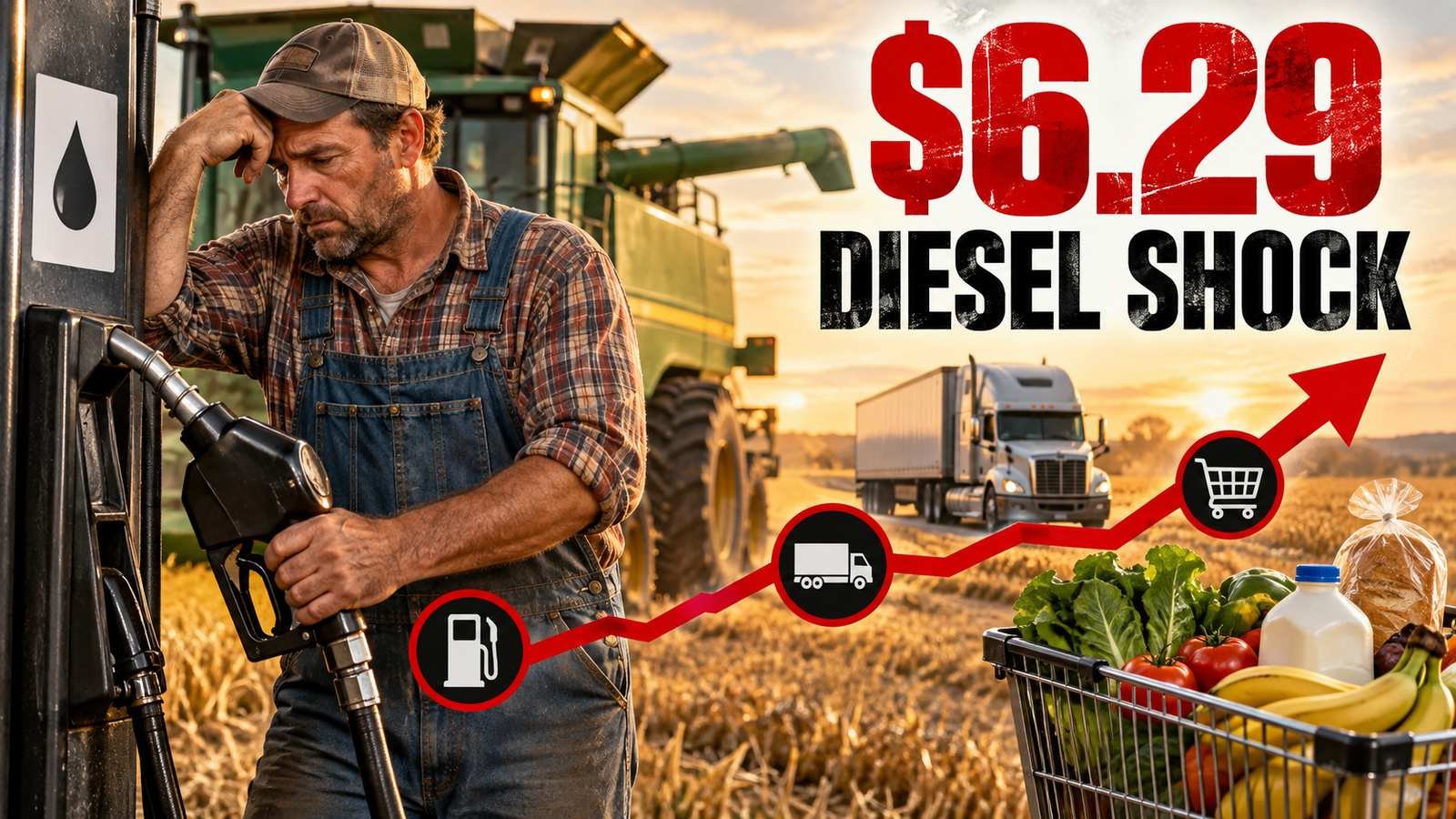
US Diesel Hit $6.29 a Gallon — Food Inflation Is Moving From Farms to Shelves
*By PriceVia Macro Desk | Published September 19, 2026 | Updated September 19, 2026*
Why this matters now
Diesel is 68% above last year just as combines, trucks and cold chains enter peak harvest, creating a cost shock that cannot be avoided by delaying farm activity.
Key points
- The average US diesel price reached a record $6.29 per gallon. - That is 68% above $3.74 a year earlier. - Fuel pressure runs through harvesting, freight and retail, raising the probability of higher produce and meat prices.
The numbers
| Metric | Value | Context | |---|---:|---| | Diesel price | $6.29/gallon | US average record | | Year-ago price | $3.74/gallon | EIA data | | Annual increase | 68% | Approximate | | Combine tank | 300 gallons | Farmer example | | Daily combine fuel | Up to $1,500 | South Dakota example | | Harvest window | Mid-Sep to late Oct | Peak demand |
What happened — confirmed facts
Reuters reported record diesel prices during the US harvest, with farmers describing costs that had doubled for key machinery. EIA data showed the national average at $6.29 per gallon. [S1, S2] Higher diesel affects more than farm equipment: trucks, refrigerated logistics and store delivery all add cost before food reaches consumers. The degree of retail pass-through depends on contracts, inventories and competitive margins. [S1, S3]
What everyone is watching
Weekly diesel prices and refinery utilisation are the fastest confirmation signals. Crude can fall while diesel remains tight if refinery outages or product shortages persist. Food categories respond differently. Fresh produce and meat have high transport or cold-chain exposure, while packaged goods may delay pass-through through hedges and supplier contracts.
What the market may be missing — PriceVia analysis
PriceVia analysis: harvest demand is inelastic. Farmers cannot wait for cheaper fuel without losing crops, so the shock initially compresses margins before it reaches consumer prices. The same cost can appear multiple times—on farm, in freight and at distribution—making diesel a supply-chain multiplier rather than a single input line.
Positive case
Refineries restore output, geopolitical pressure eases and diesel falls before distributors reset contracts, limiting both farm losses and grocery inflation.
Downside case
Product shortages persist through harvest, carriers add surcharges and retailers pass through cumulative costs during an already sensitive inflation period.
What would change the story
EIA weekly prices, refinery utilisation, freight surcharges and food producer guidance will show whether the shock is peaking or broadening.
Related stocks and themes
US agriculture, trucking, grocery retailers, food producers, refiners, diesel futures, inflation-linked bonds and consumer spending.
How to read it
Track product-level refining and freight data alongside food prices; do not treat diesel as a simple one-for-one CPI forecast.
Reader checklist
- Confirm eia weekly diesel price in a primary disclosure before changing the thesis. - Compare refinery utilisation with the headline narrative; they may move in different directions. - Reassess after new information on food-company guidance rather than treating the first report as a completed outcome.
PriceVia View
The record pump price is only the first invoice. Diesel touches the crop repeatedly before it reaches a shelf, making persistence more important than the daily crude quote.
Sources and timestamps
- [S1 — Reuters: record US diesel and food costs](https://www.reuters.com/business/energy/record-us-diesel-prices-squeeze-farmers-food-prices-may-rise-2026-09-18/) — published 2026-09-18 10:06 UTC; accessed 2026-09-19T13:15:00+05:30 - [S2 — US EIA gasoline and diesel prices](https://www.eia.gov/petroleum/gasdiesel/) — published 2026-09-19; accessed 2026-09-19T13:15:00+05:30 - [S3 — USDA food price outlook](https://www.ers.usda.gov/data-products/food-price-outlook) — published 2026-09-19; accessed 2026-09-19T13:15:00+05:30 - [S4 — Bureau of Labor Statistics CPI](https://www.bls.gov/cpi/) — published 2026-09-19; accessed 2026-09-19T13:15:00+05:30
Visual disclosure
Hero visual created specifically for this article. Thumbnail text: “$6.29 DIESEL SHOCK”. It is an editorial illustration, not a market-data, legal or regulatory screenshot.
Market-risk disclaimer
This article is for market education and information only. It is not investment advice, a recommendation or a promise of returns. Market prices, policy decisions, deal terms and forecasts can change. Verify the latest primary disclosures and assess suitability and risk independently.
- EIA weekly diesel price
- refinery utilisation
- food-company guidance
Risk context: This article is for market education and information only. It is not investment advice, a recommendation or a promise of returns. Market prices, policy decisions, deal terms and forecasts can change. Verify the latest primary disclosures and assess suitability and risk independently.
- reuters.com2026-09-18 10:06 UTC
- eia.gov2026-09-19
- ers.usda.gov2026-09-19
- bls.gov2026-09-19
Related PriceVia analysis

NMDC Is Chasing 60 Million Tonnes of Iron Ore — Its 100 MT Goal Still Depends on Clearances
India's largest iron-ore miner wants output to rise about 20% this year, but environmental approvals and evacuation capacity will decide whether the jump becomes durable supply.

China May Reopen the Door to US LNG — A 15% Tariff Killed the Trade
Washington and Beijing are discussing relief that could revive LNG cargoes ahead of a Trump–Xi meeting, alongside reciprocal tariff cuts covering about $30 billion of goods.

Europe May Shut Off India’s Scrap Metal Supply — Aluminium’s Cost Advantage Is at Risk
A proposed exemption list leaves India outside the countries allowed to receive EU metal waste from May 2027, threatening a low-cost raw-material stream used by Indian recyclers and manufacturers.

India’s Russian Oil Discount Just Met a 100% Tariff Threat — There Is No Cheap Exit
Russian crude supplies more than 40% of India’s oil, but a US bill could attach tariffs of up to 100% to that trade—forcing a choice between export access, fuel prices and fiscal support.