Boeing’s 737 MAX Goal Hit a Bottleneck — $1 Billion of Cash Is Now at Risk
Boeing says stabilising monthly 737 production at 47 aircraft is taking longer, putting its 52-a-month ambition and the upper end of free-cash-flow expectations under pressure.
Boeing’s 737 MAX Goal Hit a Bottleneck — $1 Billion of Cash Is Now at Risk
*By PriceVia Companies Desk | Published September 17, 2026 | Updated September 17, 2026*
Why this matters now
Boeing says stabilising monthly 737 production at 47 aircraft is taking longer, putting its 52-a-month ambition and the upper end of free-cash-flow expectations under pressure.
Key points
- Boeing is taking longer than expected to stabilise 737 MAX output at 47 aircraft per month. - The company still aims for 52 per month next year, while 787 output is about eight monthly against a target of ten. - Free cash flow may land near $2 billion rather than a possible $3 billion, and net debt remains close to $26 billion.
The numbers
| Metric | Value | Context | |---|---:|---| | 737 monthly level | 47 | Stabilisation target | | 2027 ambition | 52/month | Management goal | | Share move | About -4% | After comments | | Net debt | Nearly $26bn | Balance-sheet constraint | | 787 output | 8/month | Target is 10 | | Free cash flow | About $2bn | Versus $3bn upside case |
What happened — confirmed facts
Boeing’s chief executive said the company needs more time to make 47 monthly 737 deliveries or production units stable, and shares fell around 4%. The issue is consistency and quality through the system, not simply reaching the rate in one month. [S1, S2] Management is targeting 52 737s a month next year and ten 787s monthly versus about eight now. The uncertified 737-10 represents roughly 30% of orders, linking production economics to regulatory timing as well as factory execution. [S1, S3]
What everyone is watching
Investors will watch supplier readiness, rework, travelled work and FAA oversight. A line can show nominal output while inventory or quality bottlenecks delay deliveries and cash collection. Cash flow is the balance-sheet bridge. With nearly $26 billion of net debt, a $1 billion difference between scenarios matters for deleveraging, credit confidence and the freedom to invest in the next aircraft programme.
What the market may be missing — PriceVia analysis
PriceVia analysis: the bottleneck is variability, not capacity on paper. Aerospace systems become expensive when one missing or non-conforming part interrupts an otherwise completed aircraft and pushes cash into the next period. The 737-10 concentration creates optionality and risk. Certification would unlock an important portion of the backlog; prolonged delay can force customer substitutions, compensation or fleet-plan changes.
Positive case
The line holds 47 cleanly, suppliers catch up, the FAA permits 52 and 737-10 certification advances. Deliveries convert inventory into cash and debt falls faster.
Downside case
Quality or supply problems persist, 52 slips and the 737-10 remains delayed. Cash flow undershoots while customer concessions and financing needs rise.
What would change the story
Monthly deliveries, FAA production decisions, 737-10 milestones, supplier commentary and year-end free cash flow will determine whether the bottleneck is temporary.
Related stocks and themes
Boeing, Spirit AeroSystems suppliers, airlines, aircraft lessors, aerospace components, US manufacturing and commercial aviation.
How to read it
Track deliveries and inventory quality, not headline production alone, and model cash with certification and supplier delays rather than management’s best case.
Reader checklist
- Confirm monthly deliveries in a primary disclosure before changing the thesis. - Compare faa production cap with the headline narrative; they may move in different directions. - Reassess after new information on 737-10 certification rather than treating the first report as a completed outcome.
PriceVia View
Boeing does not need one heroic month; it needs boring repetition. Stable, conforming aircraft are the prerequisite for the cash recovery story.
Sources and timestamps
- [S1 — Reuters: Boeing says 737 stabilisation taking longer](https://www.reuters.com/legal/litigation/boeing-ceo-says-it-is-taking-longer-stabilize-737-max-output-shares-slide-2026-09-16/) — published 2026-09-16; accessed 2026-09-17T13:15:00+05:30 - [S2 — Boeing investor relations](https://investors.boeing.com/) — published 2026-09-17; accessed 2026-09-17T13:15:00+05:30 - [S3 — FAA 737 MAX information](https://www.faa.gov/737-max) — published 2026-09-17; accessed 2026-09-17T13:15:00+05:30 - [S4 — Boeing orders and deliveries](https://www.boeing.com/commercial/orders-deliveries) — published 2026-09-17; accessed 2026-09-17T13:15:00+05:30
Visual disclosure
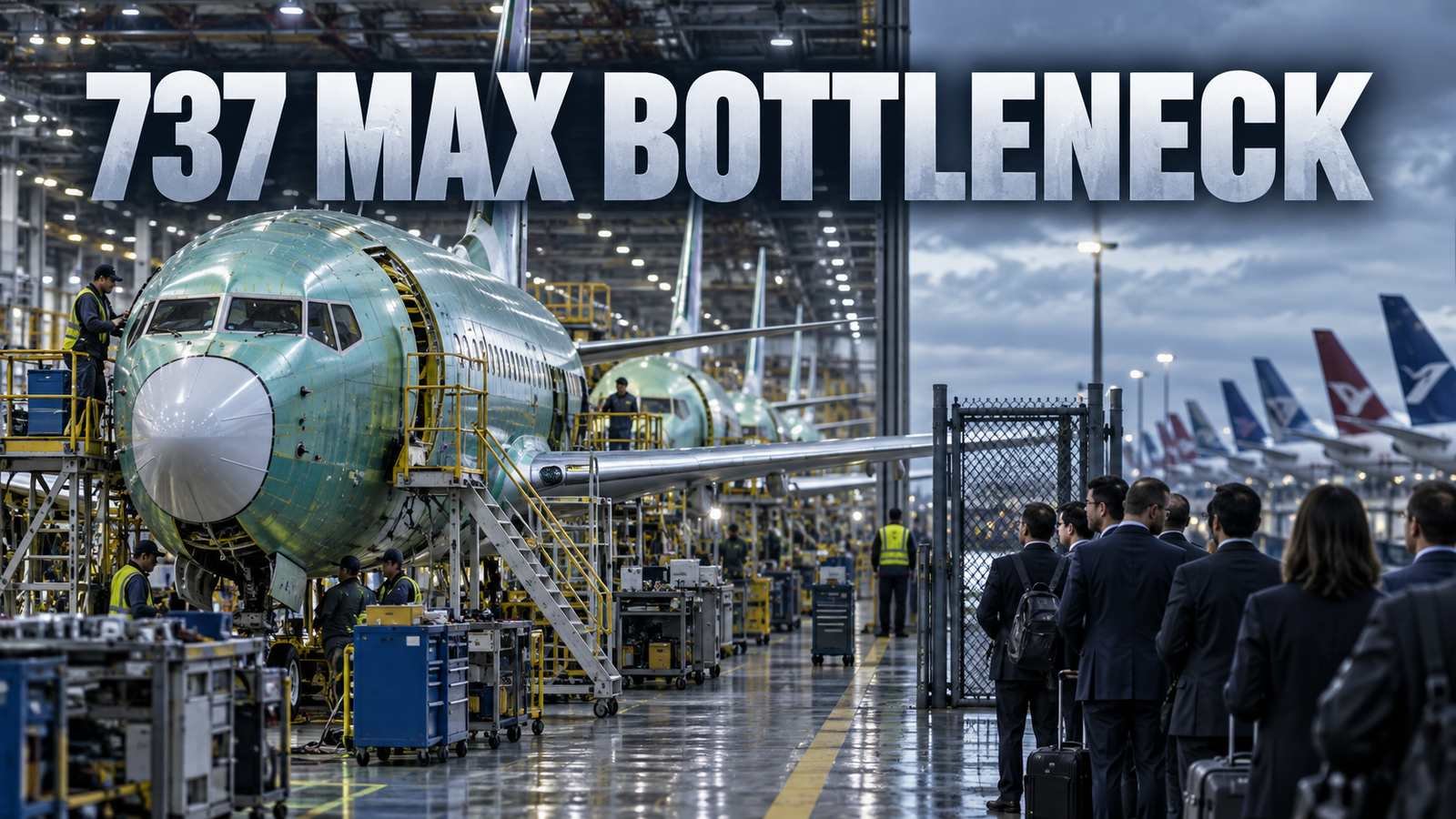
Hero visual created specifically for this article. Thumbnail text: “737 MAX BOTTLENECK”. It is an editorial illustration, not a market-data, legal or regulatory screenshot.
Market-risk disclaimer
This article is for market education and information only. It is not investment advice, a recommendation or a promise of returns. Market prices, policy decisions, deal terms and forecasts can change. Verify the latest primary disclosures and assess suitability and risk independently.
- Monthly deliveries
- FAA production cap
- 737-10 certification
Risk context: This article is for market education and information only. It is not investment advice, a recommendation or a promise of returns. Market prices, policy decisions, deal terms and forecasts can change. Verify the latest primary disclosures and assess suitability and risk independently.
- reuters.com2026-09-16
- investors.boeing.com2026-09-17
- faa.gov2026-09-17
- boeing.com2026-09-17
Related PriceVia analysis
Delhi Metro Carried a Record 82.45 Lakh Riders in One Day — A Bus Strike Revealed Its Spare Capacity
A sudden DTC bus disruption pushed Delhi Metro to a new daily record, testing whether the network can absorb shocks without letting reliability deteriorate.
India Gave Compressed Biogas an Assured Buyer — Price Support Could Finally Turn Waste Into Bankable Fuel
New GOBARdhan rules address the two questions that have stalled many waste-to-gas projects: who will buy the output and how predictable will the price be.

India's New ESG Assurance Standard Starts in April 2027 — Two Big Carve-Outs Will Shape What Investors Can Trust
SSA 5000 broadens assurance across climate, labour and biodiversity disclosures, but excludes joint audits and forward-looking statements from the international framework.

India's Forex Reserves Fell $4.92 Billion — The $780.78 Billion Buffer Is Being Put to Work
The weekly decline arrived as traders reported central-bank dollar selling near a rupee record low, illustrating that reserves are insurance to be deployed—not a score that must rise every week.