Chinese Investors Paid a 24% Premium for Wall Street — That Is Demand, Not Value
A $6.8 billion quota increase unleashed pent-up demand for U.S. technology funds, but extreme ETF premiums mean some buyers are paying far more than the assets are worth.
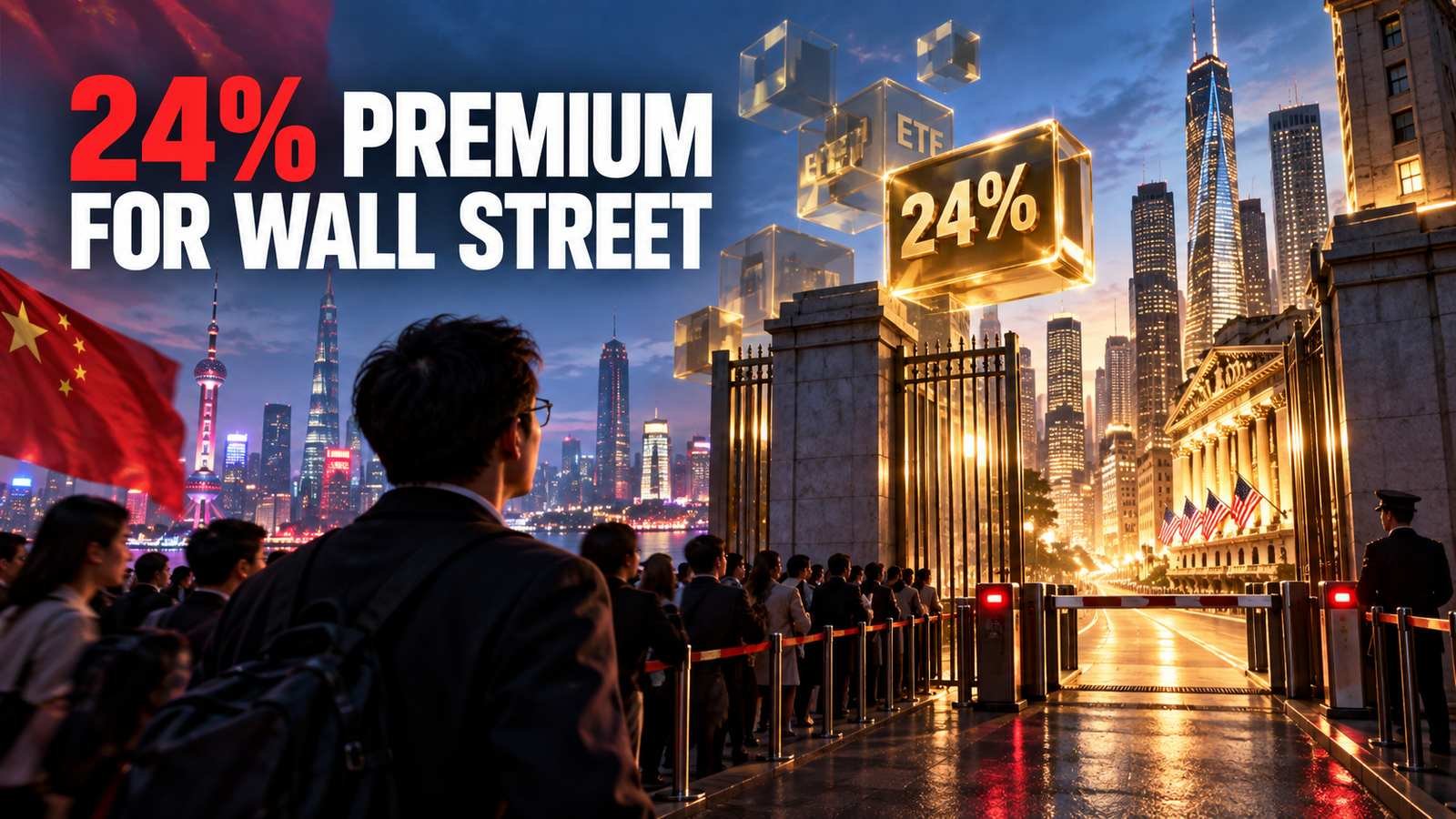
Chinese Investors Paid a 24% Premium for Wall Street — That Is Demand, Not Value
*By PriceVia Global Markets Desk | Published September 16, 2026 | Updated September 16, 2026*
Why this matters now
A $6.8 billion quota increase unleashed pent-up demand for U.S. technology funds, but extreme ETF premiums mean some buyers are paying far more than the assets are worth.
Key points
- China increased its outstanding QDII quota by $6.8 billion to a record $183 billion. - Fund managers quickly reimposed tiny subscription limits after demand surged. - A Shenzhen Nasdaq-100 technology ETF traded at a 24% premium to net asset value, creating a loss risk even if U.S. stocks do not fall.
The numbers
| Metric | Value | Context | |---|---:|---| | QDII quota | $183bn | Record outstanding total | | Recent increase | $6.8bn | Late August | | U.S.-bound QDII business | ~$150bn | Nearly half of total | | Example ETF premium | 24% | Nasdaq technology tracker | | 2025 portfolio deficit | $426bn | Record annual outflow | | Q1 2026 net outflow | $146bn | Balance-of-payments data |
What happened — confirmed facts
Beijing is simultaneously widening authorised overseas-investment routes and tightening unofficial brokerage channels. Wanjia and other managers loosened limits, then cut them again within days as demand overwhelmed capacity. [S1, S2] Chinese government bond yields sit more than three percentage points below U.S. Treasury yields, while U.S. equities have outperformed local shares. These gaps help explain the demand, but they do not justify any price above fund NAV. [S1, S3]
What everyone is watching
ETF premium risk is mechanical. If quota expands or subscriptions reopen, arbitrage can pull the market price toward NAV even when the underlying Nasdaq index is unchanged. Regulators must balance household diversification against capital-outflow pressure. More quota can reduce distortions, but a rapid opening may increase foreign-currency demand and complicate exchange-rate management.
What the market may be missing — PriceVia analysis
PriceVia analysis: this is not simply a bullish vote on U.S. technology. It is also a signal that Chinese savers see limited attractive options at home and are willing to pay for legal access. A premium embeds two bets—the foreign asset and the scarcity of the wrapper. Investors may be right on the first and still lose on the second when scarcity fades.
Positive case
Quota rises steadily, premiums normalise without a selloff and households gain diversified exposure. Controlled liberalisation deepens China’s asset-management industry.
Downside case
The premium collapses, Wall Street corrects or Beijing tightens quotas to control outflows. Investors could absorb losses from both the underlying market and the wrapper.
What would change the story
Watch QDII approvals, daily subscription caps, ETF premium-to-NAV data, the yuan and domestic bond yields. A sustained single-digit premium would improve entry quality.
Related stocks and themes
Nasdaq 100, Chinese asset managers, QDII funds, the yuan, U.S. technology stocks, cross-border ETFs and capital controls.
How to read it
Check live NAV and creation limits before buying any cross-border ETF. Exposure is only useful when the vehicle price is defensible.
Reader checklist
- Confirm etf premium to nav in a primary disclosure before changing the thesis. - Compare new qdii quotas with the headline narrative; they may move in different directions. - Reassess after new information on yuan outflows rather than treating the first report as a completed outcome.
PriceVia View
The queue for Wall Street is genuine. Paying 24% for a ticket converts diversification into a scarcity trade with its own downside.
Sources and timestamps
- [S1 — Reuters: Chinese investors rush into U.S. funds](https://www.reuters.com/world/china/chinese-investors-rush-into-us-stocks-as-beijing-opens-wider-path-overseas-2026-09-16/) — published 2026-09-16 03:37 UTC; accessed 2026-09-16T13:15:00+05:30 - [S2 — SAFE QDII information](https://www.safe.gov.cn/en/) — published 2026-09-16; accessed 2026-09-16T13:15:00+05:30 - [S3 — People’s Bank of China statistics](http://www.pbc.gov.cn/en/3688241/index.html) — published 2026-09-16; accessed 2026-09-16T13:15:00+05:30 - [S4 — Nasdaq-100 index information](https://indexes.nasdaqomx.com/Index/Overview/NDX) — published 2026-09-16; accessed 2026-09-16T13:15:00+05:30
Visual disclosure
Hero visual created specifically for this article. Thumbnail text: “24% PREMIUM FOR WALL STREET”. It is an editorial illustration, not a market-data, legal or regulatory screenshot.
Market-risk disclaimer
This article is for market education and information only. It is not investment advice, a recommendation or a promise of returns. Market prices, policy decisions, deal terms and forecasts can change. Verify the latest primary disclosures and assess suitability and risk independently.
- ETF premium to NAV
- New QDII quotas
- Yuan outflows
Risk context: This article is for market education and information only. It is not investment advice, a recommendation or a promise of returns. Market prices, policy decisions, deal terms and forecasts can change. Verify the latest primary disclosures and assess suitability and risk independently.
- reuters.com2026-09-16 03:37 UTC
- safe.gov.cn2026-09-16
- indexes.nasdaqomx.com2026-09-16
Related PriceVia analysis
The US 10-Year Yield Crossed 5% — Stocks Just Lost Their Easiest Argument
The benchmark yield returned to a level last seen in 2023 as oil, inflation, debt supply and Fed expectations collided; the key consequence is a higher hurdle rate for almost every risk asset.

BRICS Wants to Rewrite Global Finance — Payments Are the First Real Test
Finance ministers demanded a bigger emerging-market voice and faster, cheaper cross-border payments; turning a joint statement into interoperable infrastructure is the harder step.
ByteDance Borrowed $29.6 Billion Without Collateral — Nearly 30 Banks Wanted In
The three-year facility grew from a $20 billion target after overwhelming lender demand, with Chinese banks providing more than 60% and overseas AI infrastructure absorbing much of the capital.

One Refinery, a $47 Billion Valuation: Africa’s Biggest IPO Faces Its Hardest Question
Nigeria approved a 4.1-billion-share offer that could raise $1.63 billion, but the implied valuation towers over listed refining peers while detailed financial statements remain limited.