Japan’s Service Inflation Re-Accelerated to 3.6% — The BOJ Hike Case Is Getting Harder to Ignore
Japan’s business-service prices accelerated again in July, with transport and labour-heavy services showing pressure that looks broader than imported energy inflation.
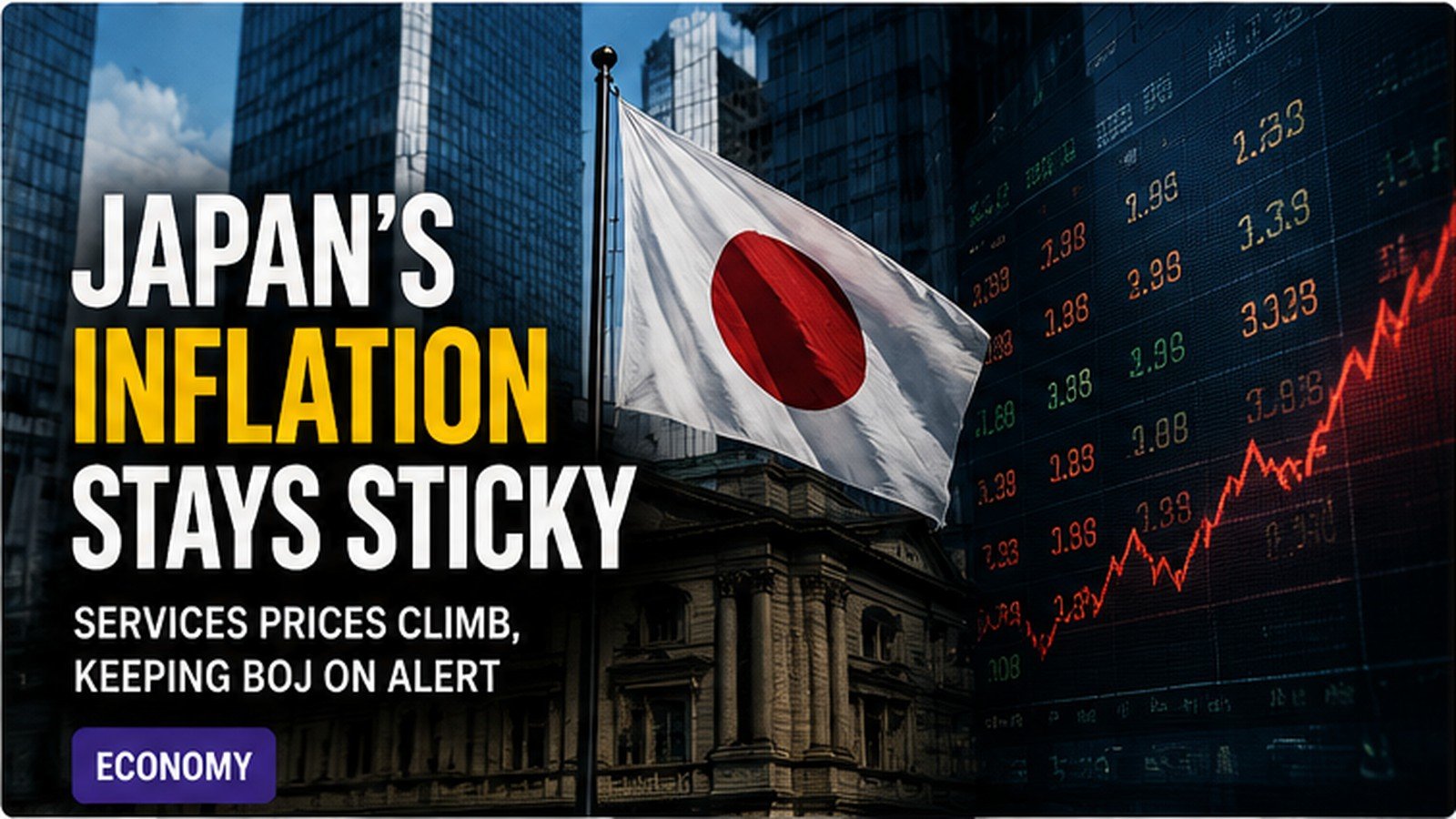
Japan’s service-sector producer inflation accelerated to 3.6% in July from a revised 3.4% in June, adding another piece of evidence that price pressure is spreading through the domestic economy rather than coming only from imported goods.
That matters for the Bank of Japan because sustainable service inflation is closely tied to wages and domestic demand. It is harder for policymakers to dismiss than a temporary jump in commodity prices.
WHAT HAPPENED
The Bank of Japan’s Services Producer Price Index rose 3.6% year on year in July. The index climbed 0.4% from the previous month.
Transportation and postal activities rose 6.4% from a year earlier, while road passenger transportation increased 7.2%. Services with high labour-cost ratios were up 3.0% year on year, according to the BOJ’s preliminary data.
WHAT EVERYONE IS WATCHING
Markets are focused on when the BOJ will raise rates again and whether yen weakness will force policymakers to move faster.
The inflation data strengthens the case for tighter policy, but one release is not enough. The BOJ needs confidence that wage growth and domestic price-setting behaviour are becoming self-sustaining.
WHAT THE MARKET MAY BE MISSING
The composition of inflation is more important than the headline 3.6%.
International transportation prices are highly volatile and can be distorted by energy and geopolitical shocks. But price increases across labour-intensive domestic services would be a more durable signal that Japan has moved away from its old low-inflation regime.
That is why investors should separate imported cost pressure from domestically generated service inflation.
THE NUMBERS
• All-items services producer inflation: +3.6% YoY • June revised rate: +3.4% • Monthly change: +0.4% • Transportation and postal activities: +6.4% YoY • Road passenger transportation: +7.2% YoY • High-labour-cost services: +3.0% YoY
POSITIVE CASE
For Japan’s banks and the yen, broader domestic inflation supports a gradual normalisation of interest rates without requiring an emergency policy move. A controlled hiking cycle could improve financial-sector margins and reduce currency pressure.
DOWNSIDE CASE
Inflation remains driven by energy and transport shocks while household demand weakens. In that scenario, a faster BOJ hike could tighten conditions into a fragile economy.
WHAT WOULD CHANGE THE STORY
The next wage data, core consumer inflation, BOJ communication and evidence of persistent service-price increases outside transportation will determine whether July marks durable broadening.
RELATED THEMES
Japanese yen, BOJ, Japanese banks, government bonds, exporters, domestic services and Asian monetary policy.
PRICEVIA VIEW
The headline says 3.6%. The real signal is where the inflation is coming from. If labour-heavy domestic services keep repricing, the BOJ’s argument for waiting becomes progressively harder to defend.
SOURCES & TIMESTAMP
Bank of Japan July 2026 Services Producer Price Index released August 26, 2026; Reuters August 26 reporting.
MARKET-RISK DISCLAIMER
This article is for informational and educational purposes only and does not constitute investment advice.
Risk context: PriceVia playbook applied before drafting. Candidate was checked against the August 25 PriceVia pack for duplicate/near-duplicate search intent. Facts and material numbers were verified against the listed primary/reputable sources on August 26, 2026.
Related PriceVia analysis

Gold's Break Above $4,600 Is More Than a Safe-Haven Move — Bond Liquidity Is Driving the Rally
Gold has reached its highest level in more than three months as lower yields, a softer dollar and geopolitical risk reinforce one another.

The Dollar Is Struggling Even With Geopolitical Risk — Treasury Buybacks Changed the Trade
The dollar is failing to gain sustained traction from geopolitical stress because the bond market is increasingly driving the currency story.

Oil Is Holding Near $92 After Iran Sanctions — Why the Market Still Can't Remove the Risk Premium
Oil fell more than 2% after new sanctions looked less disruptive than feared, but depleted buffers and Hormuz risk keep the downside unusually fragile.
India's GDP May Slow to 7.1% — Strong Consumption Is Hiding a Private-Investment Problem
India is still expected to be the fastest-growing major economy, but the composition of growth matters more than the headline number.