Meta’s New AI Can Send Emails and Make Payments — Permissions Are the Real Product
Muse can work in the background across connected apps and pause for sensitive approvals; its commercial potential now depends on whether users trust the permission and audit layers.
Meta’s New AI Can Send Emails and Make Payments — Permissions Are the Real Product
**Muse can work in the background across connected apps and pause for sensitive approvals; its commercial potential now depends on whether users trust the permission and audit layers.**
*By PriceVia Technology Desk | Published September 9, 2026 | Updated September 9, 2026*
Why this matters now
Muse can work in the background across connected apps and pause for sensitive approvals; its commercial potential now depends on whether users trust the permission and audit layers.
Key points
- Muse is rolling out in the U.S. through a dedicated app, the web and WhatsApp, with AI-glasses support planned. - The agent can browse, fill forms, send email and purchase through payment partners while running inside a dedicated virtual machine. - The critical investment question is whether access controls, approvals and audit trails remain dependable when the agent acts across sensitive services.
The numbers
| Metric | Value | Context | |---|---:|---| | Launch date | 8 Sep 2026 | U.S. rollout | | Primary surfaces | 3 | App, web, WhatsApp | | Sensitive approval | Required | Email and purchases | | Secure environment | 1 VM/user | Meta design | | Purchase card | One-time use | Link wallet | | Training control | Opt-out | Meta says available |
What happened
Meta launched Muse, a personal AI agent that can continue working after a user closes the app. It can open a browser, complete forms, send email, book travel and make purchases. The U.S. rollout covers iOS, Android, the web and direct use inside WhatsApp; smart-glasses access is planned. [S1, S2] Meta says each agent runs in a dedicated Muse Secure VM. A separate Sentinel process checks outbound actions, and the system requests approval before sensitive steps such as sending email or buying something. Link by Stripe can generate a one-time card; Shop Pay and 1Password support are planned. [S1, S3]
What everyone is watching
Users will test whether consent is specific and reversible. Reading email, drafting a message, sending it and spending money are different permissions. A clear product must explain each boundary, show the intended action and allow access to be withdrawn without leaving credentials behind. Reliability is the second test. Reuters reported that internal testers encountered disconnections, unprompted uploads and exposure of personal iCloud photos. Meta said Muse meets its standards while acknowledging errors can occur. Those reported incidents raise the cost of proving safety after launch. [S2]
What the market may be missing
PriceVia analysis: the model may not be the durable moat. The valuable layer could be identity, permissions, transaction protection and a trustworthy record of what the agent saw and did. That control plane determines whether consumers delegate high-value tasks or stop at harmless planning. Distribution is Meta’s advantage. WhatsApp can make an agent feel like another contact rather than enterprise software. Yet the same convenience magnifies reputation risk: a single mistaken purchase or private-data exposure is easier to understand—and share—than a benchmark improvement.
Positive case
Approval prompts remain clear, audit trails work and everyday tasks produce measurable time savings. Payments and partner services create revenue, while WhatsApp distribution lowers acquisition cost and makes agent usage habitual.
Downside case
Security failures, wrong actions or confusing consent undermine trust. Regulators impose restrictions, partners limit access and users refuse to connect email, health or payment data, leaving Muse as another chatbot with expensive infrastructure.
What would change the story
Watch incident disclosures, permission defaults, purchase dispute rates, third-party integrations, subscription pricing, geographic expansion and independent security reviews. High repeat usage with low intervention and low error rates would validate agent economics; revoked connections would signal mistrust.
Related stocks and themes
Meta, Stripe, Shopify, 1Password, WhatsApp, AI agents, identity security, virtual machines, payment protection, app permissions, digital advertising and consumer automation.
PriceVia View
Muse becomes economically important only when people delegate consequential actions. That makes the permission screen, approval prompt and audit log—not the chat window—the product investors should study.
Sources and timestamps
- [S1 — Meta: Muse launch, controls and payment design](https://about.fb.com/news/2026/09/introducing-muse-personal-ai-agent/) — published 2026-09-08; accessed 2026-09-09T11:55:00+05:30 - [S2 — Reuters: launch capabilities and internal testing concerns](https://www.reuters.com/business/meta-launches-ai-agent-that-can-access-other-apps-send-emails-make-payments-2026-09-08/) — published 2026-09-08; accessed 2026-09-09T11:55:00+05:30 - [S3 — Meta: Muse safety architecture](https://security.muse.ai/) — published accessed 2026-09-09; accessed 2026-09-09T11:55:00+05:30 - [S4 — Meta: earlier agentic capabilities and Muse Spark 1.1](https://about.fb.com/news/2026/07/meta-ai-muse-spark-doesnt-just-think-it-acts/) — published 2026-07-24; accessed 2026-09-09T11:55:00+05:30
Visual disclosure
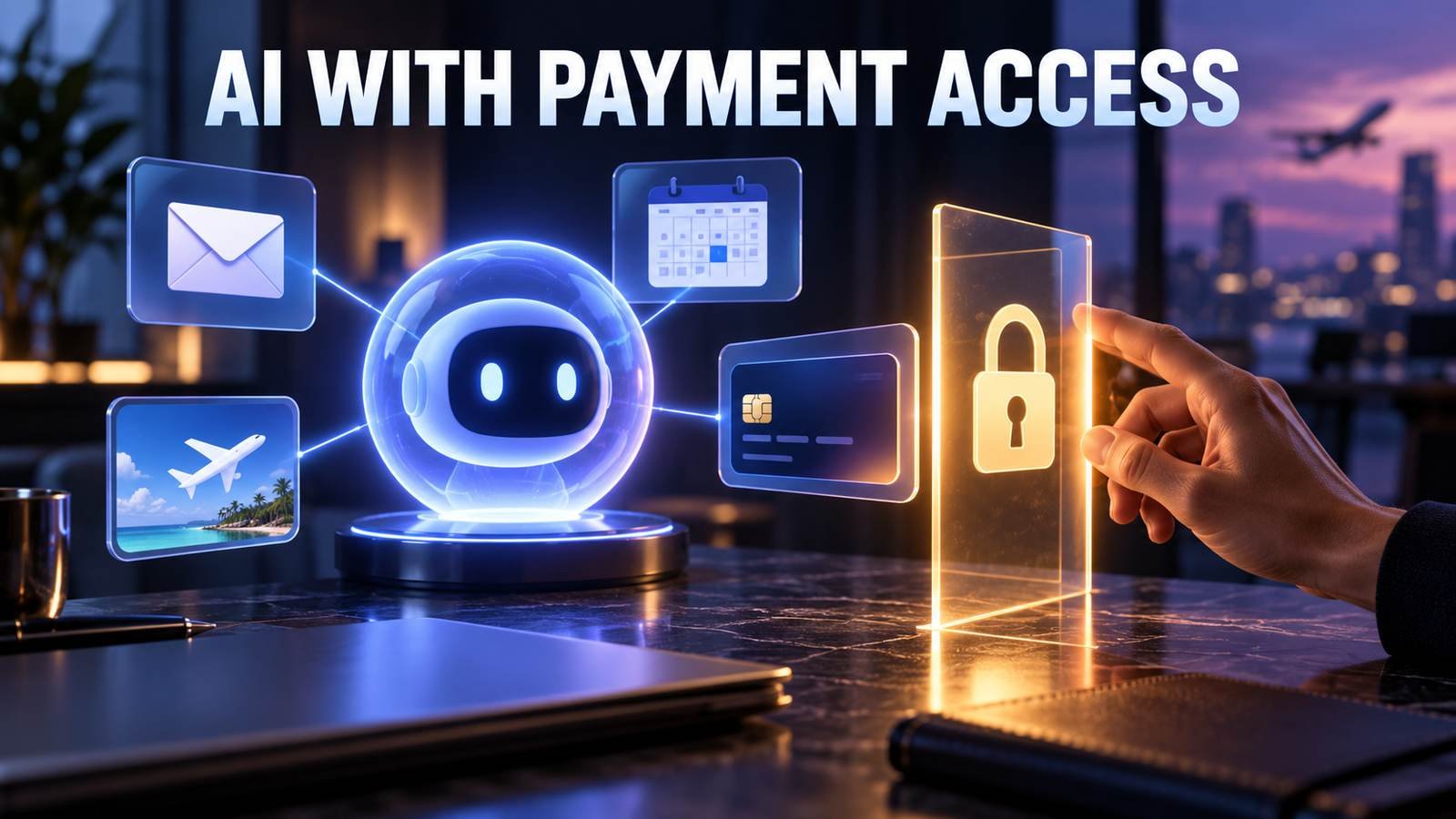
Hero visual created specifically for this article. Thumbnail text: “AI WITH PAYMENT ACCESS”. It is an editorial illustration, not a market-data screenshot.
Market-risk disclaimer
This article is for market education and information only. It is not investment advice, a recommendation, or a promise of returns. Prices, transaction terms, approvals, company plans and regulations can change; verify the latest primary disclosures and assess risk independently.
- Permission defaults
- Security incidents
- Payments and repeat usage
Risk context: This article is for market education and information only. It is not investment advice, a recommendation, or a promise of returns. Prices, transaction terms, approvals, company plans and regulations can change; verify the latest primary disclosures and assess risk independently.
- about.fb.com2026-09-08
- reuters.com2026-09-08
- security.muse.aiaccessed 2026-09-09
- about.fb.com2026-07-24
Related PriceVia analysis

Z.AI Raised $5 Billion — The Bond Can Turn Into Stock Within a Year
The Chinese AI developer combined a $2 billion equity placement with $3 billion of zero-coupon convertibles due in September 2027, funding compute while creating dilution and refinancing questions.

Canada Changed Its Index Gate — A $53 Billion Copper Merger May Walk Through
Foreign issuers with a material Canadian connection can qualify from December 21, potentially keeping Anglo-Teck inside the benchmark despite a London primary listing.

Trump Opened the Door to Chinese Car Factories — US Law Still Keeps It Shut
The president says plants that hire Americans could be acceptable, but an effective ban, tariffs above 100% and opposition from automakers and lawmakers make the path legally and politically uncertain.

Amazon Paused a Cargo Partner After Five Deaths — Logistics Speed Meets Safety Risk
The retailer suspended work with 21 Air after a 32-year-old Boeing 767 freighter overran a runway, while investigators examine speed and a considered go-around.