UPI’s Free Era Is Changing — A 0.4% Fee Will Fund the Next Merchant Push
From October 15, larger merchant UPI payments will attract a 0.4% MDR, while 5% of collections is earmarked to expand adoption among small merchants.

UPI’s Free Era Is Changing — A 0.4% Fee Will Fund the Next Merchant Push
*By PriceVia Fintech Desk | Published September 20, 2026 | Updated September 20, 2026*
Why this matters now
From October 15, larger merchant UPI payments will attract a 0.4% MDR, while 5% of collections is earmarked to expand adoption among small merchants.
Key points
- The 0.4% MDR applies to eligible merchant payments above ₹2,000. - The charge is capped at ₹300, with selected essential sectors paying a flat ₹5. - A dedicated fund will receive 5% of MDR collections for small-merchant digitisation.
The numbers
| Metric | Value | Context | |---|---:|---| | Standard MDR | 0.4% | Above ₹2,000 | | Start date | 15 Oct 2026 | Implementation | | Per-payment cap | ₹300 | At ₹75,000+ | | Essential-sector fee | ₹5 | Flat MDR | | Fund allocation | 5% | Of collections | | August volume | 24bn | UPI transactions |
What happened — confirmed facts
Reuters and NPCI-linked reporting say the new MDR applies to qualifying person-to-merchant payments, not ordinary person-to-person transfers. Small merchants remain protected under the framework. Railways, fuel, telecom, utilities, insurance and tax payments receive a flat ₹5 treatment above the threshold. The government has said providers should not pass the fee to consumers.
What everyone is watching
Whether merchants absorb the fee, steer users to other rails or quietly change discounts and convenience charges. How transparently the 5% fund reaches smaller cities and whether it improves acceptance, reliability and fraud controls.
What the market may be missing — PriceVia analysis
PriceVia analysis: the policy is a controlled attempt to give UPI an economic engine without breaking its consumer habit. The key risk is indirect pass-through, not a visible checkout fee. The fund also turns large-merchant volume into a cross-subsidy for the long tail. Its credibility will depend on measurable new terminals and active merchants, not the size of the pot alone.
Positive case
Banks and apps invest in reliability, merchants absorb the charge and small-city acceptance expands without hurting usage.
Downside case
Merchants reprice goods or steer payments, weakening trust while the fund produces little incremental adoption.
What would change the story
Final NPCI operating circulars, merchant-category definitions and evidence of pass-through would change the assessment.
Related stocks and themes
Banks, fintech apps, payment gateways, large retailers, fuel companies and small merchants.
How to read it
Consumers should distinguish merchant MDR from a direct UPI user fee; investors should track who ultimately bears the cost.
Reader checklist
- Confirm NPCI circular details in a primary disclosure before changing the thesis. - Track merchant pass-through; headline narratives can move before the underlying evidence. - Track small-merchant activation; headline narratives can move before the underlying evidence.
PriceVia View
the policy is a controlled attempt to give UPI an economic engine without breaking its consumer habit. The key risk is indirect pass-through, not a visible checkout fee.
Sources and timestamps
- [S1 — Reuters: UPI merchant fee](https://www.reuters.com/world/india/india-payments-authority-sets-04-fee-upi-merchant-payments-above-2000-rupees-2026-09-15/) — published 2026-09-15; accessed 2026-09-20T17:10:00+05:30 - [S2 — Economic Times: 5% small-merchant fund](https://m.economictimes.com/news/economy/policy/upis-new-mdr-pot-5-of-collections-to-be-used-for-bringing-small-merchants-online/articleshow/134364457.cms) — published 2026-09-20 12:05 IST; accessed 2026-09-20T17:10:00+05:30 - [S3 — PIB: UPI policy release](https://www.pib.gov.in/) — published 2026-09-15; accessed 2026-09-20T17:10:00+05:30 - [S4 — NPCI: UPI ecosystem](https://www.npci.org.in/what-we-do/upi/product-overview) — published 2026-09-20; accessed 2026-09-20T17:10:00+05:30
Visual disclosure
Hero visual created specifically for this article. Thumbnail text: “UPI’S NEW FEE”. It is an editorial illustration, not a market-data, legal or regulatory screenshot.
Market-risk disclaimer
This article is for market education and information only. It is not investment advice, a recommendation or a promise of returns. Market prices, policy decisions, deal terms and forecasts can change. Verify the latest primary disclosures and assess suitability and risk independently.
- NPCI circular details
- merchant pass-through
- small-merchant activation
Risk context: This article is for market education and information only. It is not investment advice, a recommendation or a promise of returns. Market prices, policy decisions, deal terms and forecasts can change. Verify the latest primary disclosures and assess suitability and risk independently.
- reuters.com2026-09-15
- m.economictimes.com2026-09-20 12:05 IST
- pib.gov.in2026-09-15
- npci.org.in2026-09-20
Related PriceVia analysis
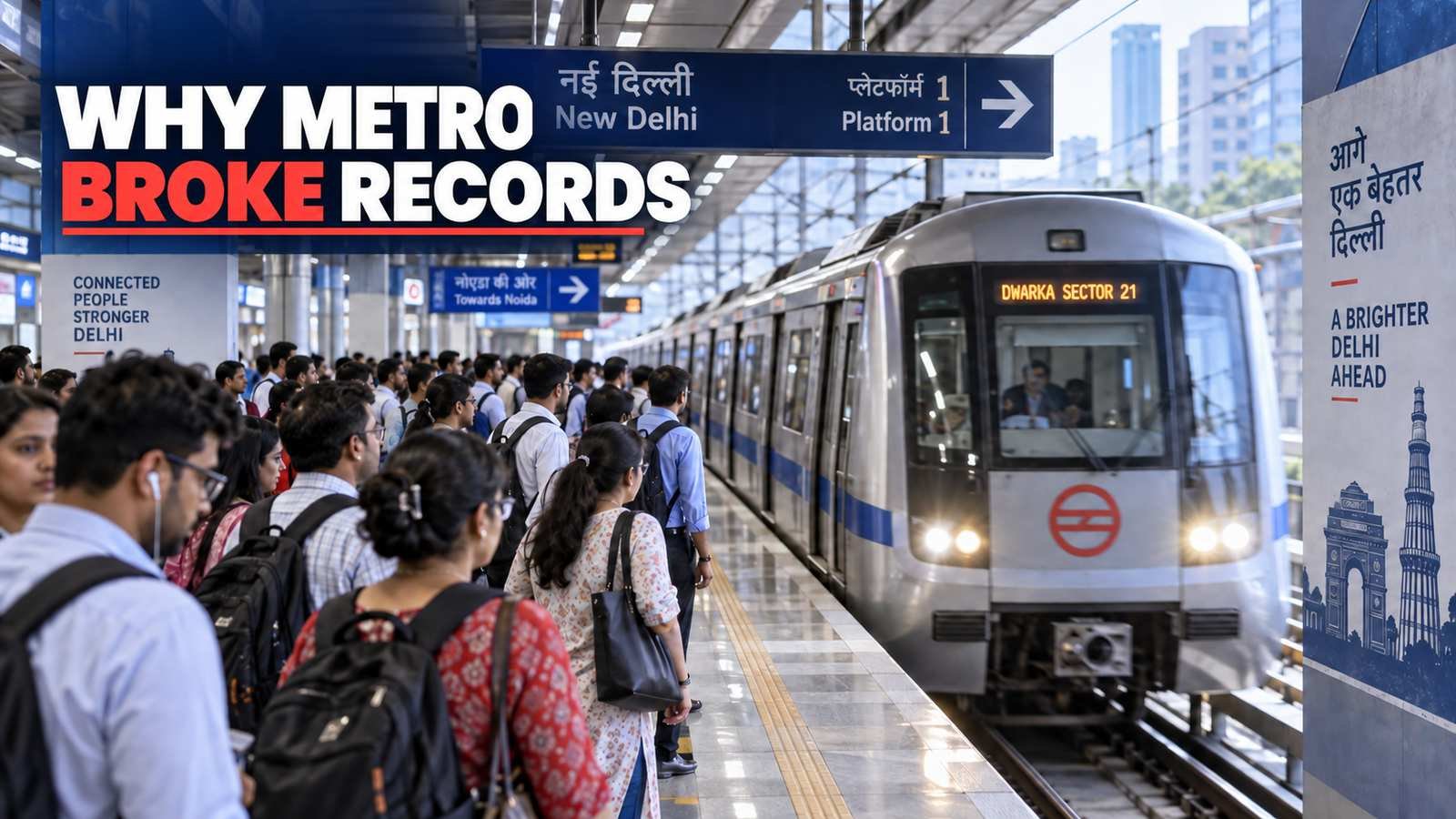
Delhi Metro Carried a Record 82.45 Lakh Riders in One Day — A Bus Strike Revealed Its Spare Capacity
A sudden DTC bus disruption pushed Delhi Metro to a new daily record, testing whether the network can absorb shocks without letting reliability deteriorate.

India Gave Compressed Biogas an Assured Buyer — Price Support Could Finally Turn Waste Into Bankable Fuel
New GOBARdhan rules address the two questions that have stalled many waste-to-gas projects: who will buy the output and how predictable will the price be.

India's New ESG Assurance Standard Starts in April 2027 — Two Big Carve-Outs Will Shape What Investors Can Trust
SSA 5000 broadens assurance across climate, labour and biodiversity disclosures, but excludes joint audits and forward-looking statements from the international framework.

India's Forex Reserves Fell $4.92 Billion — The $780.78 Billion Buffer Is Being Put to Work
The weekly decline arrived as traders reported central-bank dollar selling near a rupee record low, illustrating that reserves are insurance to be deployed—not a score that must rise every week.