Walmart’s Rare Miss May Be a Bigger Warning Than the 9% Stock Drop
Walmart usually benefits when households trade down. A rare sales miss therefore raises a more uncomfortable question: what if even the value leader is seeing pressure?
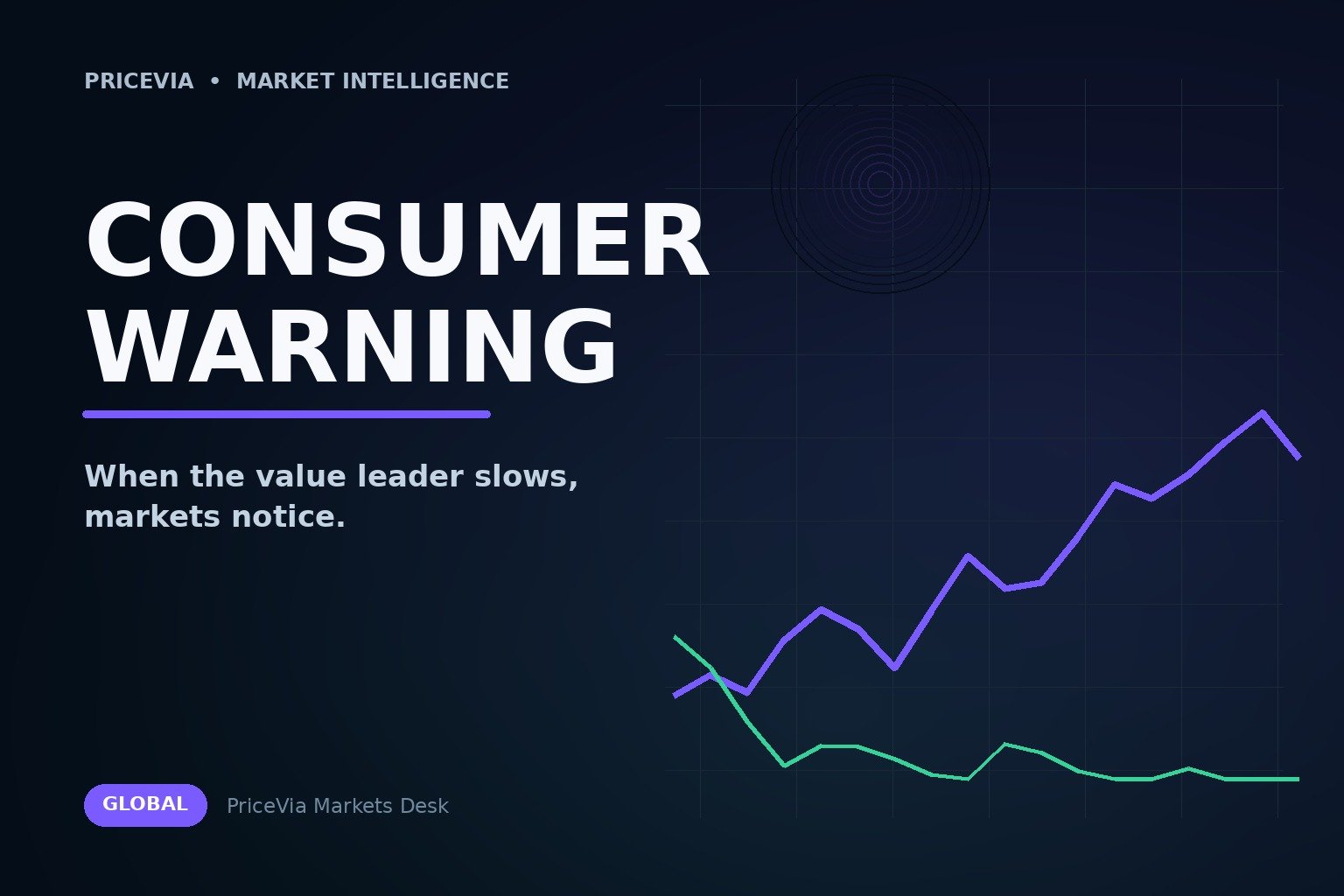
Walmart is supposed to win when consumers get nervous
Walmart’s business model is built for pressure. When households become more price-sensitive, the world’s largest retailer often gains traffic from shoppers trading down. That is why its latest quarter is getting more attention than a normal retail miss.
U.S. comparable sales grew 2.6%, the slowest pace in six years and below expectations cited by Reuters. Shares fell more than 9%, erasing over $80 billion in market value in a single session.
The uncomfortable signal is traffic
Part of the sales slowdown came from lower pharmacy pricing, so the headline number is not a pure read on household demand. But store-traffic growth also slowed to 1.5% from 3% in the previous quarter, according to Reuters.
That matters because the consumer warning becomes more credible when fewer visits accompany higher fuel costs and softer retail data. Walmart can cut prices, but it cannot fully offset a household budget that is being squeezed somewhere else.
What most people may be missing
The key question is not whether Walmart had a bad quarter. It still raised parts of its full-year outlook and its digital business remains strong. The deeper question is whether the company is being forced to spend more aggressively to keep the value proposition intact.
Walmart plans price rollbacks across thousands of products and has a tariff-refund windfall helping to fund the effort. Lower prices can defend market share, but they also tell investors management sees a reason to push harder on affordability.
E-commerce shows the story is not uniformly weak
Walmart U.S. e-commerce grew 24%, and the company continues to build higher-margin businesses around advertising, memberships and marketplace activity. Those revenue streams can cushion pressure in physical retail and support long-term economics.
That is why the stock reaction should not be reduced to 'consumer collapse.' The company is simultaneously gaining digital scale and seeing more cautious behaviour in parts of the core retail engine.
Fuel prices are becoming a macro variable
Management warned that higher gasoline prices can change how consumers allocate spending. Reuters reported Walmart expects materially higher fuel-related costs than previously assumed, while executives described shoppers making trade-offs as prices rise.
If energy remains expensive, the pressure can spread beyond Walmart into restaurants, discretionary retail, travel and lower-income household spending. A retailer this large can therefore become an early macro sensor.
What would change the warning
Watch traffic growth, grocery volumes, the success of price rollbacks and whether fuel prices ease. If traffic reaccelerates while margins hold, the market may decide the quarter was a temporary disruption amplified by pharmacy effects.
If traffic keeps slowing even as Walmart cuts prices, the consumer signal becomes harder to dismiss. That would matter far beyond one retail stock.
- Store traffic after the latest slowdown.
- Whether price rollbacks lift unit volumes.
- Fuel prices and lower-income household spending.
- Whether e-commerce and advertising growth offset pressure in stores.
Risk context: A single quarter does not establish a consumer recession. This article discusses signals, not a forecast of Walmart shares or the U.S. economy.
Related PriceVia analysis

China Just Recalled About 4.3 Million Cars — The Bigger Problem Is a Door Handle
China’s largest-ever vehicle recall shows how a small design feature in software-defined cars can become a regulatory and reputational problem across an entire industry.

Nvidia Earnings Are Now a Market Event — AI Spending Must Clear a Much Higher Bar
Technology shares are already weakening ahead of Nvidia's report, showing how much of the market's AI confidence now depends on one earnings event.
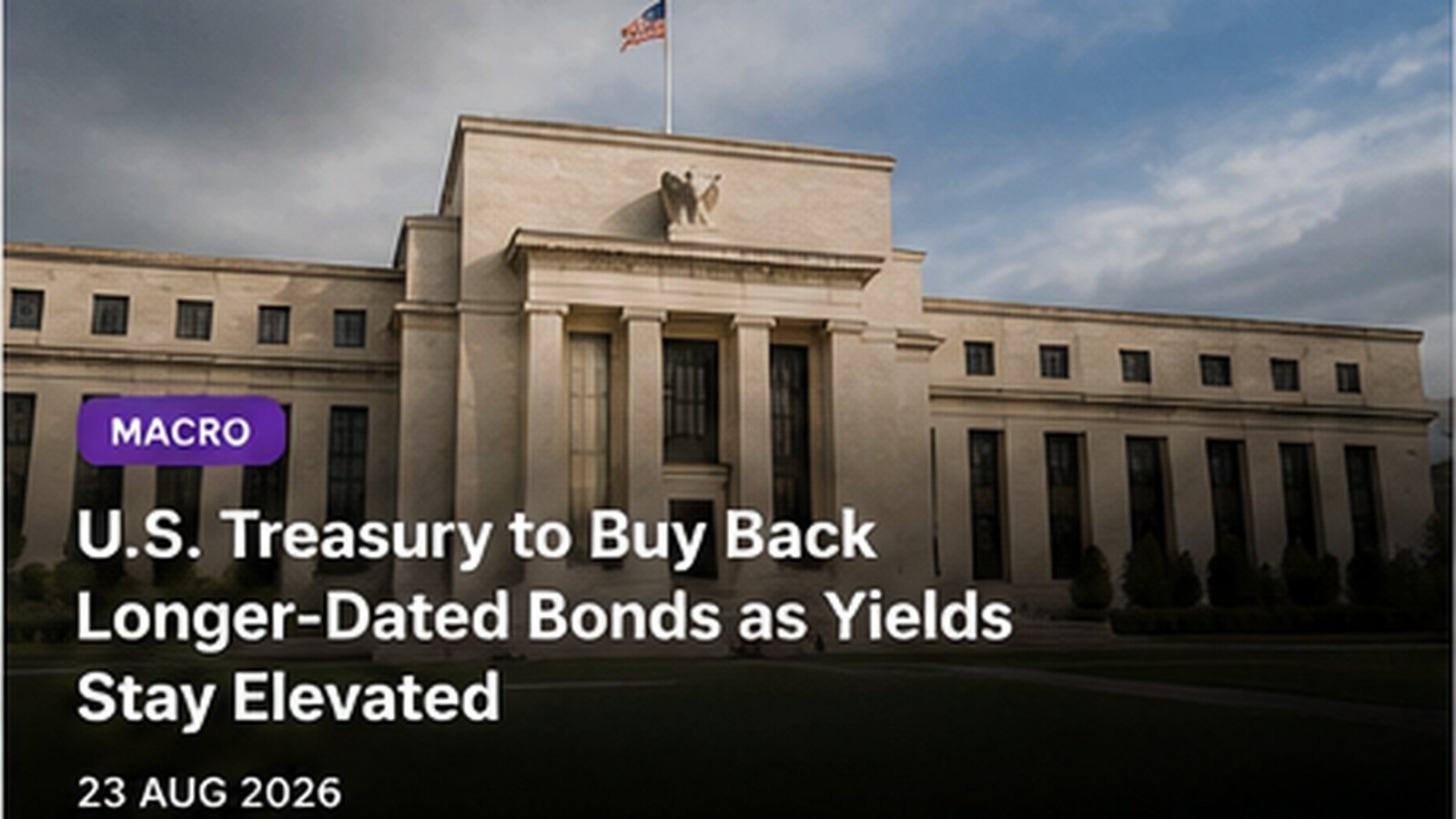
U.S. Treasury Expands Long-Dated Bond Buybacks to Calm a Stressed Market
The U.S. Treasury has moved to increase buybacks of long-dated government bonds after a sharp rise in yields unsettled one of the world's most important financial markets. The change doubles the size of certain repurchase operations from $2 billion to at least $4 billion per transaction for selected maturities between 10 and 30 years.
 CURRENCY DEFENSE
Japan and South Korea Are Coordinating Currency Defense — FX Intervention Is Back
Currency intervention is usually treated as a short-lived market event. The more important development is that Asian finance ministries are signaling they may coordinate when volatility becomes politically or economically costly.