Indian Banks Are Quietly Winning While the Nifty Goes Nowhere
The headline index is barely moving, but the market underneath it is not calm. Money is rotating toward private banks while technology and other rate-sensitive pockets absorb the pressure.
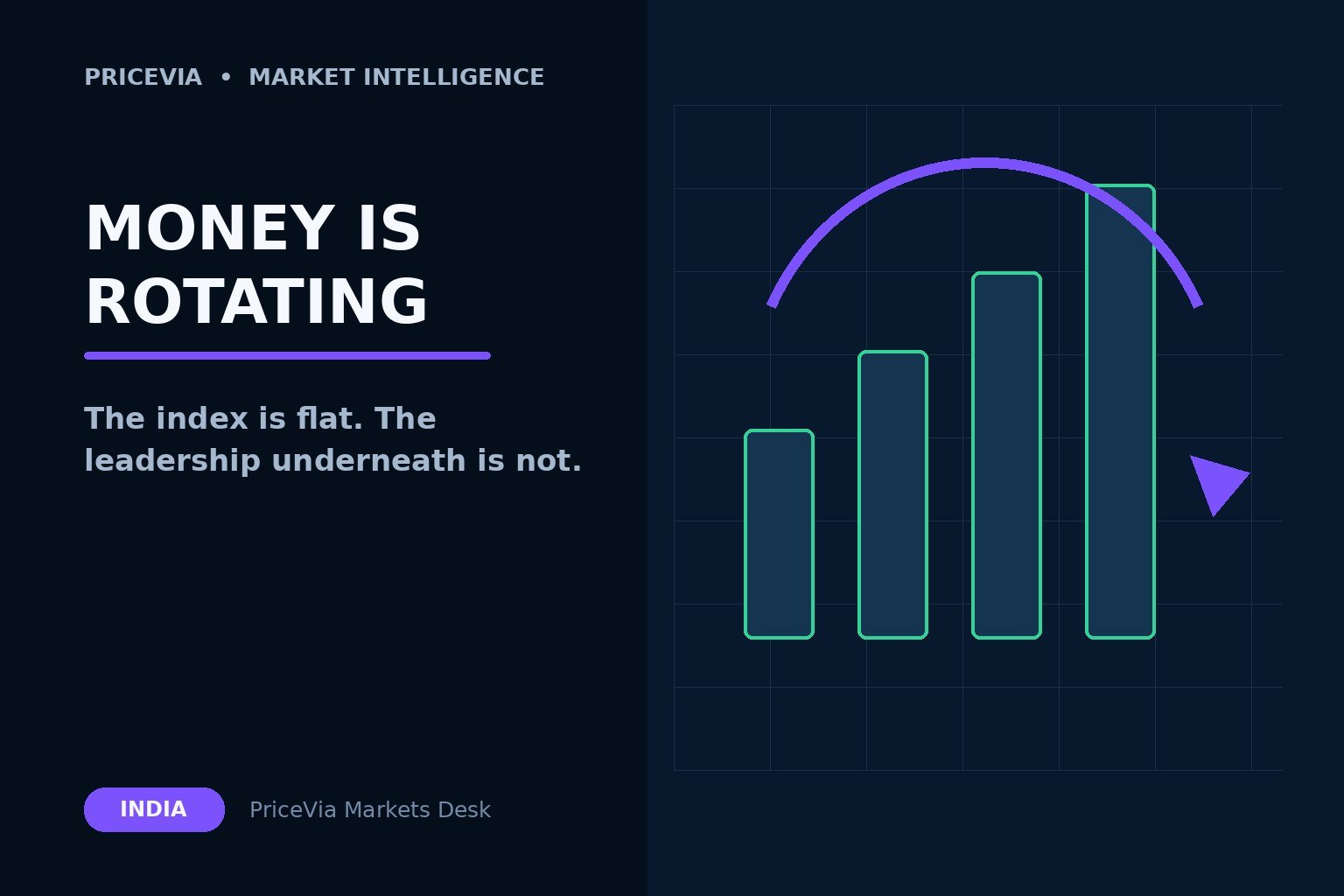
The index looks flat, but the market underneath is moving
Friday’s Nifty close barely changed, yet the weekly sector map told a different story. Reuters reported that 12 of 16 major sectors ended the week lower, with private banks gaining about 1.3% while IT stocks lost about 2.6%. The Nifty itself fell 0.5% for the week.
That divergence is useful because broad indexes can hide rotation. When investors reduce risk without leaving equities completely, they often shift toward businesses where earnings visibility, liquidity and balance-sheet quality look comparatively better.
Why private banks can look different in a high-yield, high-oil market
Higher oil prices and rising global bond yields are a difficult combination for India. Expensive energy can add to inflation and pressure the rupee, while higher global yields can make emerging-market assets less attractive to overseas capital. Those forces can hit long-duration growth sectors and import-sensitive businesses first.
Private banks are not immune, but the market can still prefer them if investors believe liquidity is healthy, credit growth is recovering and asset quality remains manageable. Reuters noted that Goldman Sachs and Bernstein both pointed to an improving earnings backdrop for lenders.
The funding story is becoming part of the signal
ICICI Bank’s decision to double its overseas borrowing limit to $5 billion adds another layer. Reuters reported that Indian banks have accelerated international fundraising after the Reserve Bank of India brought forward the closure of a foreign-exchange swap facility, with lenders expected to raise billions through dollar bonds and loans.
External borrowing is not automatically bullish; it creates currency and funding considerations of its own. But active access to global funding markets can matter when domestic investors are trying to distinguish between institutions with flexible balance sheets and those with fewer financing options.
What most people may be missing: this is relative strength, not a clean risk-on signal
Private banks rising while most sectors fall does not mean the market has turned broadly bullish. It can mean investors are becoming more selective. The same week saw IT stocks under pressure as U.S. inflation and rates remained a concern, while oil and global bond yields weighed on risk appetite.
That makes the bank rally more informative when viewed as a relative trade. If lenders continue to outperform even on weak index days, the market may be signaling confidence in domestic credit and liquidity rather than confidence in the entire equity market.
The rotation has a clear failure point
The constructive case depends on credit growth, funding costs and asset quality staying supportive. If oil keeps climbing, the rupee weakens sharply or bond yields push higher, banks can face their own pressure through deposit costs, corporate stress or foreign selling.
The sector also becomes vulnerable if the current optimism about FY2027 earnings is already fully reflected in valuations. Relative strength can attract more money, but it can also make the group more sensitive to disappointing loan growth or margin commentary.
What to watch next in Indian equities
Watch whether private-bank leadership broadens beyond a few heavyweights, whether IT stabilizes, and whether small-caps continue to hold up. A healthy rotation usually becomes stronger when participation expands rather than relying on two or three large stocks.
Also watch the rupee and global yields. If those macro pressures ease while banks remain firm, the rotation can become a more constructive signal. If the index weakens and bank leadership breaks, the market may be moving from selective risk-taking toward broader de-risking.
- Private-bank breadth beyond Kotak and Axis.
- Nifty IT stabilization after the weekly decline.
- Rupee direction and RBI intervention intensity.
- Global bond yields and foreign institutional flows.
Risk context: Sector rotation can reverse quickly and index-level moves can hide stock-specific risk. This is market analysis, not investment advice.
Related PriceVia analysis
 LIQUIDITY DRAIN
India’s Earnings Are Improving — So Why Isn’t the Market Acting Like It?
Better earnings should help Indian equities. The problem is that the primary market may be competing for the same capital just as foreign investors remain cautious.
 RISK IS BUILDING
Indian Markets Look Calm. Oil and Global Bond Yields Are Quietly Raising the Risk
The index barely moved on Friday. That calm surface may be hiding a more important combination: expensive oil, volatile global yields and pressure on India’s currency and foreign flows.

Nifty Faces an Expiry Test as Oil and Iran Risk Return — The Bigger Threat May Be Food Inflation
Indian equities enter monthly expiry with Brent near $92 and geopolitical risk elevated, but a weak monsoon could become the more persistent domestic problem.
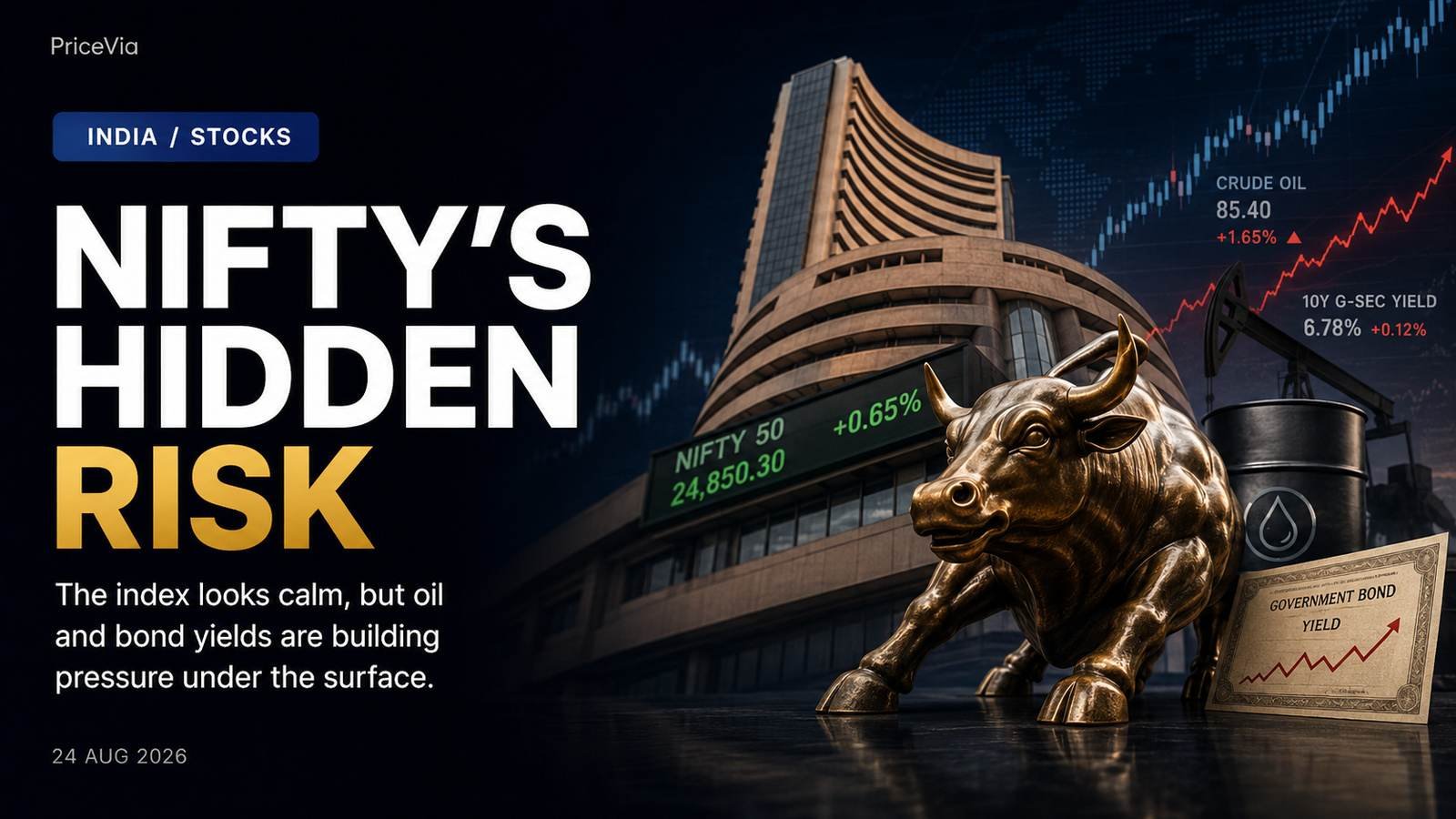
Nifty Is Trying to Bounce — But $93 Oil Is Still the Number That Matters
Indian equities are trying to start the week on a better footing, but the market’s most important number may still be sitting outside the stock screen: Brent crude near $93 a barrel.