Nifty Faces an Expiry Test as Oil and Iran Risk Return — The Bigger Threat May Be Food Inflation
Indian equities enter monthly expiry with Brent near $92 and geopolitical risk elevated, but a weak monsoon could become the more persistent domestic problem.

Indian equities are entering Tuesday with three separate sources of pressure converging at once: Middle East risk, expensive crude oil and the monthly expiry of Nifty 50 derivatives. GIFT Nifty indicated a softer start after the benchmark fell on Monday, while investors continued to assess Iran's response to a new round of U.S. sanctions.
The visible risk is crude. Brent has been hovering around $92 a barrel, a level high enough to keep India's inflation, current-account and corporate-margin sensitivity in focus. India imports most of the oil it consumes, so an extended period of expensive crude can feed into transport costs, pressure the rupee and make the RBI's job harder even when domestic demand remains resilient.
The less obvious risk is weather. Reuters reported that India's monsoon is on course to be the driest since 2009, with rainfall around 15% below average. If that weakness persists, the market may have to reprice food inflation and rural-demand expectations rather than treating the current volatility as only a geopolitical event.
Tuesday's derivatives expiry adds a technical layer. The market is still adapting to a new closing-auction process for stocks linked to futures and options, which can amplify late-session moves without necessarily changing the underlying investment case. That makes headline index action less informative than sector breadth, foreign flows and the behaviour of rate-sensitive stocks.
There is still a meaningful cushion. Foreign investors were net buyers of ₹11.82 billion of Indian shares on Monday, showing that global capital has not uniformly abandoned the market. Strong domestic earnings and institutional liquidity can also absorb part of the external shock.
Positive case: oil remains contained, Iran-related tensions do not disrupt physical supply, foreign inflows persist and expiry volatility passes without a break in market breadth.
Downside case: crude moves materially higher while the monsoon shortfall begins to affect food prices, creating the combination of sticky inflation and weaker rural purchasing power.
What would change the story: watch oil-sensitive sectors, the rupee and foreign institutional flows through expiry.
PriceVia View: the key signal is not simply whether Nifty closes green or red. Watch whether oil-sensitive sectors underperform, whether the rupee absorbs pressure without disorderly moves, and whether foreign investors remain buyers through expiry.
Market-risk disclaimer: This article is for informational and educational purposes only and does not constitute investment advice.
Risk context: Prepared as an original PriceVia analysis using the linked credible sources. Market levels are timestamp-sensitive and should be rechecked before later republication.
Related PriceVia analysis
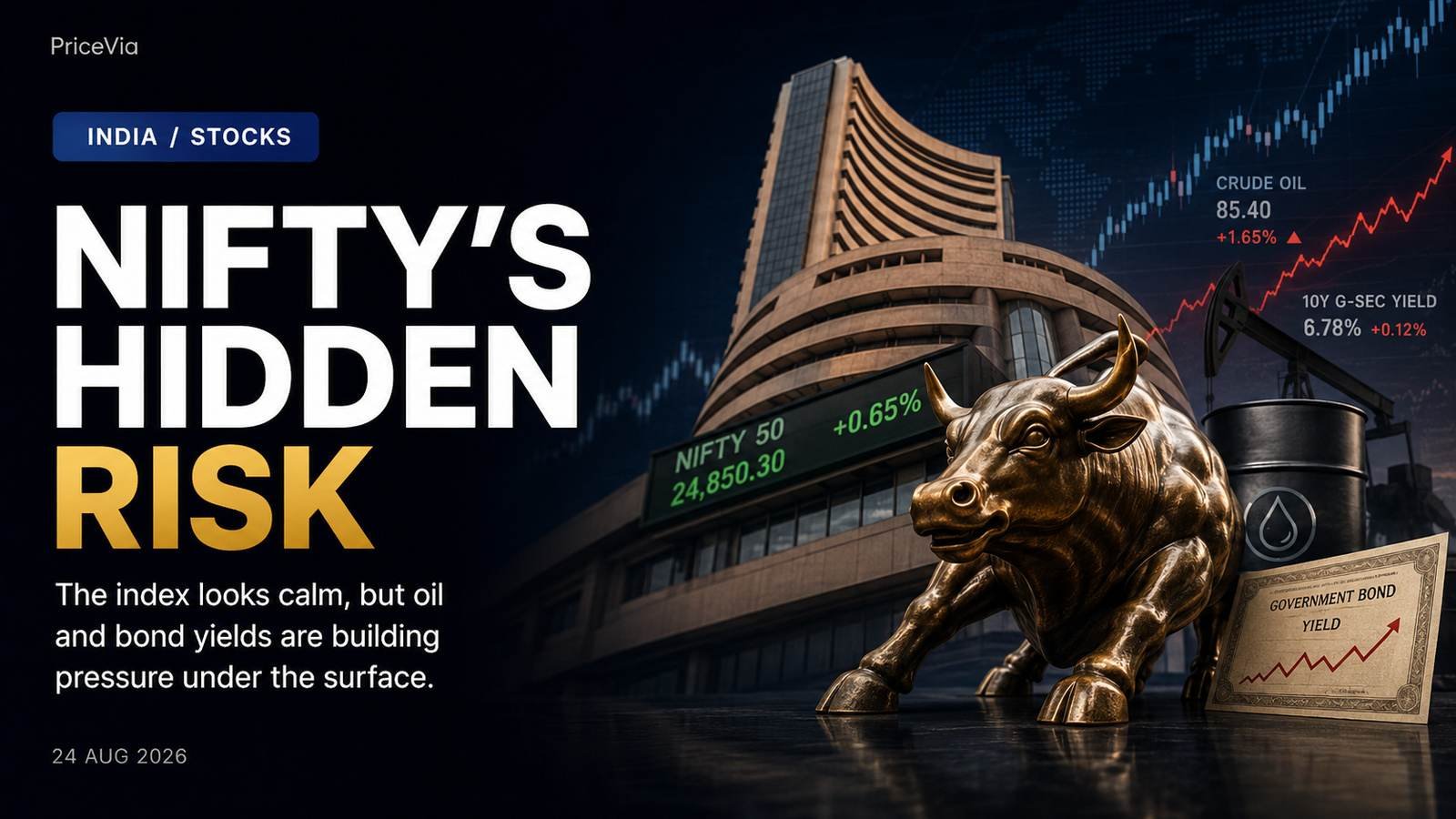
Nifty Is Trying to Bounce — But $93 Oil Is Still the Number That Matters
Indian equities are trying to start the week on a better footing, but the market’s most important number may still be sitting outside the stock screen: Brent crude near $93 a barrel.
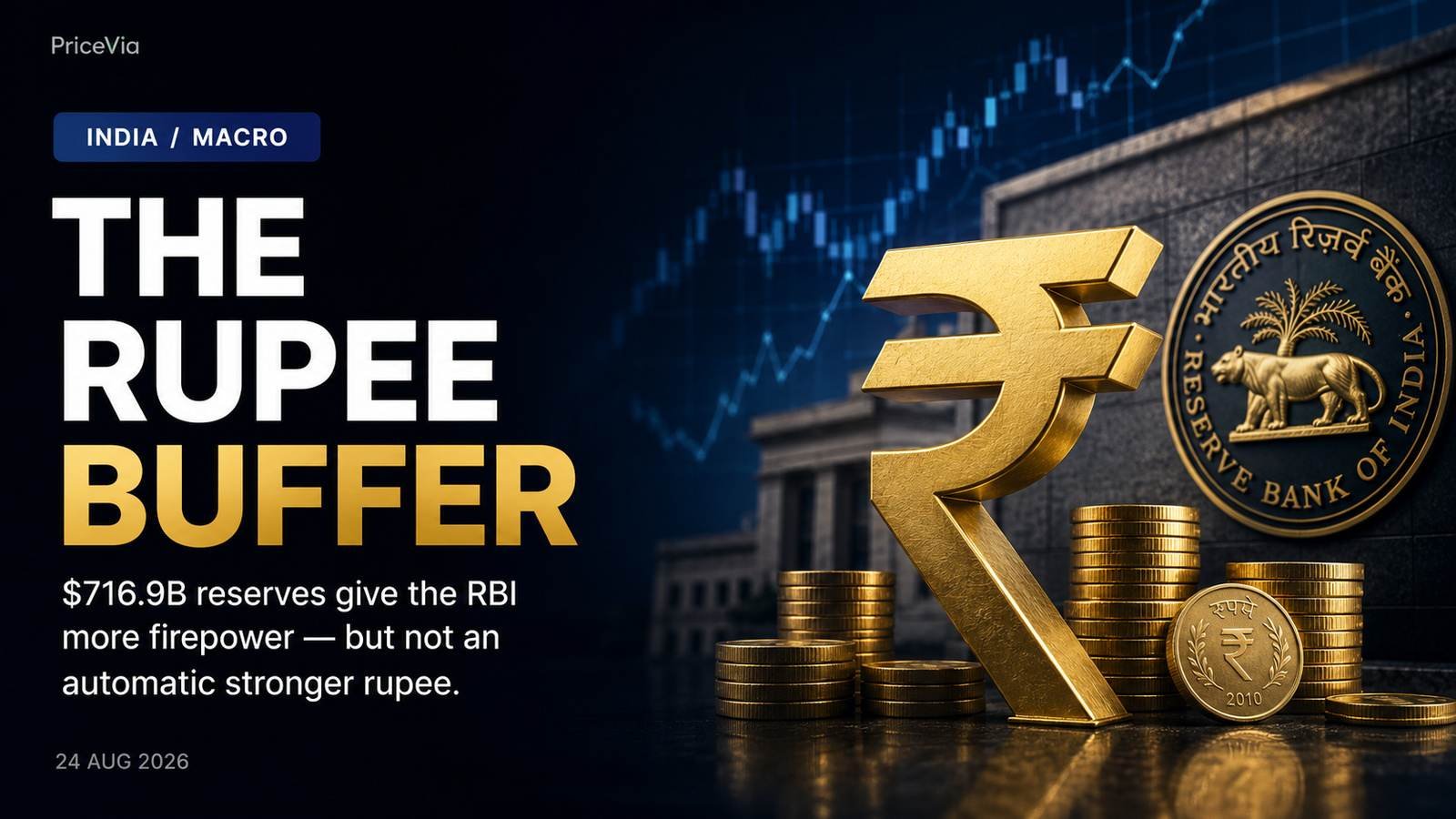
The Rupee Has a $716.9 Billion Buffer — But That Doesn't Mean It Will Get Stronger
India's reserve cushion is nearing its record high, but the RBI may prefer to turn new dollar inflows into stability rather than a much stronger rupee.

Nifty 50 Profits Grow 18% as Corporate India Delivers Its Best Quarter in 10 Quarters
Corporate India's June-quarter earnings season has delivered a significant positive surprise. Nifty 50 companies posted average profit growth of 18%, the strongest pace in 10 quarters, according to Reuters' review of brokerage estimates.
 COSTS HIT THE CUSTOMER
Tata Motors Is Raising Prices Again — India’s Auto Inflation Is Reaching Buyers
The increase is modest relative to the price of a car, but the message is larger: manufacturers are reaching the point where more of the inflation they absorbed internally is being passed to customers.