The Rupee Has a $716.9 Billion Buffer — But That Doesn't Mean It Will Get Stronger
India's reserve cushion is nearing its record high, but the RBI may prefer to turn new dollar inflows into stability rather than a much stronger rupee.
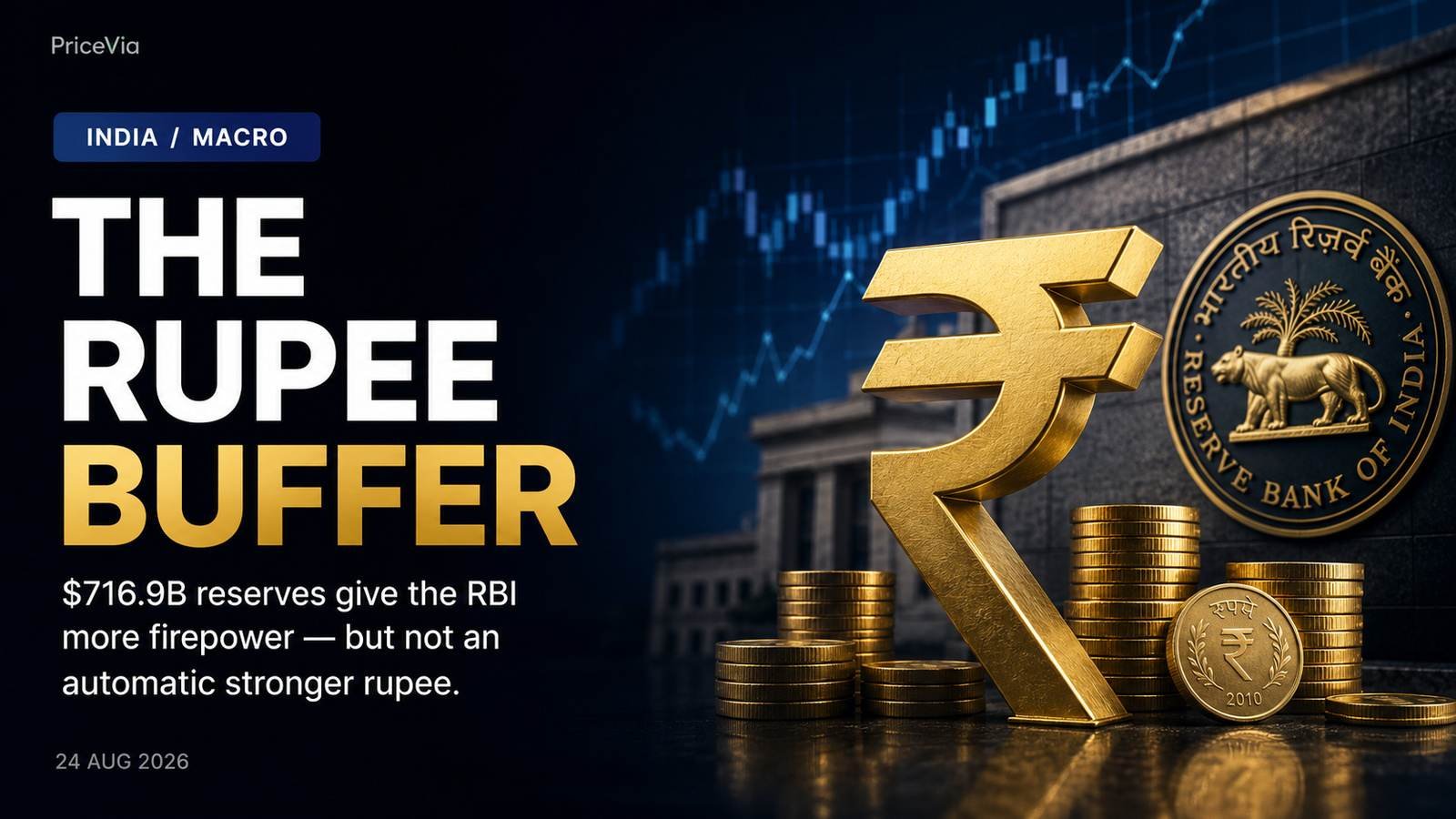
India's rupee starts the new week with a much larger external cushion, but that does not automatically mean the currency is about to strengthen sharply. The rupee closed Friday at 95.6950 per U.S. dollar, while India's foreign-exchange reserves had climbed to $716.9 billion as of August 14, a six-month high and less than $12 billion below the February record.
The immediate support comes from strong capital inflows and the Reserve Bank of India's active presence in the foreign-exchange market. Reuters reported on August 24 that the rupee was expected to open around 95.65-95.70, with policy-linked inflows and RBI intervention limiting volatility even as month-end corporate payments and derivative maturities create fresh dollar demand.
The reserve rebuild has been unusually fast. Reserves rose by nearly $10 billion in the latest reported week and by about $50 billion over seven weeks. A separate Reuters report said the RBI's June measures had already attracted nearly $57 billion by August 13, while the broader inflow generated by those measures was estimated at about $73 billion by August 24.
That is the part of the story most investors can see. The less obvious part is what the RBI may choose to do with those dollars. Instead of allowing every new inflow to push the rupee sharply higher, the central bank can absorb part of the supply and rebuild reserves. In that scenario, the benefit shows up first as a stronger policy buffer and lower currency volatility, not necessarily as rapid rupee appreciation.
Oil remains the main counterweight. Brent crude was trading around the mid-$90s per barrel as markets assessed the risk of further disruption tied to the Iran conflict. Because India imports most of the crude it consumes, expensive oil increases the country's dollar requirement and can weaken the current-account and inflation outlook if the move persists.
The bond market is watching the same pressure points. India's benchmark 10-year government bond yield ended Friday at 6.8495%, and traders cited by Reuters expected a 6.80%-6.89% range this week. Elevated oil can keep inflation concerns alive, while strong foreign-currency inflows and RBI management can reduce stress in the exchange rate.
The positive case is therefore about stability rather than a one-way currency rally. If capital inflows stay strong, oil cools and the global dollar remains contained, the RBI can continue rebuilding reserves while keeping disorderly rupee moves in check. That would reduce one important source of macro uncertainty for Indian assets.
The downside case begins with crude. A renewed oil spike, heavier month-end importer demand or weaker foreign flows could test the RBI's willingness to defend the currency. A sustained break beyond 96 per dollar would be a clearer sign that external pressure is overpowering the current inflow cushion.
What would change the story? Watch the pace of foreign inflows, Brent crude, the RBI's visible intervention pattern and whether reserves continue moving toward the February record of $728.5 billion. The key signal is not simply whether the rupee rises. It is whether India can convert the current inflow wave into a durable reserve buffer without allowing currency volatility to return.
PriceVia View: $716.9 billion is the headline number, but the strategic value is optionality. The RBI now has more room to absorb shocks, smooth volatility and choose when to let market forces move the rupee. In the current setup, a more stable rupee may matter more than a dramatically stronger one.
Market-risk disclaimer: This article is for informational and educational purposes only and does not constitute investment advice or a recommendation to buy or sell any security, currency, commodity or cryptoasset. Markets can move rapidly; verify current prices and facts before acting.
Risk context: Prepared for PriceVia on August 24, 2026 using current Reuters reporting. Market levels are timestamp-sensitive and should be rechecked before later republication.
Related PriceVia analysis

Nifty Faces an Expiry Test as Oil and Iran Risk Return — The Bigger Threat May Be Food Inflation
Indian equities enter monthly expiry with Brent near $92 and geopolitical risk elevated, but a weak monsoon could become the more persistent domestic problem.
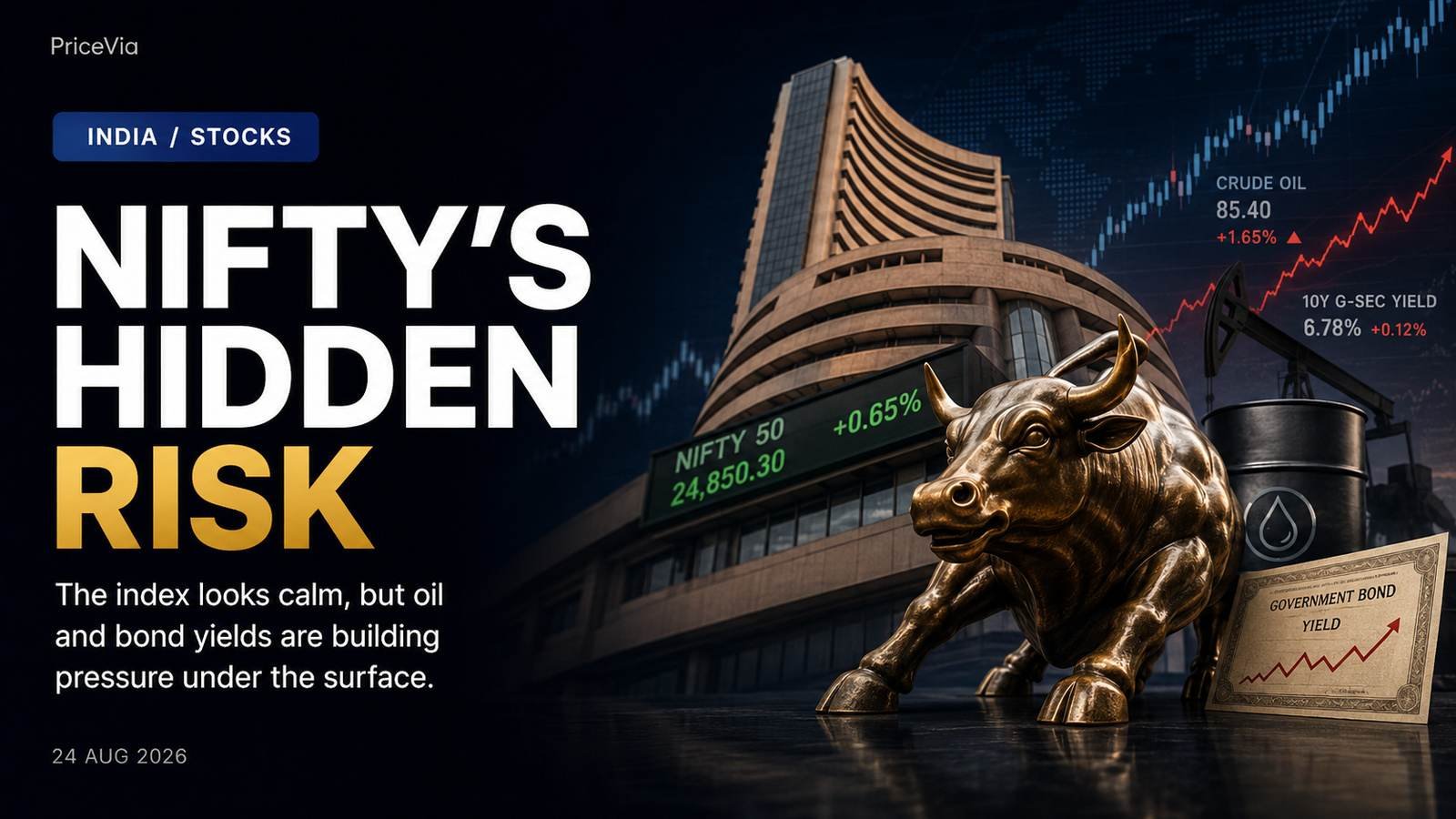
Nifty Is Trying to Bounce — But $93 Oil Is Still the Number That Matters
Indian equities are trying to start the week on a better footing, but the market’s most important number may still be sitting outside the stock screen: Brent crude near $93 a barrel.

Nifty 50 Profits Grow 18% as Corporate India Delivers Its Best Quarter in 10 Quarters
Corporate India's June-quarter earnings season has delivered a significant positive surprise. Nifty 50 companies posted average profit growth of 18%, the strongest pace in 10 quarters, according to Reuters' review of brokerage estimates.
 COSTS HIT THE CUSTOMER
Tata Motors Is Raising Prices Again — India’s Auto Inflation Is Reaching Buyers
The increase is modest relative to the price of a car, but the message is larger: manufacturers are reaching the point where more of the inflation they absorbed internally is being passed to customers.