Japan and South Korea Pledge Close FX Coordination After Unusual Intervention
Japan and South Korea have reaffirmed close coordination on foreign-exchange policy after a rare episode of simultaneous intervention highlighted growing concern about currency volatility in Asia.
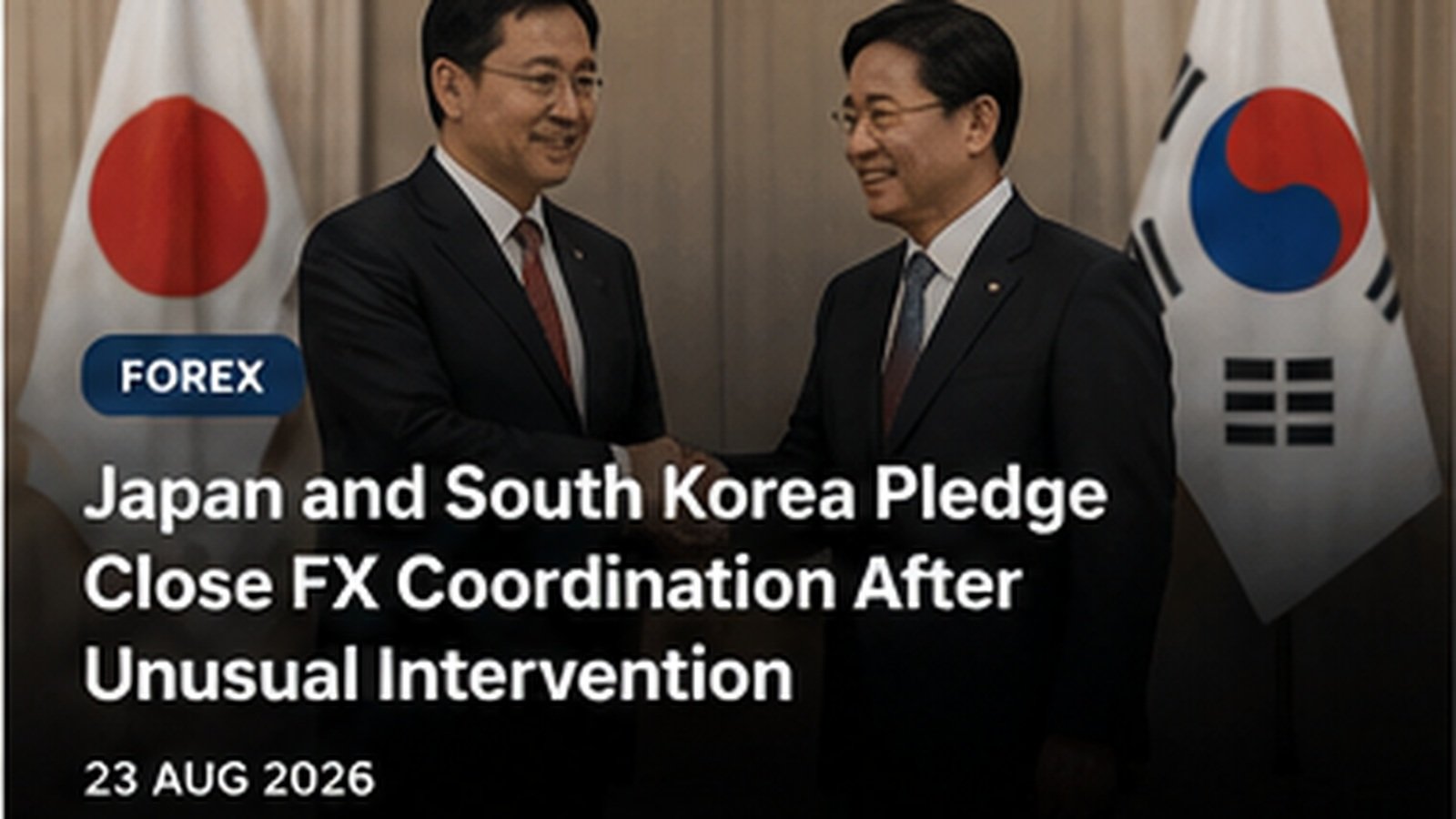
Japan and South Korea have reaffirmed close coordination on foreign-exchange policy after a rare episode of simultaneous intervention highlighted growing concern about currency volatility in Asia.
Senior officials from both countries met in Tokyo on August 21 and exchanged views on their policy approaches and the global macro environment. The discussion followed unusual currency-market action on July 31, when both countries intervened to support their currencies.
Coordinated intervention is important because it can send a stronger signal than unilateral action. When multiple authorities enter the market around the same time, traders may become less willing to build large speculative positions against either currency. The signalling effect can sometimes be as important as the amount of money deployed.
Japan and South Korea have different economic structures, but both are major exporters and both are sensitive to disorderly currency moves. Rapid depreciation can increase import costs and inflation, especially for energy. Excessive appreciation, meanwhile, can hurt export competitiveness. That leaves policymakers trying to prevent volatility without targeting a rigid exchange rate.
The meeting also reflects a broader shift in the global currency environment. Rising long-term U.S. yields, fiscal uncertainty, commodity shocks and changing expectations for monetary policy have made foreign-exchange markets more sensitive to official signals. In that setting, regional coordination can become a useful tool for limiting destabilising moves.
Investors should not assume that coordination means the currencies will move in a straight line. Intervention is most effective when it aligns with broader macro fundamentals. If interest-rate differentials or capital flows remain strongly one-sided, authorities may be able to slow a move without fully reversing it.
The policy message is nevertheless meaningful. By publicly committing to continued communication, Japan and South Korea are telling markets that unusually rapid moves could attract a response. That can influence positioning even on days when no intervention occurs.
There are also implications for the rest of Asia. Sharp moves in the yen and won can affect competitive dynamics for exporters in Taiwan, China and Southeast Asia. If intervention reduces volatility in two major regional currencies, it may indirectly stabilise broader Asian FX trading.
For Indian investors, the connection comes through global risk sentiment and the dollar. Currency intervention in North Asia does not directly determine the rupee, but a calmer regional FX environment can reduce contagion during periods of global stress. The RBI is itself actively smoothing rupee volatility, making cross-country intervention policy particularly relevant.
The next thing to watch is whether verbal coordination is enough or whether authorities return to the market during another bout of volatility. If intervention becomes more frequent, it would signal that policymakers view current currency moves as a threat to financial stability rather than ordinary market adjustment.
For now, Japan and South Korea have made their preference clear: they want exchange rates to reflect fundamentals without becoming disorderly, and they are prepared to coordinate more closely when volatility threatens that objective.
Risk context: Prepared as an original PriceVia explainer using the linked source reporting. Market levels and event details are timestamp-sensitive and should be rechecked before later republication.
Related PriceVia analysis
Japan’s Service Inflation Re-Accelerated to 3.6% — The BOJ Hike Case Is Getting Harder to Ignore
Japan’s business-service prices accelerated again in July, with transport and labour-heavy services showing pressure that looks broader than imported energy inflation.

Gold's Break Above $4,600 Is More Than a Safe-Haven Move — Bond Liquidity Is Driving the Rally
Gold has reached its highest level in more than three months as lower yields, a softer dollar and geopolitical risk reinforce one another.

The Dollar Is Struggling Even With Geopolitical Risk — Treasury Buybacks Changed the Trade
The dollar is failing to gain sustained traction from geopolitical stress because the bond market is increasingly driving the currency story.

Oil Is Holding Near $92 After Iran Sanctions — Why the Market Still Can't Remove the Risk Premium
Oil fell more than 2% after new sanctions looked less disruptive than feared, but depleted buffers and Hormuz risk keep the downside unusually fragile.