The Rupee Is Holding Near 96 — But the Calm Is Being Engineered
The rupee looks unusually stable despite high oil prices and global stress. That stability may say more about the RBI’s firepower than about the absence of pressure.
A quiet currency can still be under pressure
The rupee ended Friday near 95.69 per dollar, almost unchanged on the day. On the surface, that looks calm. The unusual part is what the currency has had to absorb: oil prices rose sharply during the week, geopolitical risk remained elevated and importer demand for dollars stayed firm.
Reuters reported that frequent Reserve Bank of India intervention has prevented a slide beyond the psychologically important 96-per-dollar area. That means the lack of volatility should not automatically be read as a lack of stress.
The RBI has built a larger shield
India has attracted tens of billions of dollars through foreign-currency mobilisation measures announced in June. Reuters said those inflows have increased the RBI’s capacity to manage disorderly moves, while the central bank has used spot and forward-market tools to keep the adjustment gradual.
The result is striking: two-week realised volatility in the rupee is below 2%, among the lowest in Asia. Policy has effectively converted a potentially sharp move into a controlled one.
What most people may be missing
The rupee’s stability is not purely a market vote of confidence. It is also a policy outcome. That distinction matters because interventions can change the path of a currency without removing the forces acting on it.
Oil is the clearest pressure point. India is a major energy importer, so sustained high crude prices create recurring dollar demand. A broadly weaker U.S. dollar would normally support Asian currencies, yet Reuters noted that the rupee has not benefited as much as peers. That is a clue that local demand remains heavy.
The forward book deserves attention
The RBI’s net forward dollar liabilities were $103.3 billion at the end of June. Forward positions are a normal part of currency management, and the RBI governor has described the position as manageable, but the size matters because it shows how actively the central bank has been shaping the timing of currency flows.
Investors should therefore watch not only headline reserves but also how the forward book evolves. A stable spot rate can coexist with meaningful intervention behind the scenes.
The good news is the buffer is real
This is not a story of an exhausted central bank. Reuters reported more than $50 billion of inflows under the June measures, while analysts cited the possibility of a larger external buffer as the programme matures. That gives the RBI room to prioritise orderly movement rather than defend a single line at any cost.
The risk would rise if oil remains elevated for longer, foreign flows weaken and the dollar turns stronger at the same time. That combination would force the market to test how much of the current calm is durable without continuous intervention.
Three signals worth watching next
Watch Brent crude, the RBI’s forward-book data and whether USD/INR repeatedly tests the 96 area. The most useful signal may be whether the currency begins moving more freely when global conditions improve.
If the rupee still struggles to strengthen on good global days, it would suggest that importer demand and domestic hedging pressure remain powerful even while the RBI is containing volatility.
- Brent crude and oil-related dollar demand.
- Whether USD/INR repeatedly tests 96.
- The RBI forward book and reserves.
- Whether the rupee participates when the dollar weakens globally.
Risk context: Currency management can change quickly. This article discusses macro signals and does not predict a specific USD/INR target.
Related PriceVia analysis

Nifty Faces an Expiry Test as Oil and Iran Risk Return — The Bigger Threat May Be Food Inflation
Indian equities enter monthly expiry with Brent near $92 and geopolitical risk elevated, but a weak monsoon could become the more persistent domestic problem.
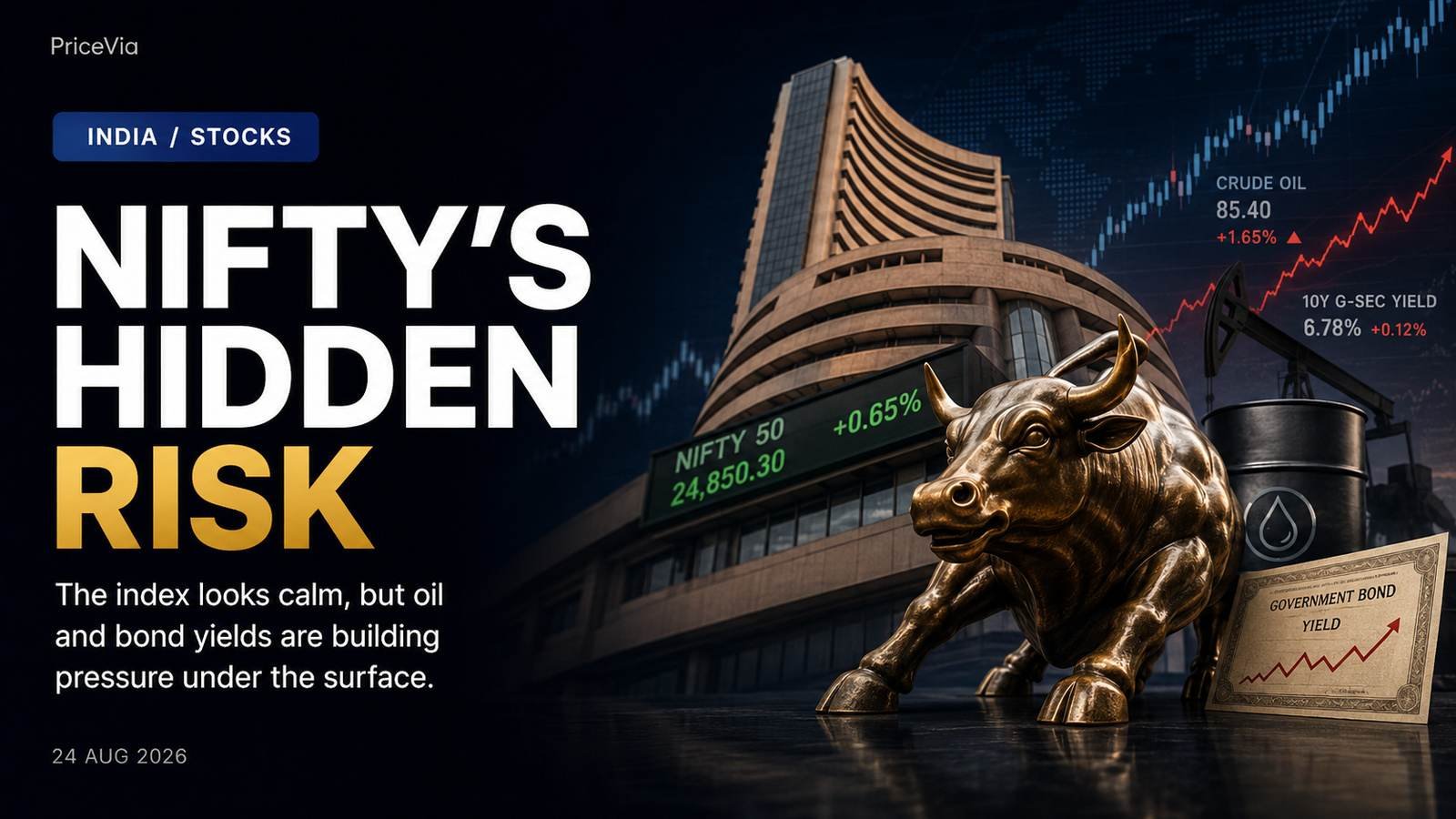
Nifty Is Trying to Bounce — But $93 Oil Is Still the Number That Matters
Indian equities are trying to start the week on a better footing, but the market’s most important number may still be sitting outside the stock screen: Brent crude near $93 a barrel.
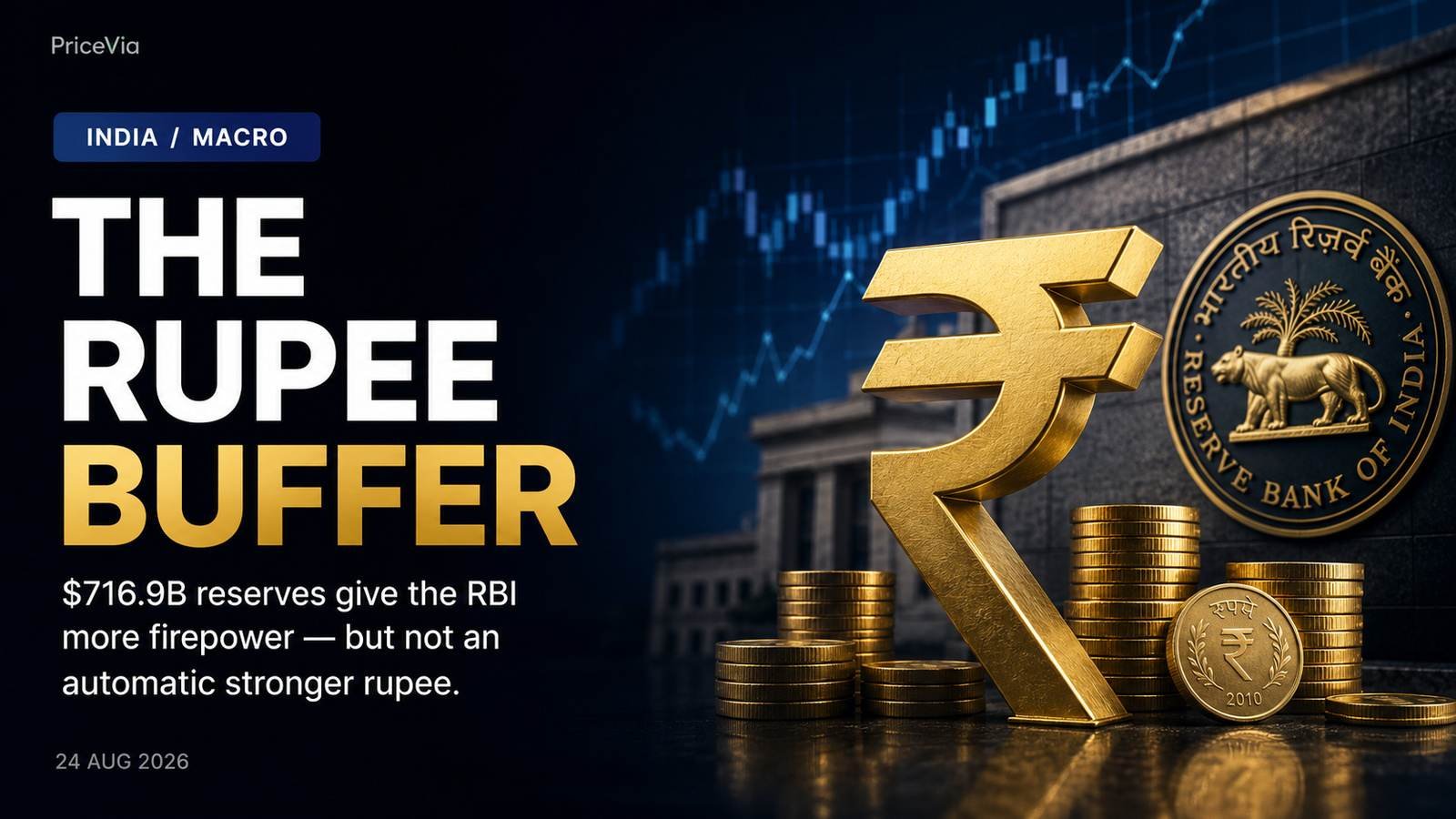
The Rupee Has a $716.9 Billion Buffer — But That Doesn't Mean It Will Get Stronger
India's reserve cushion is nearing its record high, but the RBI may prefer to turn new dollar inflows into stability rather than a much stronger rupee.

Nifty 50 Profits Grow 18% as Corporate India Delivers Its Best Quarter in 10 Quarters
Corporate India's June-quarter earnings season has delivered a significant positive surprise. Nifty 50 companies posted average profit growth of 18%, the strongest pace in 10 quarters, according to Reuters' review of brokerage estimates.